There’s a reason fajitas are the dish everyone orders when the sizzling platter goes by at a Tex-Mex restaurant. Done right, they’re smoky, charred, tender, and downright fun to eat. And here’s the good news: you can absolutely make restaurant-quality steak fajitas at home — you just need to know a few things the recipes usually skip.
This is the complete guide. I’ll walk you through which steak to buy (it matters more than you’d think), every way to cook them — skillet, grill, Blackstone, even the oven — why restaurant fajitas are so tender, and a foolproof recipe to pull it all together. Whether you’re feeding the family on a Tuesday or a crowd on the weekend, by the end you’ll know exactly how to do it. Prefer poultry? My chicken fajitas guide has you covered too.
Table of Contents
What Are Steak Fajitas?
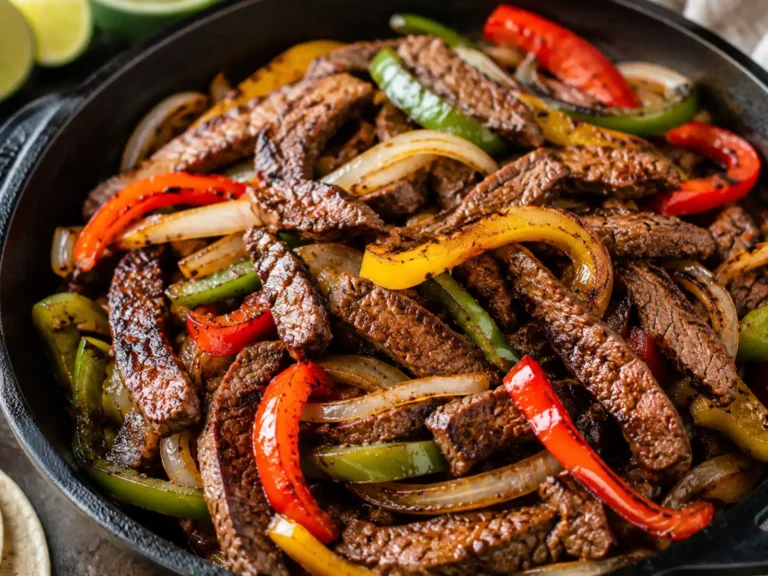
Steak fajitas are a Tex-Mex classic — strips of marinated, high-heat-cooked beef served sizzling with charred bell peppers and onions, piled into warm tortillas with your favorite toppings. The word “fajita” originally referred to the cut of meat — skirt steak — so the very first fajitas were all about the beef. Today it describes the whole dish, and they remain the original and, for many of us, the best.
What Steak Is Best for Fajitas?
This is the question that makes or breaks your fajitas, and most recipes barely touch it. The cut you choose determines the flavor, the tenderness, and how you should cook the meat.
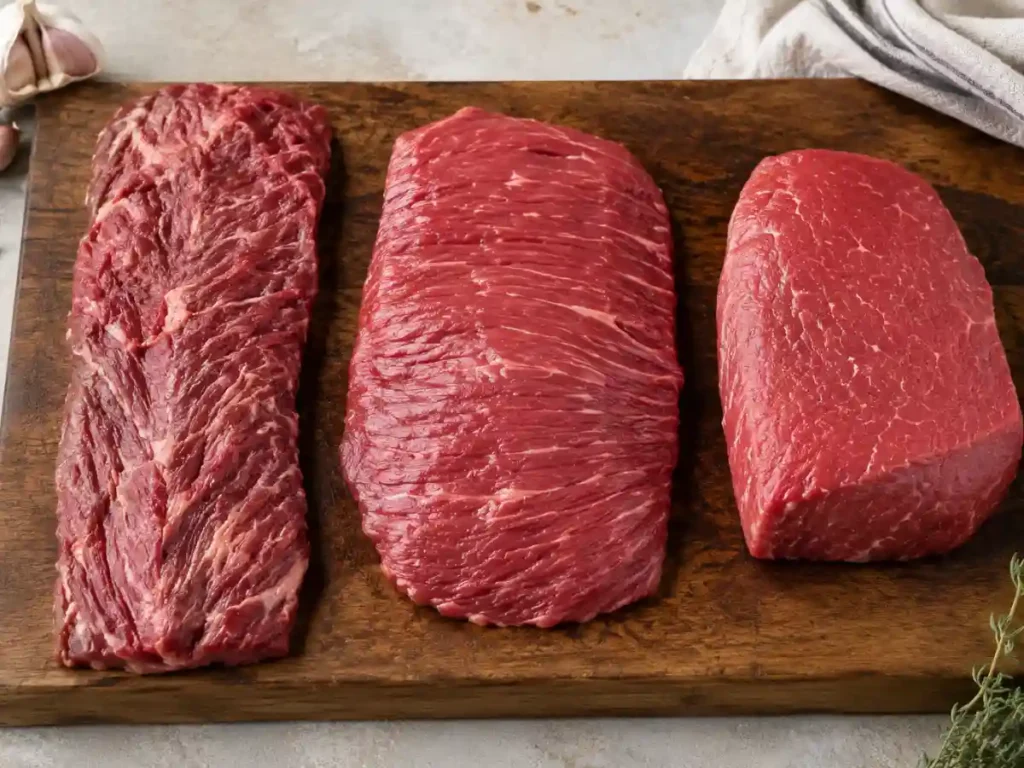
| Cut | Flavor | Tenderness | Price | Best for |
|---|---|---|---|---|
| Skirt steak | Richest, beefiest | Tender if sliced right | $$ | The classic — true restaurant flavor |
| Flank steak | Leaner, milder | Tender, needs care | $$ | Widely available, leaner option |
| Sirloin | Mild | Naturally tender | $ | Budget-friendly |
| Hanger / flat iron | Very beefy | Tender | $$$ | A treat, if you can find them |
Quick decision rules:
- Want classic restaurant flavor? Choose skirt steak — it’s the traditional cut for a reason.
- Want lean but still tender? Go with flank steak.
- Cooking on a budget? Sirloin delivers.
Skirt and flank are the two you’ll reach for most. Flank is my everyday pick because it’s easy to find and takes beautifully to a marinade — if that’s your cut, I’ve got a full flank steak fajitas recipe with three cooking methods.
Why Are Restaurant Steak Fajitas So Tender?
Ever wonder why the fajitas at your favourite spot are so much more tender than the ones you make at home? It’s not one secret — it’s five things done right, every time:
- The right cut, sliced correctly. Restaurants pick well-suited cuts and always slice against the grain (more on that below).
- An acidic marinade. Lime and orange juice don’t just add flavor — the acid tenderizes the surface of the meat.
- Very high heat. A screaming-hot cast-iron skillet or flat-top griddle chars the outside fast, before the inside can overcook and toughen.
- Resting the meat. A few minutes off the heat lets the juices redistribute instead of spilling out.
- Slicing thin, against the grain. This is the step that turns a chewy steak tender.
Nail all five and your fajitas will rival any restaurant. For a deep dive into the tenderizing science and exact marinade timings, see my steak fajita marinade guide.
Ingredients for Steak Fajitas
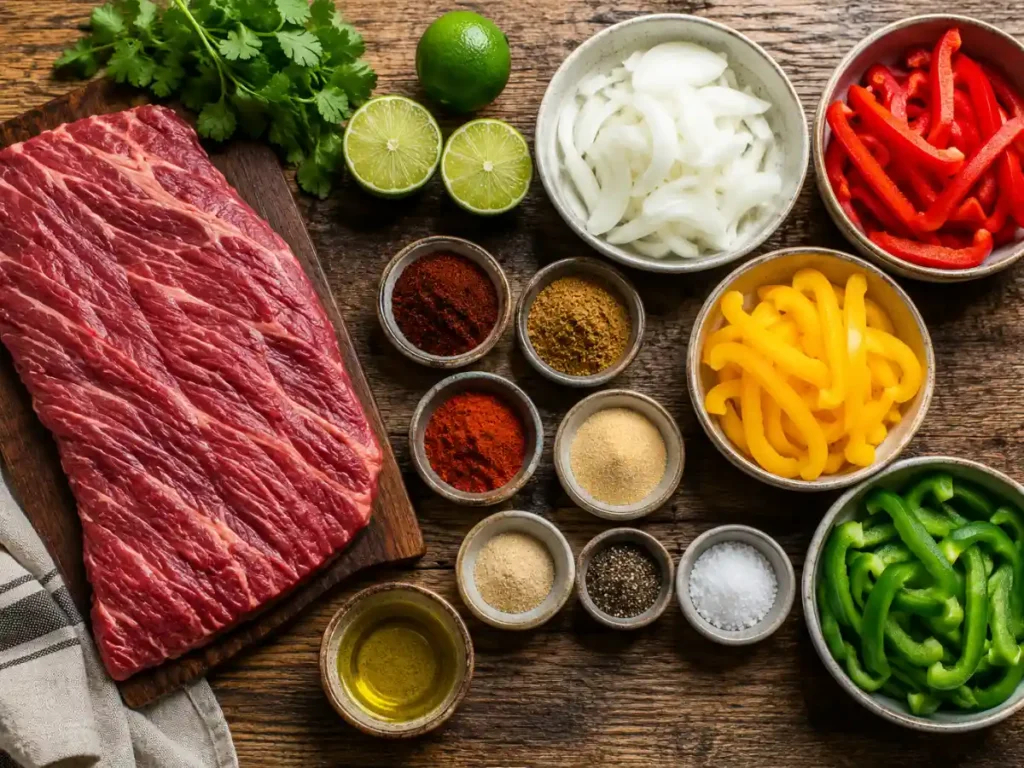
The classic lineup is simple (full measurements in the recipe card):
- Steak — skirt or flank, about 1½ to 2 pounds.
- Bell peppers — a mix of colors, sliced.
- Onion — one large, sliced.
- Oil — for cooking and the marinade.
- Lime — for the marinade and to finish.
- Fajita seasoning — chili powder, cumin, smoked paprika, garlic, and onion. My homemade fajita seasoning works beautifully on steak.
- Tortillas and toppings — flour or corn tortillas, guacamole, pico de gallo, sour cream, cheese, cilantro.
How to Make Steak Fajitas (Easy Base Recipe)
Here’s the straightforward skillet method that works every time.
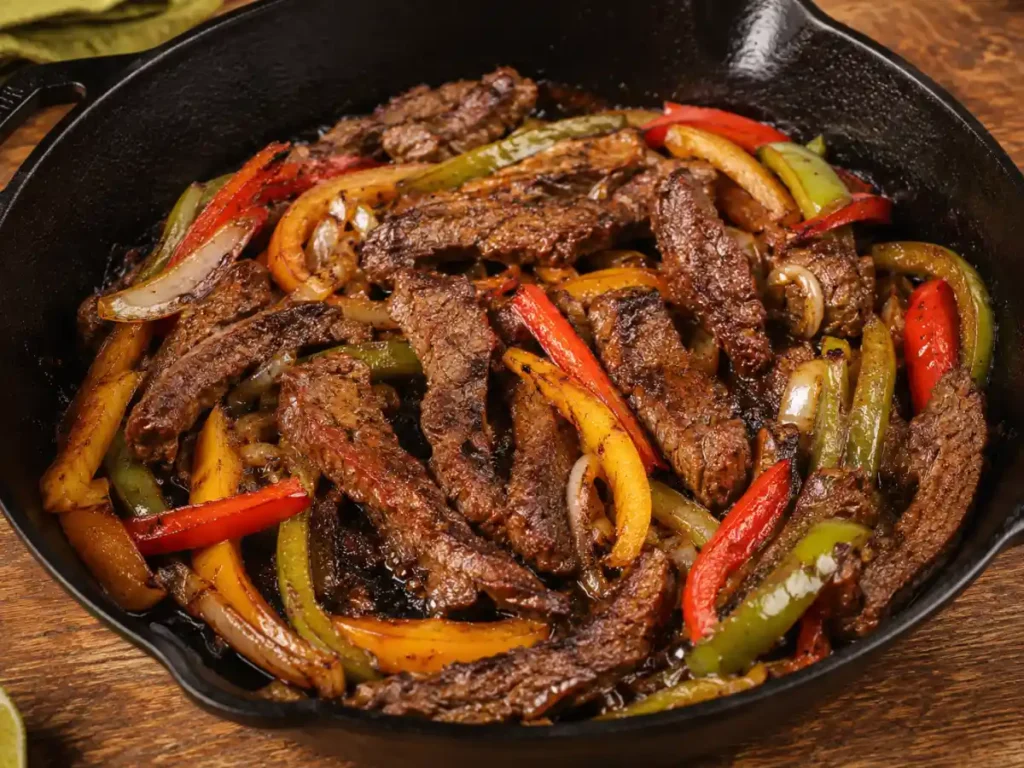
- Marinate the steak for 2 to 4 hours (or season it well if you’re short on time).
- Heat a cast-iron skillet until it’s nearly smoking.
- Sear the steak hot and fast — about 3 to 5 minutes per side — to 130–135°F for medium-rare. Don’t overcook it.
- Rest the steak 5 to 10 minutes.
- Cook the peppers and onions in the same pan over high heat until charred and tender-crisp.
- Slice the steak thin, against the grain, then toss everything together with a squeeze of lime.
- Serve sizzling with warm tortillas and toppings.
Cook to a safe temperature you’re comfortable with — see the USDA’s guidance on beef. For the full marinade with measurements and variations, head to my steak fajita marinade post.
Every Way to Cook Steak Fajitas
One of the best things about this dish is how many ways you can make them. Here’s how the methods compare:
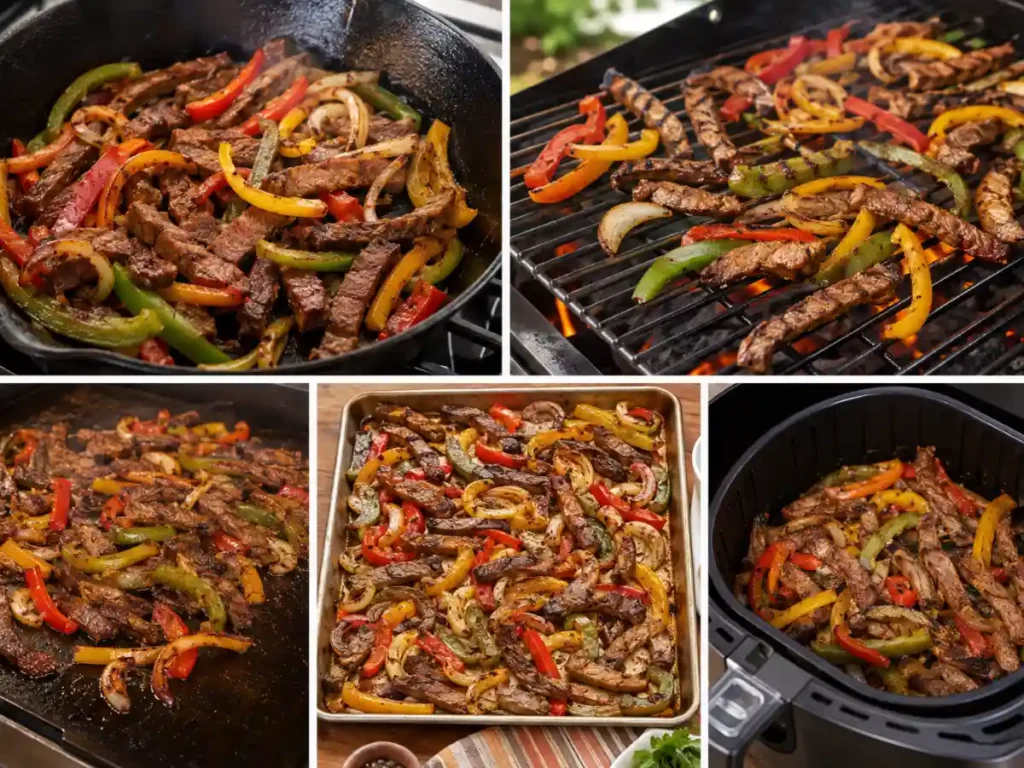
| Method | Effort | Flavor | Best for |
|---|---|---|---|
| Cast-iron skillet | Low | Great char | Weeknights |
| Grill | Medium | Best smoky char | Summer, crowds |
| Blackstone / griddle | Medium | Restaurant sizzle | Big batches |
| Sheet pan / oven | Low | Good, hands-off | Family, no grill |
| Air fryer | Low | Quick, crisp | Small batches |
| Slow cooker | Very low | Tender, shredded-style | Set-and-forget |
Skillet is the everyday default — a hot cast-iron pan gives you great char with minimal fuss.
Grill delivers the best smoky flavor; use a two-zone fire and grill the peppers alongside.
Blackstone or flat-top griddle is the closest thing to a restaurant setup — huge surface, high heat, and that signature sizzle. For times and setup, see my Blackstone griddle recipes.
Sheet pan in the oven is the hands-off hero: spread everything out on a hot pan at 425°F and let the oven do the work. My flank steak fajitas post has the full sheet-pan method step by step.
Air fryer is great for a fast, small batch. Slow cooker gives you a different, fall-apart tender result — less traditional, but perfect for a set-and-forget dinner.
How to Cut Steak for Fajitas
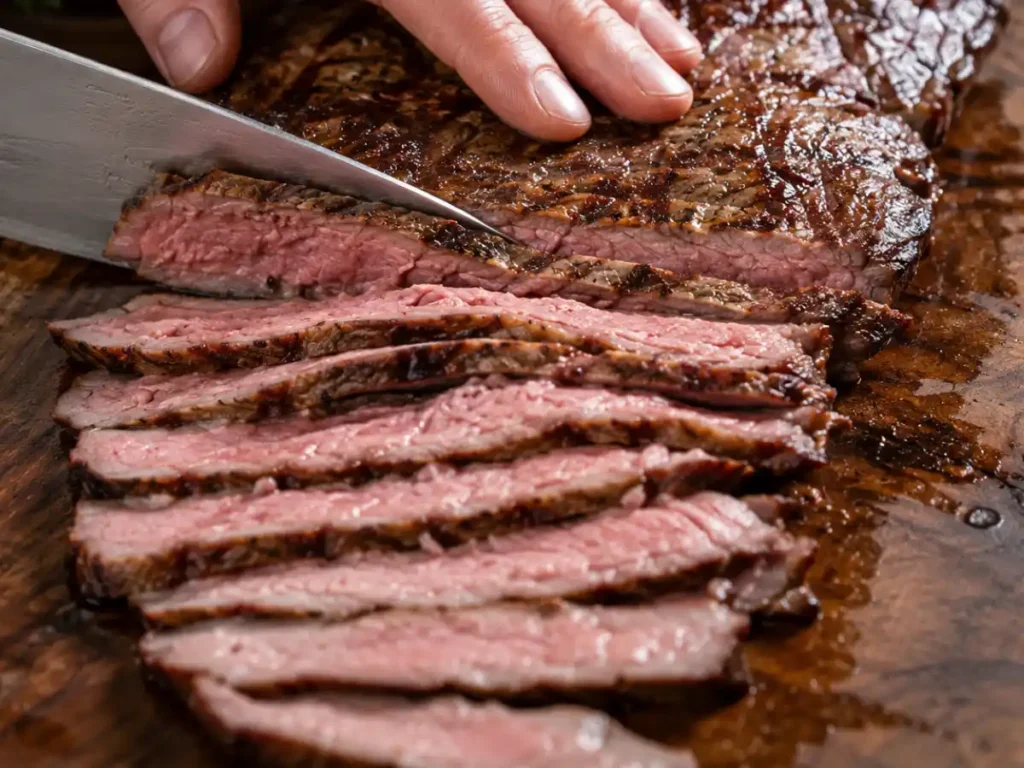
This ten-second step is the difference between tender and chewy. Look at the rested steak and you’ll see the muscle fibers all running one direction — the “grain.” Turn the steak so the grain runs left to right, then slice straight down across it, into thin strips about a quarter-inch wide, holding your knife at a slight angle.
Cutting across the grain shortens those tough fibers to bite-sized lengths. Cut with the grain and you’re left chewing long, stringy strands — even if the steak was cooked perfectly. On cuts like skirt and flank, this one move matters enormously.
Steak vs Chicken vs Both
Not sure which way to go? Here’s the quick version.
- Steak — richer and beefier, cooks fast, a little pricier. The classic.
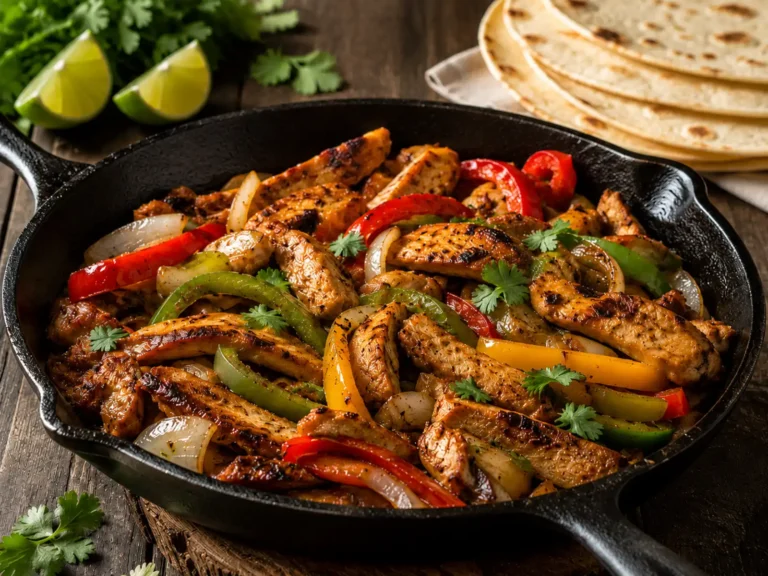
- Chicken — leaner, budget-friendly, and a crowd-pleaser. See my chicken fajitas guide.
- Both — for a party, make a mixed platter. Cook the proteins separately (they have different timing), then serve them side by side. You can even use one marinade for both — my chicken fajita marinade and steak marinade share the same DNA.
A mixed chicken-and-steak spread is always a hit when you’re feeding a crowd with different tastes.
What to Serve With Steak Fajitas
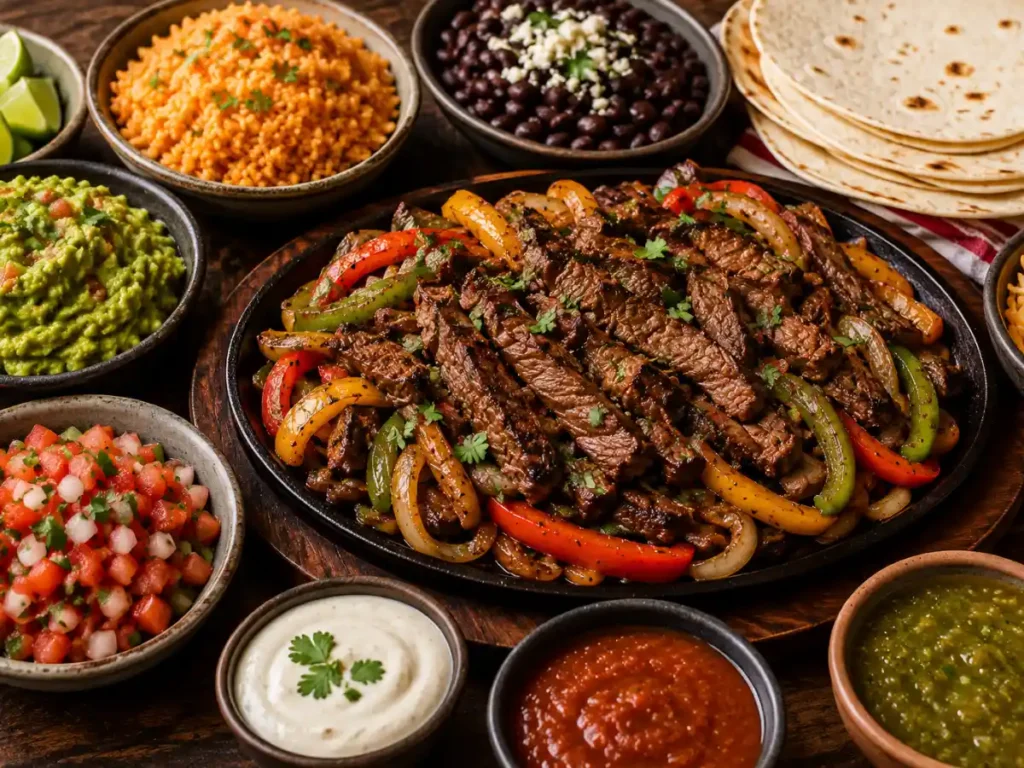
Set everything out and let everyone build their own.
Toppings: guacamole, pico de gallo, sour cream or crema, shredded cheese, salsa verde, cilantro, and lime.
Sides: Mexican rice, refried or black beans, elote or corn salad, and chips with a scoop of cowboy caviar.
To drink: a cold mango margarita rounds it all out.
Steak Fajitas Nutrition
Fajitas are a genuinely balanced meal — lean protein plus a big pile of peppers and onions. Here’s roughly how the fajita variations compare per serving (steak, veggies, and one tortilla):
- Classic version: ~390 calories, ~30g protein
- Lean / low-oil version: ~320 calories
- Chicken fajitas: ~320 calories, very lean
- Mixed chicken and steak: somewhere in between
Load up on the vegetables, go easy on the cheese and sour cream, and choose corn tortillas or a bowl to keep them lighter. It’s an easy meal to make as healthy as you like.
Tips for the Best Fajitas
- Get the pan or grill screaming hot before the steak goes on.
- Don’t overcook — pull the steak at medium-rare; it’s leaner than a ribeye and toughens fast.
- Rest the meat before slicing.
- Slice thin, against the grain.
- Char the veggies, don’t steam them — don’t crowd the pan.
- Warm the tortillas so they’re soft and pliable.
Storage & Leftovers
Store the sliced steak and veggies together with any pan juices in an airtight container for 3 to 4 days. Reheat gently in a hot skillet rather than the microwave, which can toughen the meat. Leftovers are fantastic in fajita bowls, quesadillas, or a breakfast hash.
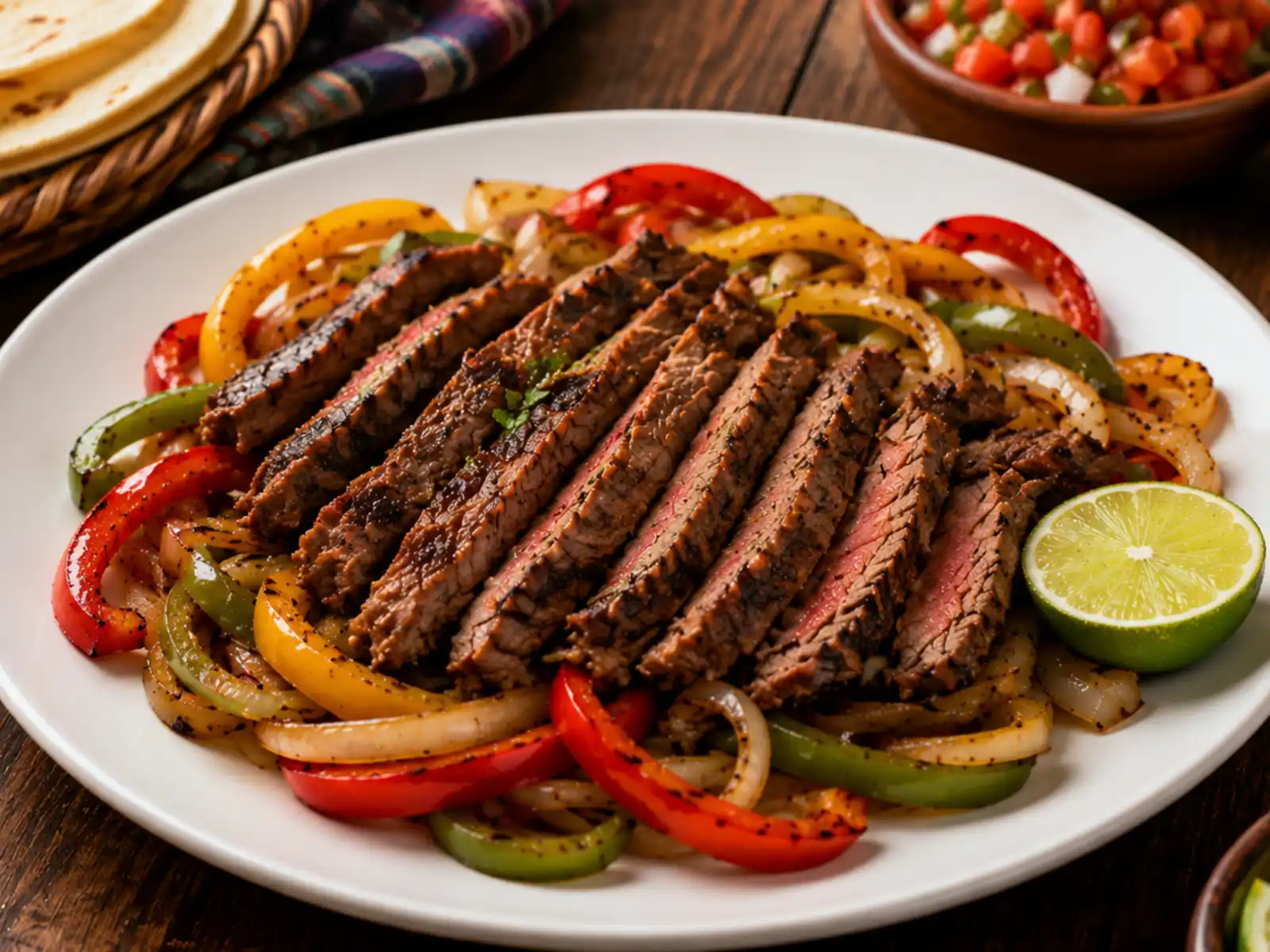

Steak Fajitas
Ingredients
Equipment
Method
- In a bowl, whisk together 2 tablespoons olive oil, lime juice, orange juice, garlic, chili powder, cumin, smoked paprika, salt, and black pepper.
- Add the steak and turn to coat. Cover and refrigerate for 2 to 4 hours. Remove it from the refrigerator about 20 minutes before cooking.
- Heat a large cast-iron skillet over high heat until very hot. Remove the steak from the marinade and let the excess drip off.
- Sear the steak for 3 to 5 minutes per side, depending on thickness, until the center reaches about 130–135°F for medium-rare or your preferred doneness.
- Transfer the steak to a cutting board and rest for 5 to 10 minutes.
- Add the remaining tablespoon of olive oil to the same skillet. Cook the sliced bell peppers and onion over high heat for 6 to 8 minutes, stirring occasionally, until charred and tender-crisp.
- Identify the direction of the steak’s grain, then slice the meat thinly across the grain into strips.
- Return the sliced steak to the skillet with the vegetables and toss briefly. Finish with fresh lime juice and cilantro.
- Serve immediately with warm tortillas, guacamole, pico de gallo, sour cream, shredded cheese, and additional lime wedges.
Notes
Frequently Asked Questions
What type of steak do you use for fajitas?
Skirt steak is the traditional, most flavorful choice, and flank steak is a leaner, widely available alternative. Both are excellent as long as you slice them thin against the grain.
What kind of steak is best for fajitas?
Skirt for the richest classic flavor, flank for a leaner but still tender option, and sirloin if you’re on a budget. Skirt and flank are the two most popular.
Why are restaurant fajitas so tender?
Five things: the right cut, an acidic marinade, very high cooking heat, resting the meat, and slicing thin against the grain. Restaurants do all five consistently.
What ingredients are in steak fajitas?
Steak, bell peppers, onions, oil, lime, fajita seasoning, tortillas, and toppings like guacamole, pico de gallo, sour cream, and cheese.
How do you cut steak for fajitas?
Against the grain. Turn the rested steak so the fibers run left to right, then slice straight across them into thin quarter-inch strips.
How long should you marinate steak for fajitas?
2 to 4 hours is the sweet spot for a citrus-based marinade — don’t go much past 4 hours or the texture suffers. See my steak fajita marinade guide for the full timing.
Can you make steak fajitas on a Blackstone, in the oven, or in the air fryer?
Yes to all three. A Blackstone griddle gives restaurant-style sizzle, a 425°F sheet pan is great hands-off, and an air fryer works well for small batches.
How many calories are in steak fajitas?
Roughly 390 calories per serving with a tortilla, made with steak, peppers, and onions. Lean versions run closer to 320.
Can you make chicken and steak fajitas together?
Absolutely. Cook the proteins separately since they have different timings, then serve them together — perfect for feeding a crowd.
Steak fajitas really come down to a few fundamentals: pick the right steak, cook it hot and fast, don’t overcook it, and slice it thin against the grain. Master those and you’ve got a restaurant-quality dinner on repeat — whichever cut, method, and toppings you choose. 🥩🌶️