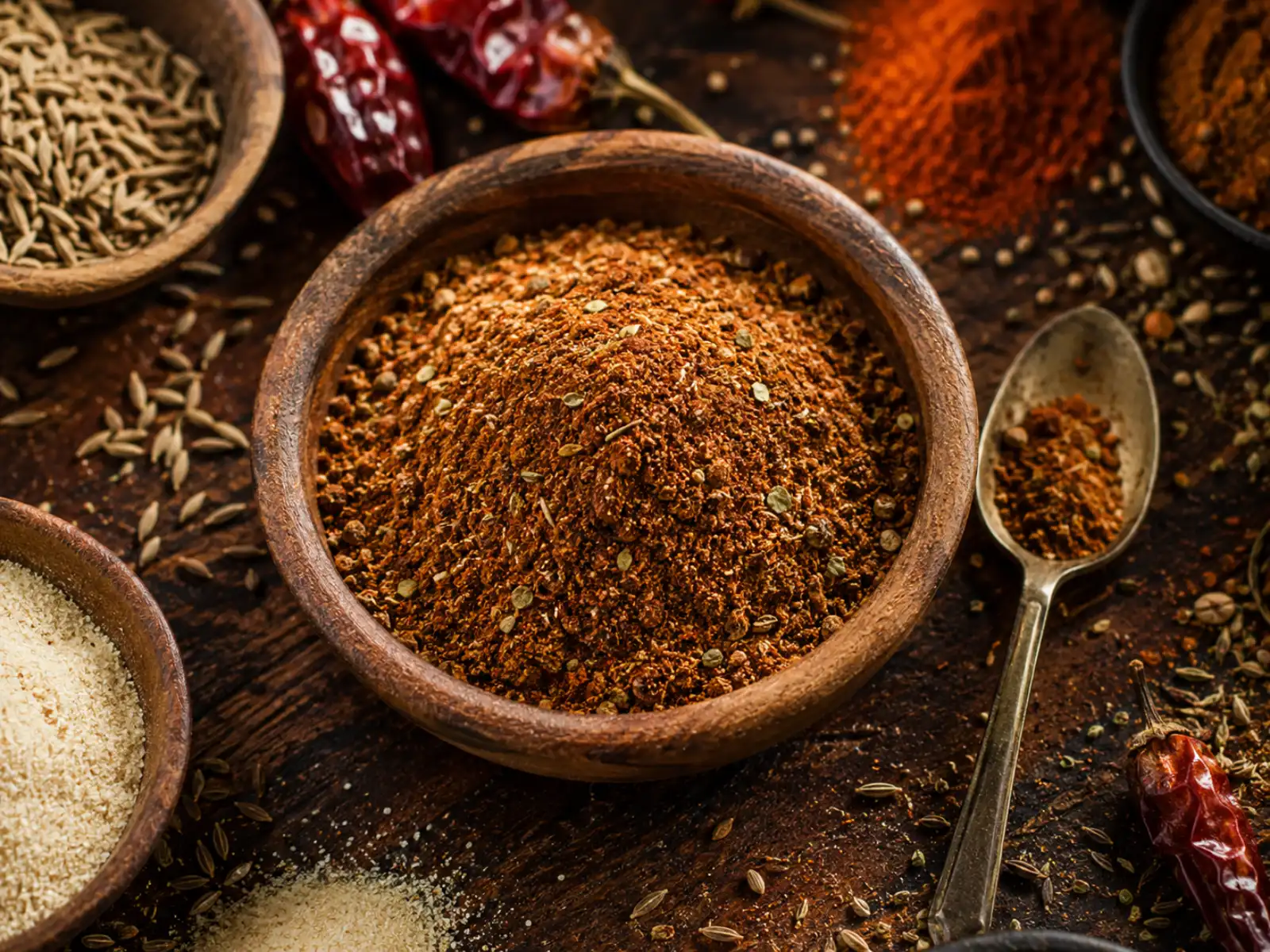
Store-bought seasoning packets are convenient, I’ll give them that — but they’re also loaded with salt, often a little flat, and full of anti-caking fillers you don’t need. Once I started mixing my own chicken fajita seasoning, I never looked back. It’s fresher, punchier, endlessly customizable, and it costs pennies from spices you almost certainly already have.
This blend is tuned specifically for chicken fajitas, with clear packet-equivalent amounts, exactly how much to use per pound, and easy mild-to-spicy variations. And while it’s built for chicken, it’s just as good on beef, shrimp, and veggies. Let’s mix up a batch.
Table of Contents
What Is Chicken Fajita Seasoning?
Chicken fajita seasoning is a Tex-Mex spice blend built around chili powder, cumin, paprika, garlic, and onion, with a touch of heat. It’s what gives fajitas that smoky, peppery, mildly spicy flavor everyone loves.
Think of it as warm and earthy rather than fiery — cumin gives it that authentic taqueria backbone, paprika adds color and gentle sweetness, and a pinch of cayenne brings just enough kick. It’s the same smoky, spice-forward profile you’ll find in dishes like my chipotle chicken. You control the heat and the salt entirely, which is the whole beauty of making it yourself.
Chicken Fajita Seasoning Recipe (Core Mix)
Ingredients for the Seasoning Mix
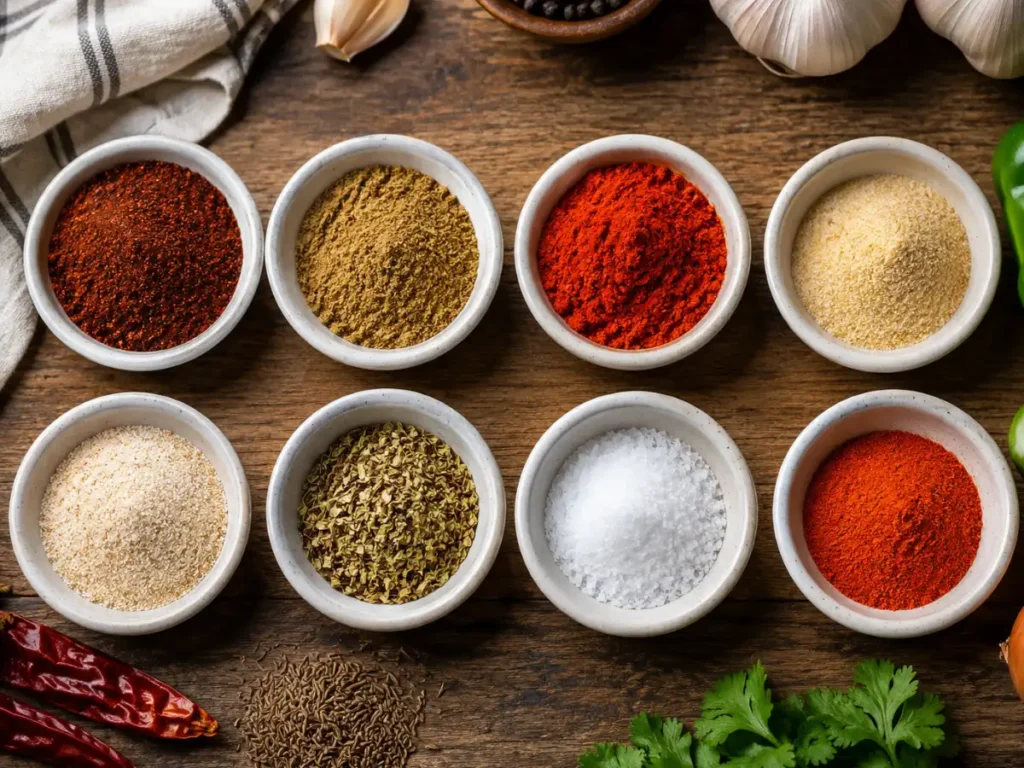
This makes about 3 tablespoons — roughly equal to one store-bought packet:
- 1 tablespoon chili powder
- 1½ teaspoons ground cumin
- 1 teaspoon paprika (smoked or sweet)
- 1 teaspoon garlic powder
- 1 teaspoon onion powder
- 1 teaspoon salt
- ½ teaspoon dried oregano
- ½ teaspoon black pepper
- ¼ teaspoon cayenne (optional, for heat)
- 1 teaspoon sugar (optional, balances the spices)
A quick note on chili powder: in the U.S., “chili powder” is a mild blend (chilies plus cumin, garlic, and oregano) — that’s what this recipe uses. It’s different from “chilli powder” in other countries, which is pure ground hot chili. If you’re serving kids, reach for a mild brand.
Step-by-Step: Mix the Seasoning
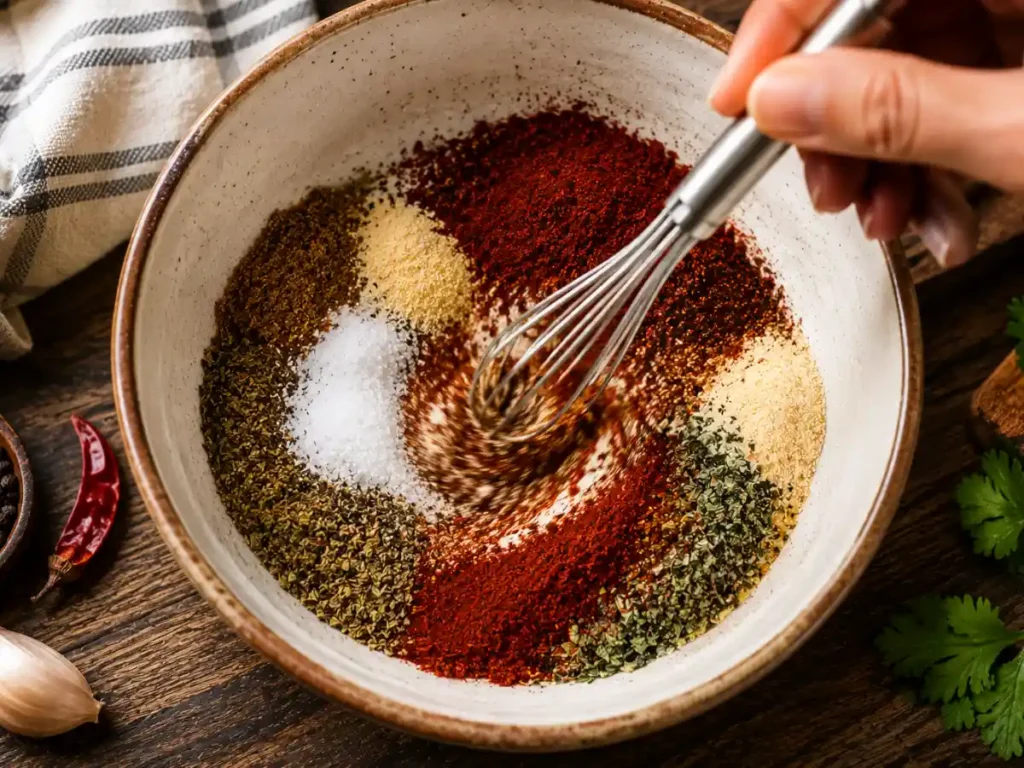
- Add all the spices to a small bowl or jar.
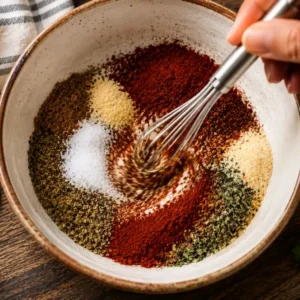
- Whisk (or shake the sealed jar) until evenly combined.
- Store in an airtight container until you’re ready to cook.
That’s it — one batch equals about one packet, and it keeps for months (more on storage below).
Packet Equivalence and Per-Pound Usage
How Much Seasoning Equals One Packet?
One batch of this chicken fajita seasoning — about 3 tablespoons — is the equivalent of a standard 1-ounce store packet. So any recipe that calls for “one packet of fajita seasoning” can use 3 tablespoons of this blend instead, with far better flavor.
How Much to Use Per Pound of Chicken
As a rule of thumb, use about 2 tablespoons of seasoning per pound of chicken. Here’s a quick guide:
| Chicken amount | Seasoning amount | Notes |
|---|---|---|
| 1 lb | 2 tbsp | Serves ~3–4 |
| 2 lb | ¼ cup (4 tbsp) | Family dinner |
| 3 lb | 6 tbsp | Crowd / meal prep |
Adjust to taste — a little extra never hurts, and you can always add more salt separately at the end.
How to Season Chicken With This Mix
Quick Weeknight Method (No Long Marinating)
Short on time? This is all you need:
- Trim the chicken and pat it dry (dry chicken sears better).
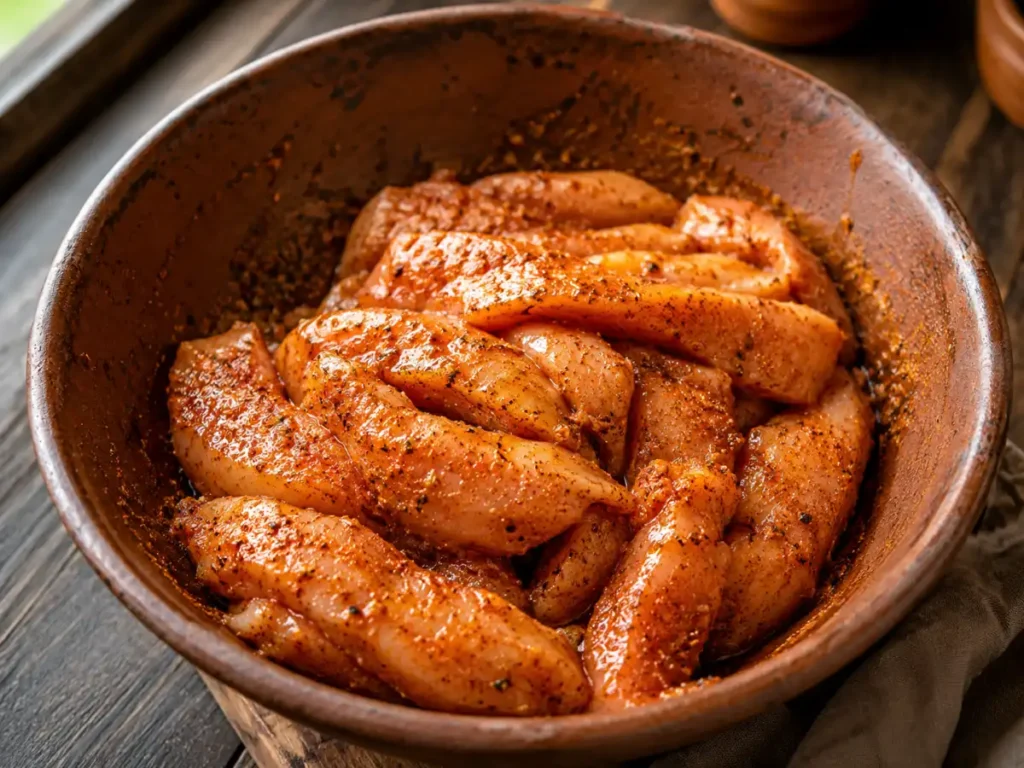
- Toss the strips with a little oil and 2 tablespoons of seasoning per pound, right before cooking.
- Cook in a hot skillet or on a sheet pan until done.
Marinade Method (More Flavor)
Got a little more time? A quick marinade deepens the flavor. Per 1 pound of chicken:
- 2 tablespoons oil
- Juice of 1 lime (or lemon)
- 2 tablespoons seasoning
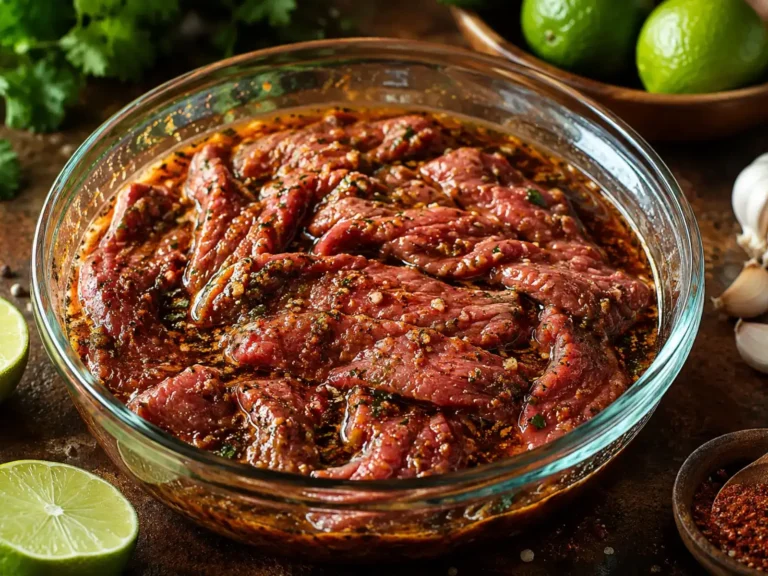
Whisk it together, coat the chicken, and refrigerate. Marinate 30 minutes minimum, 2 to 4 hours for the best flavor. You can go overnight, but the lime’s acid can start to soften the texture past a few hours, so keep it under control. Always marinate in the fridge, and discard any used marinade.
Cooking Options
Once it’s seasoned, cook your fajitas however you like — skillet, sheet pan, grill, or air fryer. For the full step-by-step on each method, see my chicken fajitas recipe, which uses this exact seasoning.
Chicken Fajitas: Example Usage
You don’t need a full recipe here — just enough to see the seasoning in action.
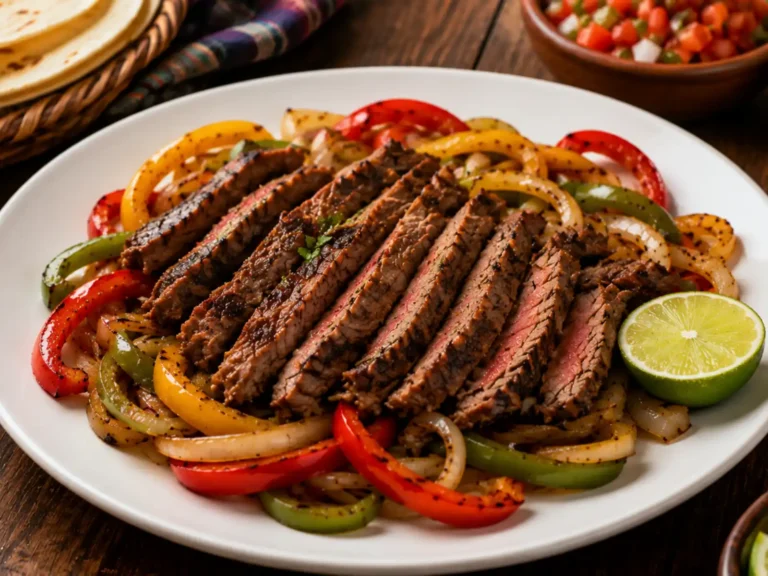
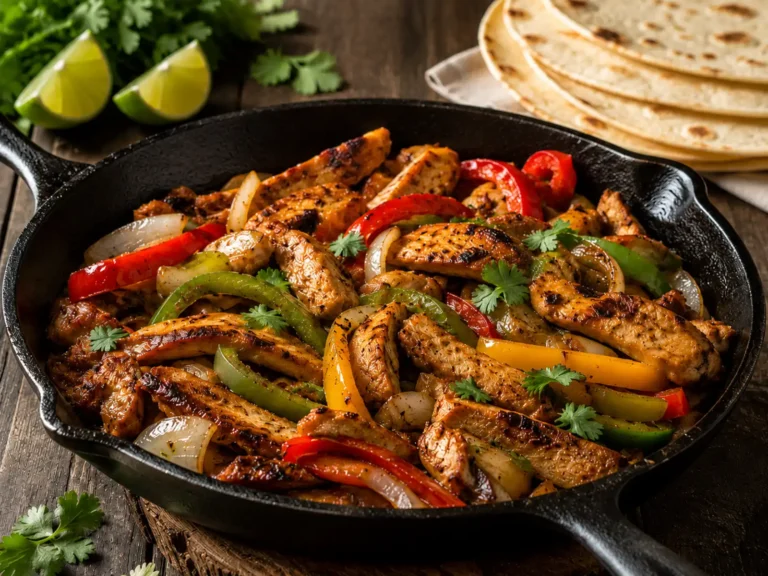
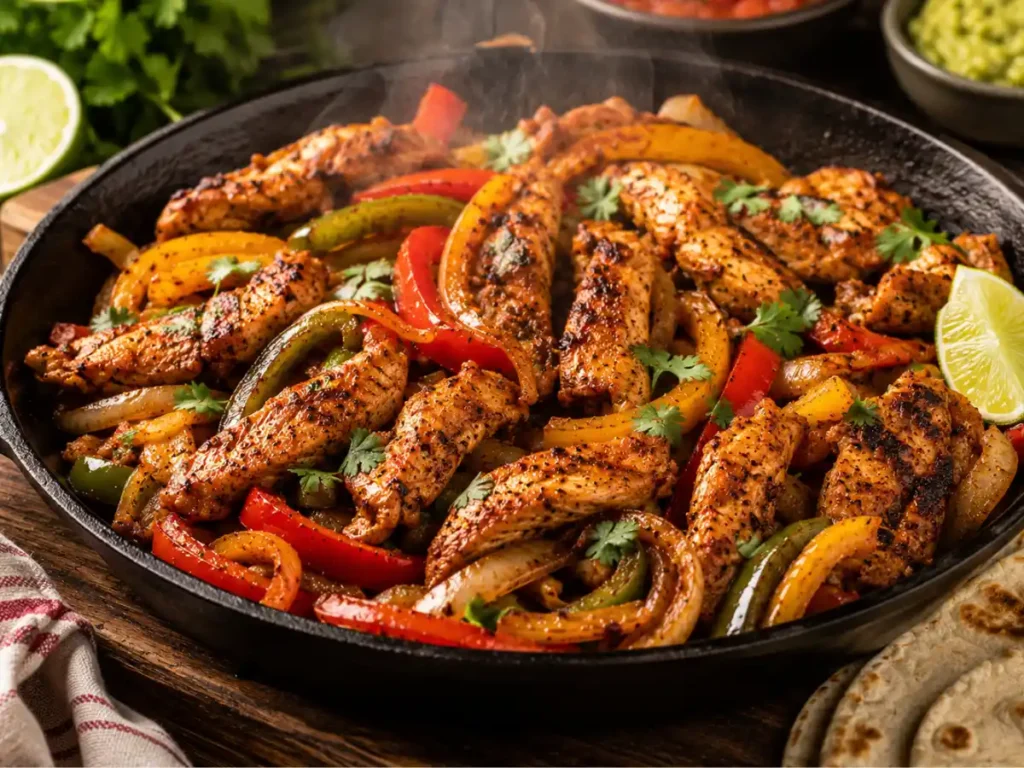
Example: Skillet Chicken Fajitas for 1 lb Chicken
- Season 1 pound of chicken strips using the quick or marinade method above.
- Sauté sliced peppers and onions in a hot skillet until tender-crisp.
- Sear the chicken, combine, and serve with warm tortillas and toppings.
Sheet-Pan Fajitas (Hands-Off Option)
Toss the seasoned chicken, peppers, and onions with a little oil, spread on a sheet pan, and roast at 425°F for about 20 minutes. Minimal effort, great char.
For the complete recipe with all four cooking methods, head to my full chicken fajitas guide.
Variations: Mild, Spicy, Smoky & Health-Conscious
Heat Level: Mild, Medium, Hot
- Mild: leave out the cayenne (and use a mild chili powder) — perfect for kids.
- Medium: the recipe as written.
- Hot: add extra cayenne, or stir in a little chipotle powder for smoky heat.
Smoky vs Classic
- Smoky: use smoked paprika (or add chipotle).
- Classic: use regular sweet paprika.
Low-Sodium / Salt-Free Option
Cut the salt in half, or leave it out entirely and salt the chicken separately to taste. Since packets are notoriously high in sodium, this is one of the biggest reasons to make your own — the American Heart Association notes most of our sodium comes from packaged and processed foods, and homemade blends let you control it.
Low-Carb / Sugar-Free Option
Simply omit the optional sugar. To keep the flavor rich without it, lean a little harder on the smoked paprika, cumin, or garlic.
Ingredient Notes & Substitutions
A few notes on the key players:
- Chili powder — the blend that forms the base; choose a mild brand for kids.
- Paprika — sweet for classic color and mild sweetness; smoked for depth.
- Cumin — the earthy backbone; generous but not overpowering.
- Garlic & onion powders — the savory foundation.
- Sugar (optional) — balances the heat and any bitterness.
- Cayenne — pure heat; start with a pinch if you’re cautious.
Easy substitutions: no onion powder? Use a bit extra garlic powder. No paprika? The blend still works — you’ll just lose a little color and sweetness.
Using the Seasoning Beyond Chicken
Steak, Shrimp & Veggie Fajitas
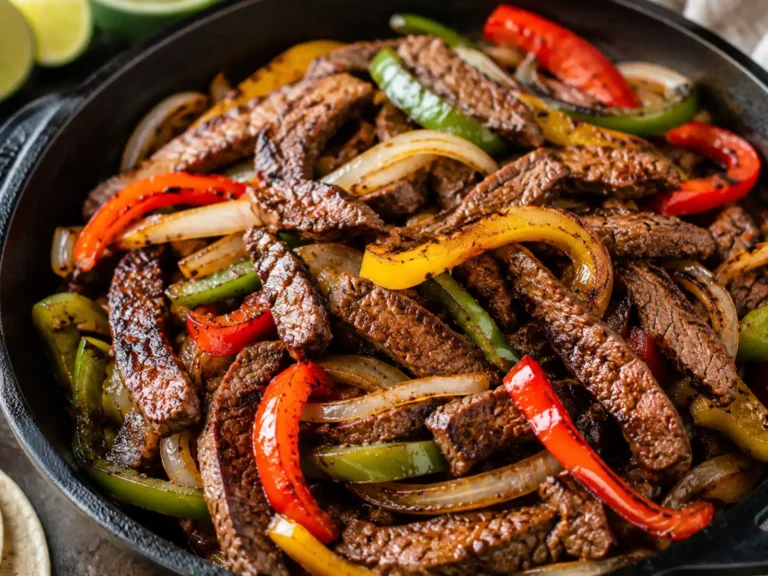
This blend isn’t chicken-only. Use about the same 2 tablespoons per pound for steak; go a little lighter for shrimp (they’re delicate and cook fast). For veggie fajitas, toss sliced peppers, onions, and mushrooms with oil and seasoning before roasting or sautéing. It’s a natural fit for a wider Mexican spread too — serve your fajitas alongside beef birria tacos for a real feast.
Other Ways to Use This Mix
It’s a fantastic all-purpose Tex-Mex seasoning — try it on burrito bowls, taco salads, roasted potatoes or veggies, grilled tofu or tempeh, even popcorn. It’s also great sprinkled over a taco pizza for taco night. Use a light hand on non-meat dishes and taste as you go.
Fajita Seasoning vs Taco Seasoning
They’re close cousins, but not identical. Taco seasoning usually leans more chili-forward, with more chili powder and oregano. Fajita seasoning leans into cumin, paprika, and bright pepper flavors for that signature Tex-Mex taste. In a pinch they’re interchangeable — just expect a slightly different flavor.
Storage, Shelf Life & Batch Prep
How to Store the Seasoning
Keep it in an airtight container or small labeled jar in a cool, dark place, away from heat and moisture (not right above the stove).
How Long It Lasts
It’s best within about 6 months, and good up to a year if your spices were fresh to begin with. Signs it’s past its prime: weak aroma, faded color, or clumping.
Make-Ahead Packets
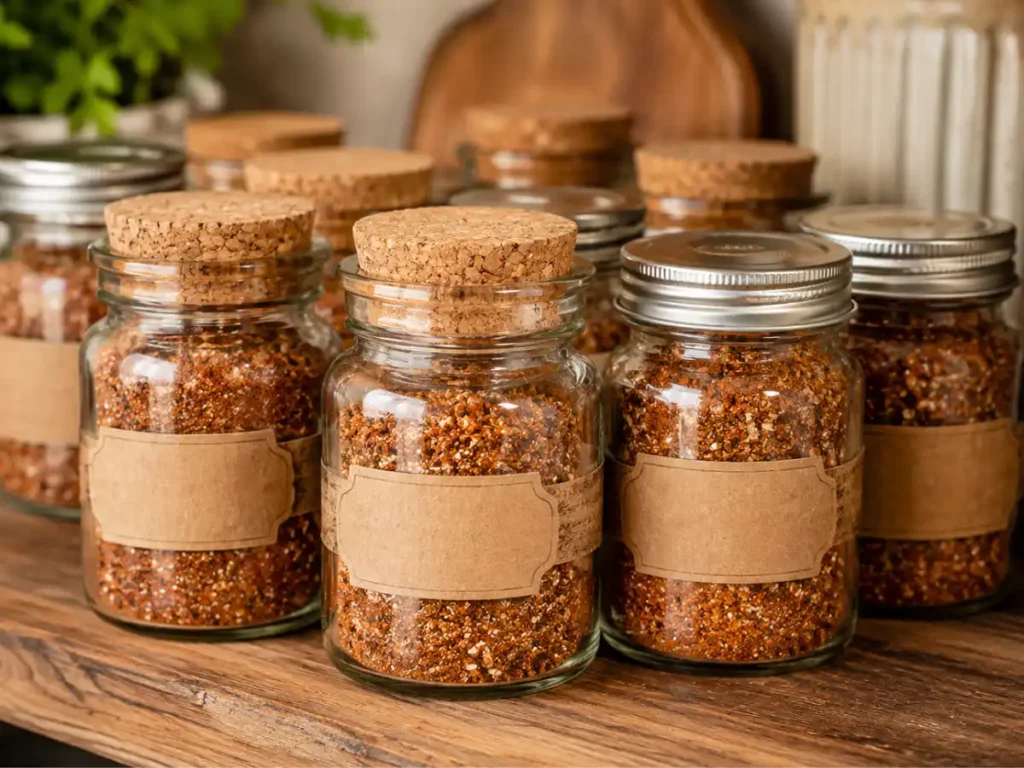
For frequent fajita nights, multiply the recipe and portion it into small jars or bags — 3 tablespoons each, so every one equals a packet. It’s a huge time-saver for meal prep, and it makes a lovely homemade gift too.
Frequently Asked Questions
How much seasoning should I use for 2–3 lb of chicken?
Use about 2 tablespoons per pound — so ¼ cup for 2 pounds, or 6 tablespoons for 3 pounds. Adjust to taste and add salt separately if needed.
Can I marinate chicken overnight with this seasoning?
You can, but 2 to 4 hours is ideal. Because the marinade includes lime or lemon juice, going much past overnight can soften the chicken’s texture.
How do I make this less spicy for kids?
Leave out the cayenne and use a mild chili powder. The blend will still be flavorful and warm without the heat.
Can I use this seasoning for tacos?
Yes — it works well on tacos too. It’s a touch more cumin-and-paprika forward than classic taco seasoning, but the difference is subtle.
Is this seasoning gluten-free and dairy-free?
The spices themselves are naturally gluten-free and dairy-free. If that matters for your diet, just check that each individual spice brand is certified, since some can be processed with additives.
Once you’ve got a jar of homemade chicken fajita seasoning on the shelf, weeknight fajitas become effortless — and so much more flavorful than anything from a packet. Mix a batch, make a few extra “packets” while you’re at it, and put it to work in my chicken fajitas recipe. 🌶️
Chicken Fajita Seasoning

Equipment
- Small Bowl or Jar
- Airtight Container
Ingredients
- 1 tbsp chili powder American-style mild blend
- 1 1/2 tsp ground cumin
- 1 tsp paprika smoked or sweet
- 1 tsp garlic powder
- 1 tsp onion powder
- 1 tsp salt reduce or omit for low-sodium
- 1/2 tsp dried oregano
- 1/2 tsp black pepper
- 1/4 tsp cayenne pepper optional, for heat
- 1 tsp sugar optional; omit for sugar-free
Instructions
- Add all the spices to a small bowl or jar.
- Whisk together, or seal the jar and shake, until evenly combined.
- Store in an airtight container in a cool, dark place until ready to use.