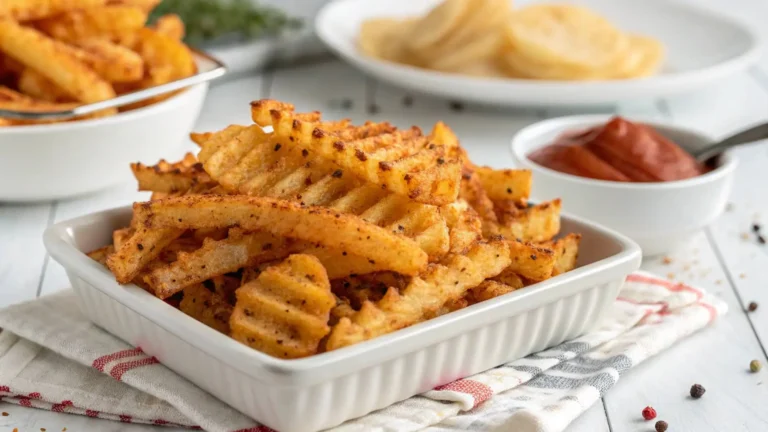

If you’ve recently wondered, “Did Chick-fil-A change their waffle fries?” you’re not alone. Fans have been asking why the fries taste different, whether the recipe changed, and whether Chick-fil-A is changing its fries again.
The short answer: yes, Chick-fil-A’s waffle fries have been part of a recent recipe-change debate. Pea starch was added in late 2024 to help the fries stay crispier longer, but Chick-fil-A has since removed pea starch from the waffle fry recipe. There has also been a separate packaging update, which made even more customers pay attention to the fries.
Here’s what changed, what Chick-fil-A has confirmed, and why your waffle fries may still taste different from one visit to another.
Table of Contents
Did Chick-fil-A Change Their Waffle Fries?
Yes, Chick-fil-A did change their waffle fries. The biggest recipe-related change was the addition of pea starch in late 2024, which was meant to help the waffle fries stay crispier for longer. After customers complained about changes in taste and texture, Chick-fil-A later removed pea starch from the waffle fry recipe.
That is why so many people are searching for whether Chick-fil-A changed their waffle fries. Some fans noticed the fries tasted different, others said the texture changed, and many started comparing recent orders to the fries they remembered before the update.
There was also a separate packaging update, with new waffle fry cartons rolling out to many locations. That packaging change made even more people pay attention to the fries, but the main recipe discussion is about the pea starch change and its removal.
So the simple answer is: Chick-fil-A’s waffle fries did go through a recent recipe change, and then that change was reversed. Your fries may still taste different depending on freshness, hold time, oil condition, and the location you visit.
The official Chick-fil-A Waffle Potato Fries page currently describes the fries as waffle-cut potatoes cooked in canola oil and sprinkled with sea salt.
Is Chick-fil-A Changing Their Fries?
Yes — Chick-fil-A has changed its waffle fries more than once recently. The first major change happened in late 2024, when pea starch was added to help the fries stay crispier longer. That update led many customers to say the fries tasted different or had a different texture.
The newer update is that Chick-fil-A removed pea starch from the waffle fry recipe. That is why people are still asking if Chick-fil-A is changing their fries. For many fans, the fries may now taste closer to the older version, but the experience can still vary by location, freshness, oil condition, and how long the fries sit before being served.
So if you recently noticed a difference, you are probably reacting to a mix of real recipe updates, packaging changes, and normal location-to-location variation.
What Changed in the Chick-fil-A Waffle Fry Recipe?
The biggest change people are talking about is the waffle fry coating. Chick-fil-A added pea starch in late 2024 to help the fries stay crispier longer, but many customers noticed a difference in taste and texture.
After the backlash, Chick-fil-A removed pea starch from the waffle fry recipe. That means the current debate is not just about whether the fries changed once — it is about the fact that the recipe was updated, customers reacted, and then Chick-fil-A adjusted the recipe again.
The fries are still waffle-cut potatoes cooked in oil and finished with sea salt, but small ingredient changes can make a big difference in how fast food fries taste, crisp, and hold their texture. That is why some customers noticed the change right away, while others may only notice differences depending on the restaurant location or how fresh the fries are.
Does Chick-fil-A Waffle Fry Recipe Contain Pea Starch?
No. Chick-fil-A’s current waffle fry recipe does not contain pea starch.
This question matters because pea starch was the ingredient behind much of the recent customer debate. It was added in late 2024 to help the fries stay crispier longer, but many fans said the fries tasted different or had a different texture. Chick-fil-A later removed pea starch from the recipe, which is why people are still talking about whether the fries changed.
What Is Going On With Chick-fil-A Fries?
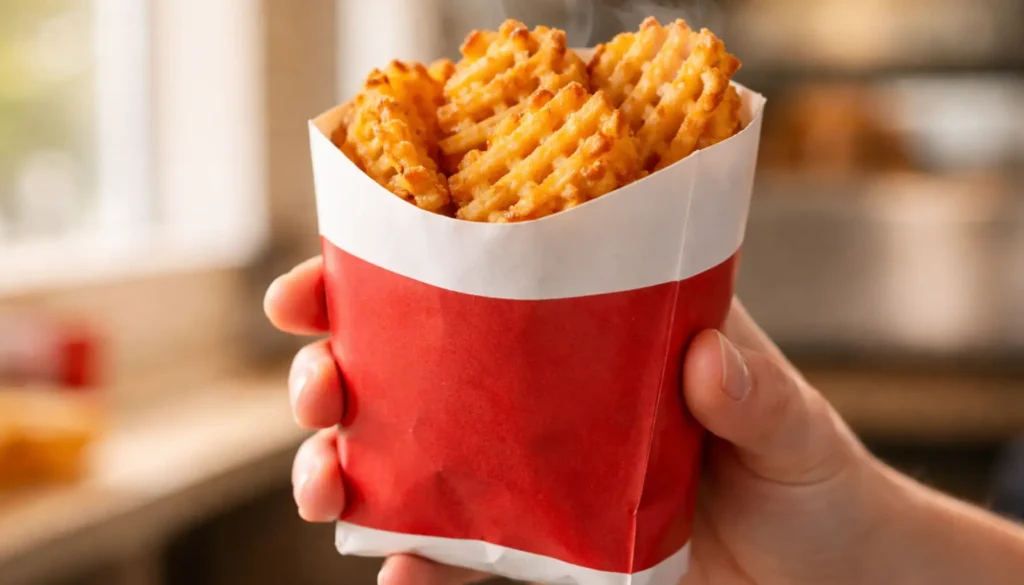
The short version: a lot of customers noticed something felt different, and the conversation spread quickly online.
When a beloved fast-food item shows up with new packaging, people pay closer attention to the product itself. That heightened attention, combined with real variation in fry quality across locations and visits, created the conditions for this debate to take off.
Chick-fil-A hasn’t helped itself by having slightly different ingredient language across its own pages. Customers reading the allergen FAQ see different oil wording than customers on the main product page. When you add social media threads and word of mouth into that mix, a packaging change and some location-level inconsistency can start to feel like a secret recipe overhaul.
To be fair to the people asking: the question is reasonable. The experience of the fries can genuinely vary, even without an official change announcement.
Why Do My Chick-fil-A Fries Taste Different?
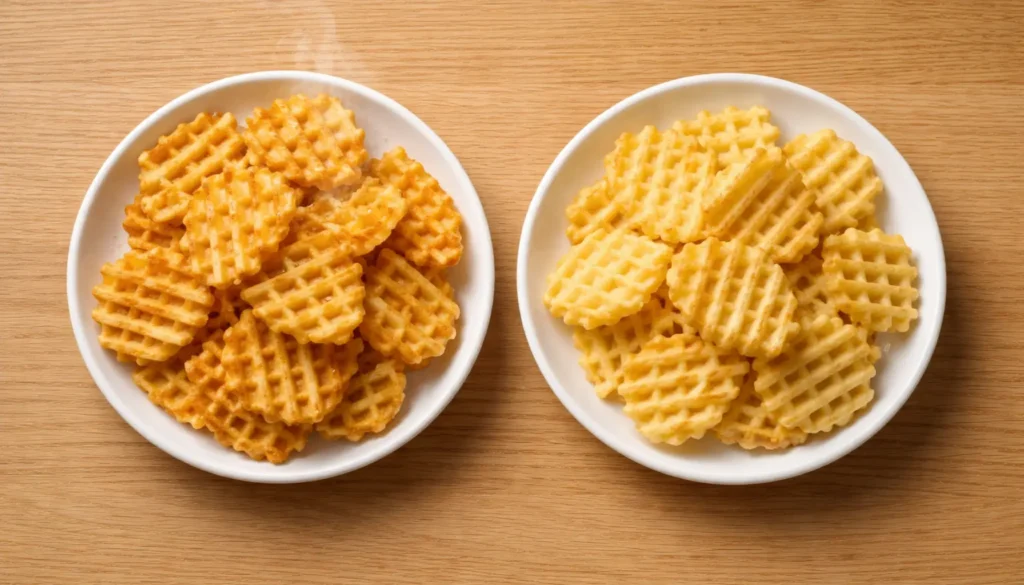
Even without a confirmed recipe change, fries can feel different from one visit to the next. There are a few practical reasons for this.
Freshness matters more than most people realize. Waffle fries that come out of the oil hot and go straight to you will taste and feel different from fries that have been sitting under a heat lamp. Texture and crispiness are especially sensitive to hold time the longer fries rest, the softer they get.
Oil condition also plays a role. Frying oil degrades over time and with use. Fries cooked in fresher oil at one location will have a different flavor profile than fries cooked in older oil at another.
Batch timing and kitchen flow can add another layer of variation. Busy locations cycle through batches faster, which often means fresher fries. Quieter locations may hold batches longer.
Finally, Chick-fil-A’s own product page states that ingredients and nutrition information may differ by restaurant location. That’s a direct acknowledgment that the experience isn’t guaranteed to be identical everywhere. Any or all of these factors could explain why your fries seemed different, even if the recipe itself hasn’t changed.
Did Chick-fil-A Announce a Recipe Change for Its Waffle Fries?
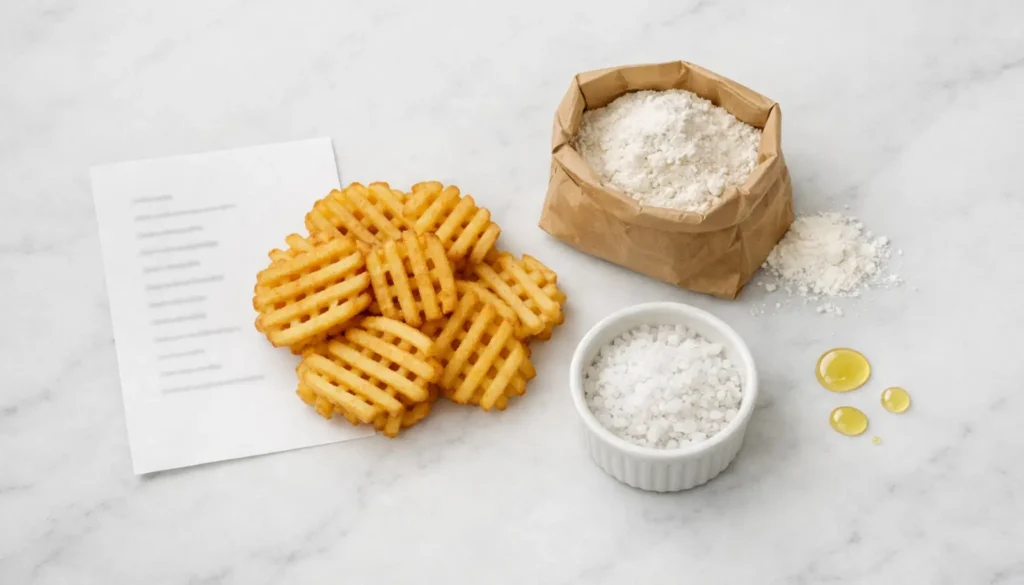
This section matters because the wording in the search query is strong “announce” implies something official and public and the honest answer is that we did not find a clear announcement of that kind.
What we found:
- Packaging change: Confirmed. New waffle fry cartons are rolling out nationally, with portion sizes staying the same.
- Current ingredient list: The product page lists potatoes, canola oil, vegetable oil, modified food starch, rice flour, salt, leavening ingredients, dextrin, xanthan gum, and dextrose, and it notes that ingredients may vary by location.
- Pea starch: Chick-fil-A’s support page directly states that the waffle fry recipe does not contain pea starch.
- Oil discrepancy: The product page says canola oil; the allergen FAQ says highly refined soybean oil. Both appear on official Chick-fil-A pages.
None of that adds up to an official recipe-change announcement. What it does show is that Chick-fil-A’s own public pages aren’t fully consistent, which gives the rumor mill plenty of material to work with. If Chick-fil-A does formally announce a change at some point, that would be on their newsroom or product pages and it hasn’t appeared there yet based on what we reviewed.
The product page and the allergen FAQ don’t describe the oil in exactly the same way and according to the FDA’s nutrition labeling guidelines, ingredient listings must reflect what is actually used in the final product, which is why even small wording differences can feel significant to consumers reading closely.
Are Chick-fil-A Fries Better Now?
This one depends entirely on what you value in a waffle fry.
If your priority is crispiness, you may have had experiences on both sides of that line a batch that hits perfectly and one that falls a little flat. The factors covered above (freshness, hold time, oil condition) all affect how crispy a fry feels, regardless of whether the recipe has changed.
If your priority is flavor consistency, location variation is the more likely culprit than any recipe update.
Some people online have said the fries taste better now. Others say they prefer the older version. Without a confirmed recipe change, it’s genuinely hard to say whether those opinions are responding to an actual formula difference or to natural variation across batches and locations. “Better” is also deeply personal when it comes to food texture preference, salt sensitivity, and what you remember from past visits all shape how a current fry registers.
The safest take: if you’re getting great fries at your location, you’re probably getting them fresh. If they’ve been disappointing, it’s worth asking for a fresh batch or trying at a different time of day.
Final Verdict
Yes, Chick-fil-A’s waffle fries did go through a recent recipe-related change. Pea starch was added in late 2024 to help the fries stay crispier longer, but Chick-fil-A later removed pea starch from the waffle fry recipe after customer backlash.
There was also a separate packaging update, with new waffle fry cartons rolling out to many locations while portion sizes stayed the same. That combination of recipe discussion, packaging changes, ingredient wording, and customer reactions explains why so many people are asking what happened to Chick-fil-A fries.
If your fries still taste different from one visit to another, the most likely reasons are freshness, hold time, oil condition, batch timing, and location-to-location variation. The recipe debate explains part of the conversation, but normal restaurant variation can still change how crispy, salty, or fresh the fries feel.
Want to make a crispier version at home? Try our crispy Chick-fil-A waffle fries recipe.
If you’d rather skip the uncertainty and make a batch that you control entirely, our crispy Chick-fil-A waffle fries recipe walks you through the full process at home.And if you want another easy potato side for dinner, try these garlic parmesan potato wedges.
FAQ
Did Chick-fil-A change their waffle fries?
Yes. Chick-fil-A’s waffle fries were changed when pea starch was added in late 2024 to help them stay crispier longer. Chick-fil-A later removed pea starch from the waffle fry recipe after customer backlash.
Is Chick-fil-A changing their fries?
Chick-fil-A has already changed its waffle fries more than once recently. The main change was the addition of pea starch, followed by its removal. There has also been a separate packaging update.
What changed in Chick-fil-A waffle fries?
The biggest recipe-related change was pea starch. It was added to help the fries stay crispier, but many customers said the taste and texture felt different. Chick-fil-A later removed pea starch from the recipe.
Does Chick-fil-A waffle fry recipe contain pea starch?
No. Chick-fil-A’s current waffle fry recipe does not contain pea starch.
Why do Chick-fil-A fries taste different?
Chick-fil-A fries can taste different because of recipe updates, freshness, hold time, oil condition, batch timing, and location-to-location variation.
Are Chick-fil-A fries better now?
That depends on personal preference. Some fans are happy pea starch was removed, while others may still notice differences based on freshness, crispiness, and location.
Did Chick-fil-A change the waffle fry packaging?
Yes. Chick-fil-A also rolled out new waffle fry cartons at many locations, while saying portion sizes stayed the same.