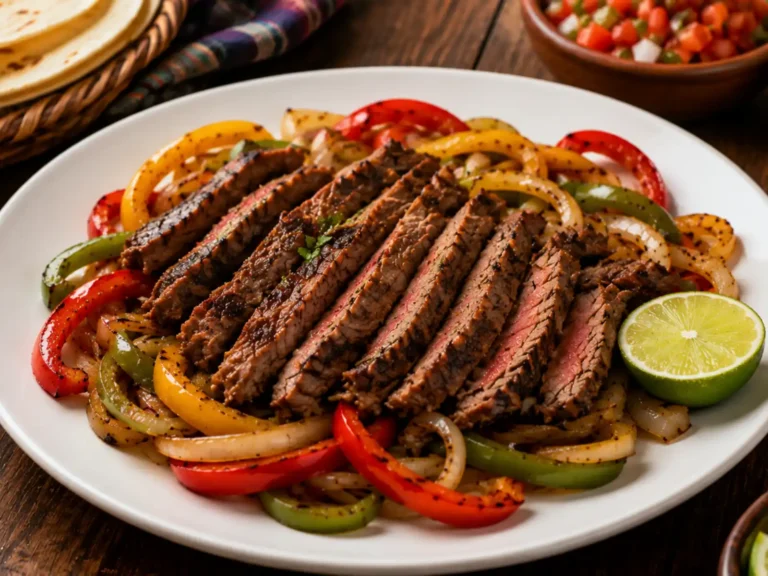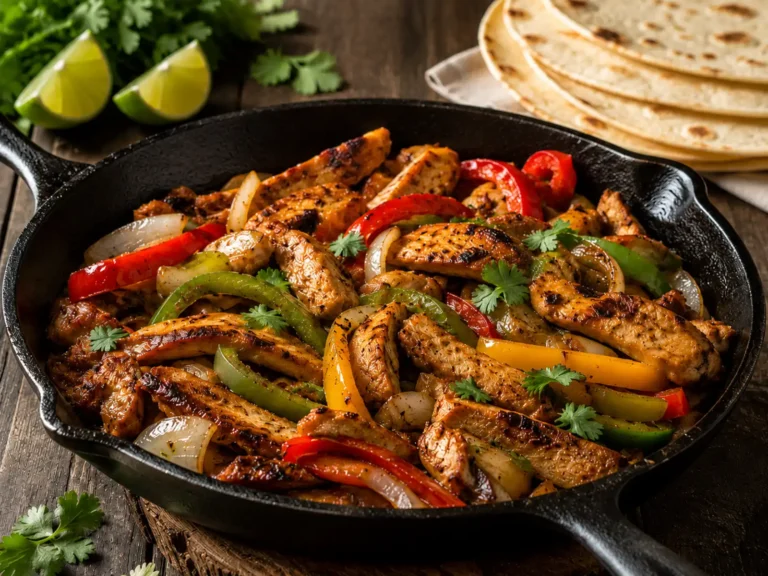
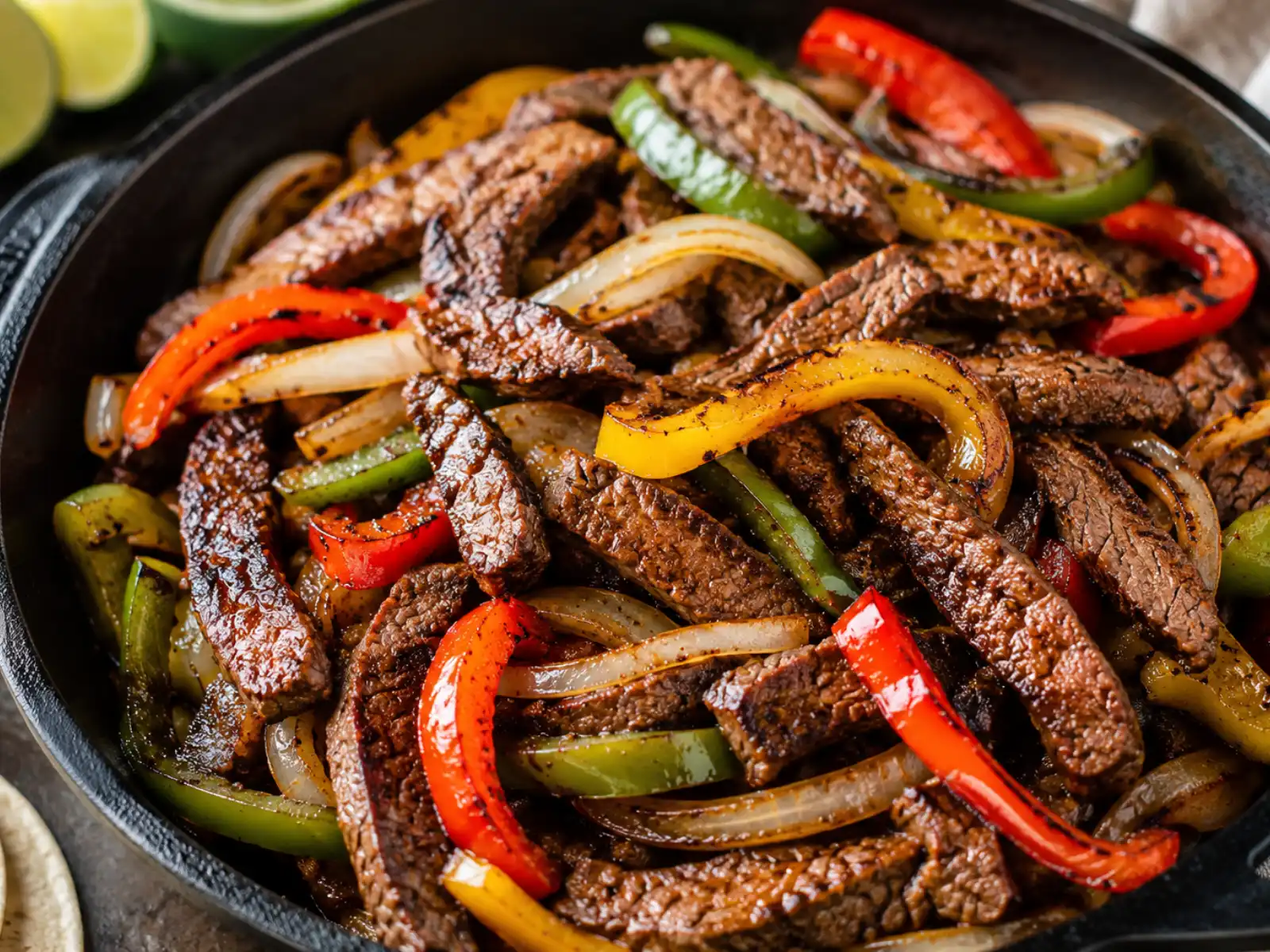
Flank steak makes fantastic fajitas. It’s lean, deeply beefy, easier on the wallet than a premium cut, and it has a big obvious grain that — once you know what to look for — makes it almost foolproof to slice. But it’s also unforgiving. Overcook it and it turns to leather. Crowd your peppers and they steam into a sad, watery pile. Slice it the wrong way and even a perfectly cooked steak eats tough.
Get those three things right and you’ll have flank steak fajitas that genuinely beat the restaurant. And here’s what you won’t find anywhere else: I’m giving you three ways to cook them — cast-iron skillet, grill, and sheet pan in the oven (no grill, barely any dishes). I’ve made these all three ways on repeat: on the stove on busy weeknights, on the grill in summer, and on a sheet pan on lazy Tuesdays when I couldn’t face the washing up. If chicken is more your thing, my chicken fajitas recipe has you covered. And if you want the full rundown on cuts, methods, and marinades, my complete steak fajitas guide covers it all.
Table of Contents
Why Flank Steak Works for Fajitas
Flank is a lean, flat cut from the belly of the cow, and it brings three things to flank steak fajitas: big beefy flavor, a budget-friendly price, and a uniform shape that makes slicing easy. Its long, visible grain is actually a feature — you can see exactly which way the fibers run, which takes the guesswork out of the most important step.
Flank vs skirt? Skirt steak is the traditional fajita cut — looser-grained, fattier, more intense. Flank is leaner, milder, and far easier to find at most supermarkets. Both are excellent; flank just needs a slightly gentler hand with the heat. For the full cut comparison and the marinade science behind why each one behaves differently, see my steak fajita marinade guide.
Ingredients You’ll Need
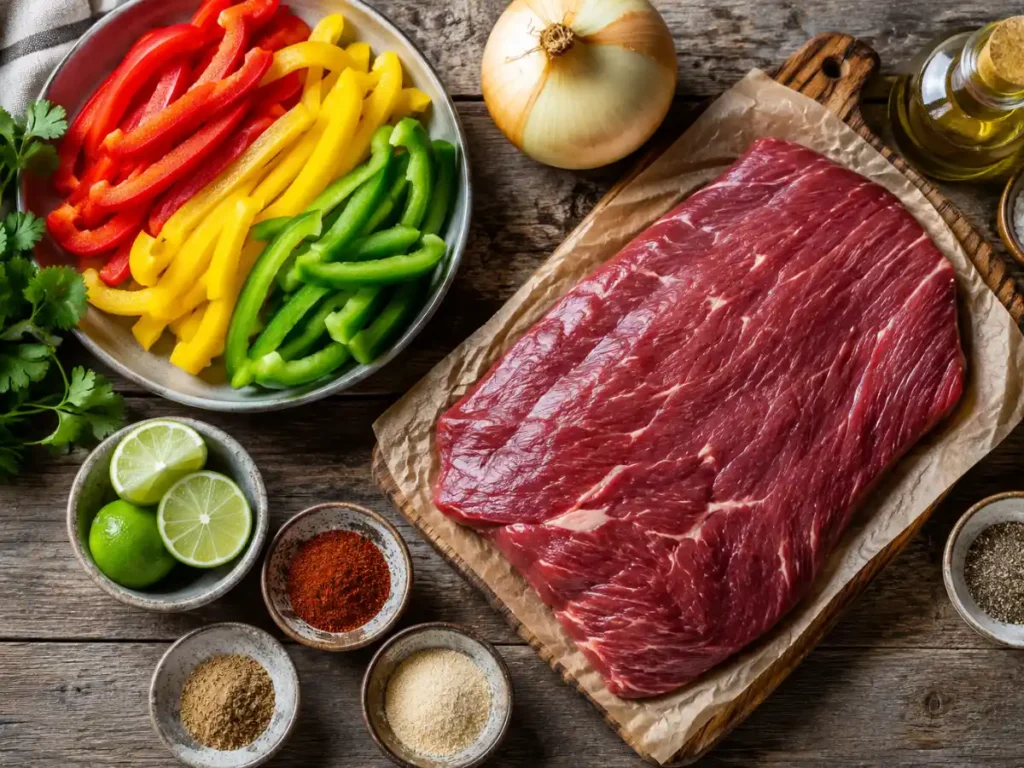
For 4 to 6 servings (full measurements in the recipe card):
- Flank steak — 1½ to 2 pounds.
- Bell peppers — 3, mixed colors, sliced into strips.
- Onion — 1 large, sliced.
- Oil — avocado or another high-smoke-point oil.
- Lime — for finishing.
- Fajita seasoning — use about 2 to 3 tablespoons of my homemade fajita seasoning for a balanced blend, or your own mix of chili powder, cumin, smoked paprika, garlic and onion powder, salt, and pepper.
- Tortillas and toppings — flour or corn tortillas, guacamole, pico de gallo, sour cream, cheese, cilantro.
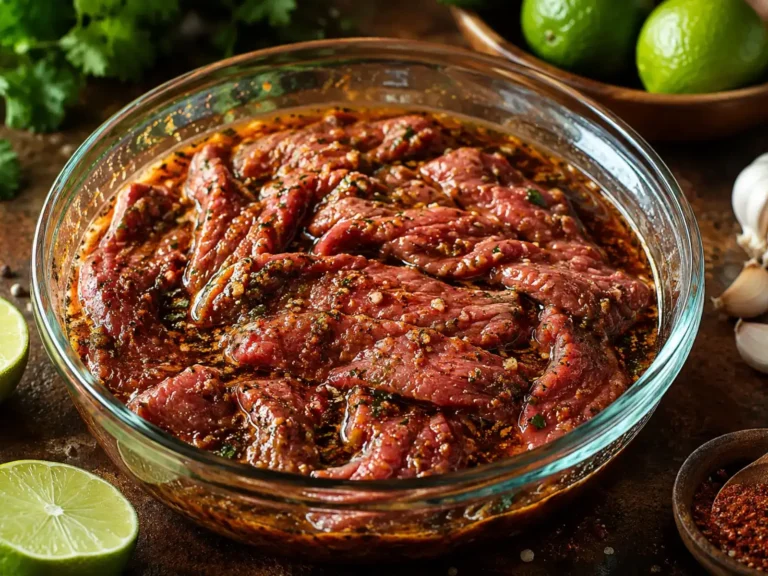
About the marinade: flank benefits enormously from marinating — aim for 2 to 4 hours, and don’t push much past 4 with a citrus-based marinade or the texture suffers. I won’t rehash the details here, because I’ve written a full guide: my steak fajita marinade post covers the exact recipe, the timings for every marinade type, and the variations. Use that, then come back here to cook.
No Time to Marinate? Try the Reverse Method
Forgot to plan ahead? There’s a genuinely clever workaround: marinate it after cooking. Sear the flank as usual, then let it rest for 10 minutes in a mixture of lime juice, minced garlic, olive oil, and a pinch of salt. The hot steak drinks it up as it rests, and you get all the bright, garlicky flavor with none of the acid-texture risk that comes from a long soak.
It’s not a substitute for a proper marinade, but it’s a very good Plan B — and honestly, on a weeknight it’s often my Plan A.
How to Cook Flank Steak Fajitas — Three Ways
Every other recipe gives you one method. Here are three ways to cook flank steak fajitas, whatever the weather and whatever the kitchen.
Method 1: Cast-Iron Skillet (the weeknight default)
- Get a cast-iron skillet screaming hot over medium-high.
- Pat the steak dry, oil it, and sear the whole steak — don’t slice it first — for about 3 to 5 minutes per side.
- Pull it at 130–135°F and set it aside to rest.
- Cook the peppers and onions in the same pan (see the char section below).
- Slice the steak against the grain and toss everything together.
Method 2: Grill (the best char)
- Build a two-zone fire — hot coals on one side, nothing on the other.
- Sear the steak over direct heat, about 4 to 5 minutes per side, then move it to the cooler side to finish if it needs more time.
- Grill the peppers and onions whole or in a basket, then slice.
- Rest, slice against the grain, serve.
Method 3: Sheet Pan in the Oven (no grill, barely any dishes)
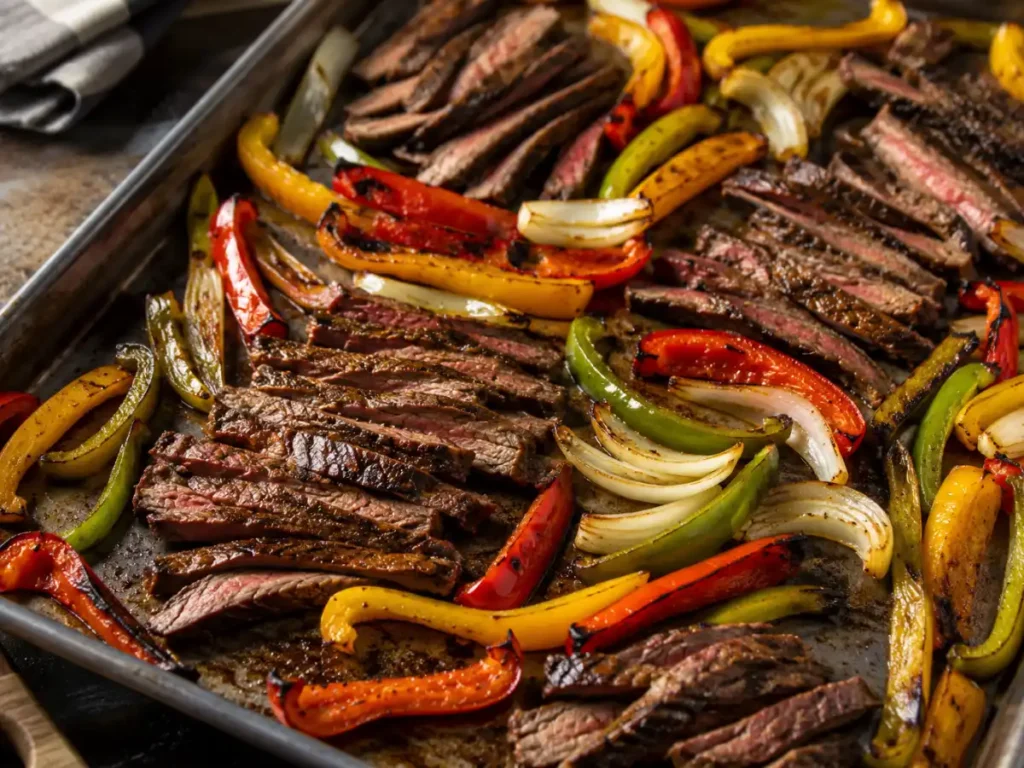
Sheet-pan flank steak fajitas are what almost nobody writes about, and the method is brilliant for a hands-off weeknight.
- Preheat the oven to 425°F with the sheet pan inside. A hot pan is the whole trick — food hitting a cold pan steams instead of charring.
- Toss the peppers and onions with oil and seasoning, then spread them out in a single layer with space between them. Do not crowd the pan. If it’s tight, use two pans. Crowding is the number-one reason sheet-pan veggies come out soggy.
- Roast the vegetables for about 15 minutes.
- Meanwhile, broil the steak on a separate pan on the top rack, about 4 to 5 minutes per side, until it hits 130–135°F.
- Finish the vegetables under the broiler for 2 to 3 minutes to get real char on the edges.
- Rest the steak, slice against the grain, and combine.
No grill, no babysitting a skillet, and you get genuine char.
The Doneness Rule: Don’t Overcook Flank
Flank is lean. There’s very little fat running through it to keep things juicy, which means it has almost no margin for error. Cook it past medium and you’ll get a chewy, dry steak no marinade can rescue.
| Doneness | Pull temp | Result |
|---|---|---|
| Medium-rare | 130–135°F | The sweet spot for flank — tender and juicy ✅ |
| Medium | 135–145°F | Still very good |
| Well-done | 145°F+ | Tough and dry — avoid with flank |
Use an instant-read thermometer and pull it early; it’ll climb a few degrees as it rests. For reference on safe cooking temperatures, see the USDA’s guidance.
Then rest it for 5 to 10 minutes. This isn’t a fussy chef ritual — when meat cooks, the juices get driven toward the center. Slice it straight away and they pour out onto the board. Let it rest and they redistribute back through the meat. On a lean cut like flank, that’s the difference between juicy and dry.
Peppers & Onions: How to Get Char, Not Soggy
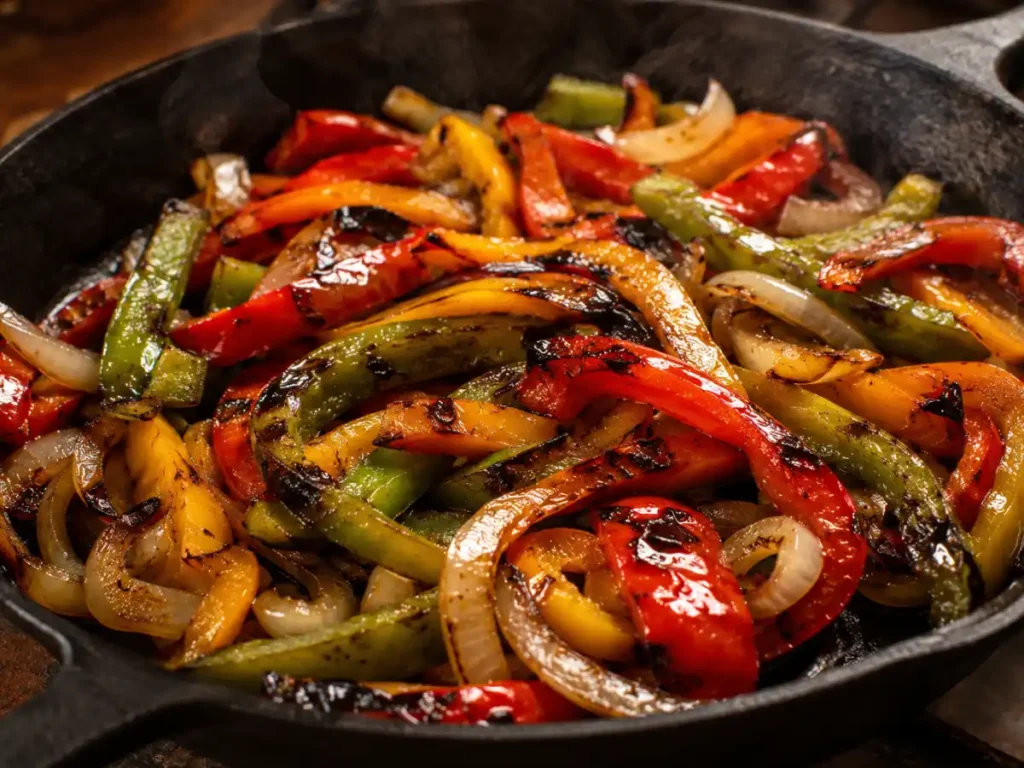
Everyone tells you to cook the vegetables until “tender-crisp.” Almost nobody tells you how — and soggy, watery peppers are the most common way flank steak fajitas go wrong. Here’s what actually matters:
- Don’t crowd the pan. This is the big one. Crowded vegetables release steam, that steam gets trapped, and they stew in it instead of searing. Cook in two batches, or use a bigger pan.
- High heat, and then leave them alone. Constant stirring keeps them from ever sitting still long enough to char. Toss them occasionally, not constantly.
- Salt at the END, not the start. Salt pulls water out of vegetables. Salt them early and you’ve created a puddle to steam in.
- In the oven: hot pan, single layer, space between them — and finish under the broiler.
- If they go watery anyway: crank the heat right up to boil the liquid off, or slide them under the broiler for a couple of minutes.
You want blistered, blackened edges and a bit of bite left in the middle.
How to Slice Flank Steak (Finding the Grain)
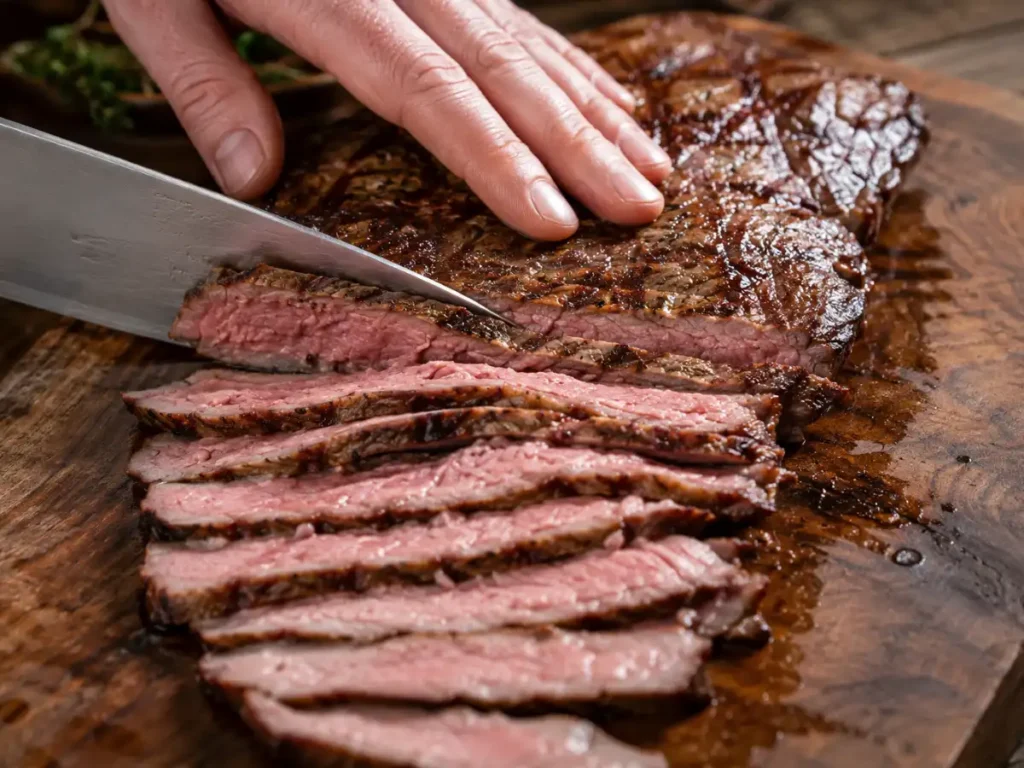
This is the single most important step, and it takes ten seconds to get right.
Look closely at the rested steak and you’ll see long fibers running in one direction — like grain in a plank of wood. On flank steak, that grain runs lengthwise, along the long axis of the cut. It’s very visible, which is exactly why flank is a forgiving cut to work with.
Turn the steak so the grain runs left-to-right in front of you, then cut top-to-bottom — straight across those lines. Slice thinly, and hold the knife at a slight angle for wider pieces.
Why it matters so much: those fibers are long, tough strands. Cut with them and every bite means chewing through intact, full-length fibers — the steak eats stringy and tough even if you cooked it perfectly. Cut across them and you shorten every single fiber to the width of your slice. Same steak, completely different experience.
What to Serve With Flank Steak Fajitas
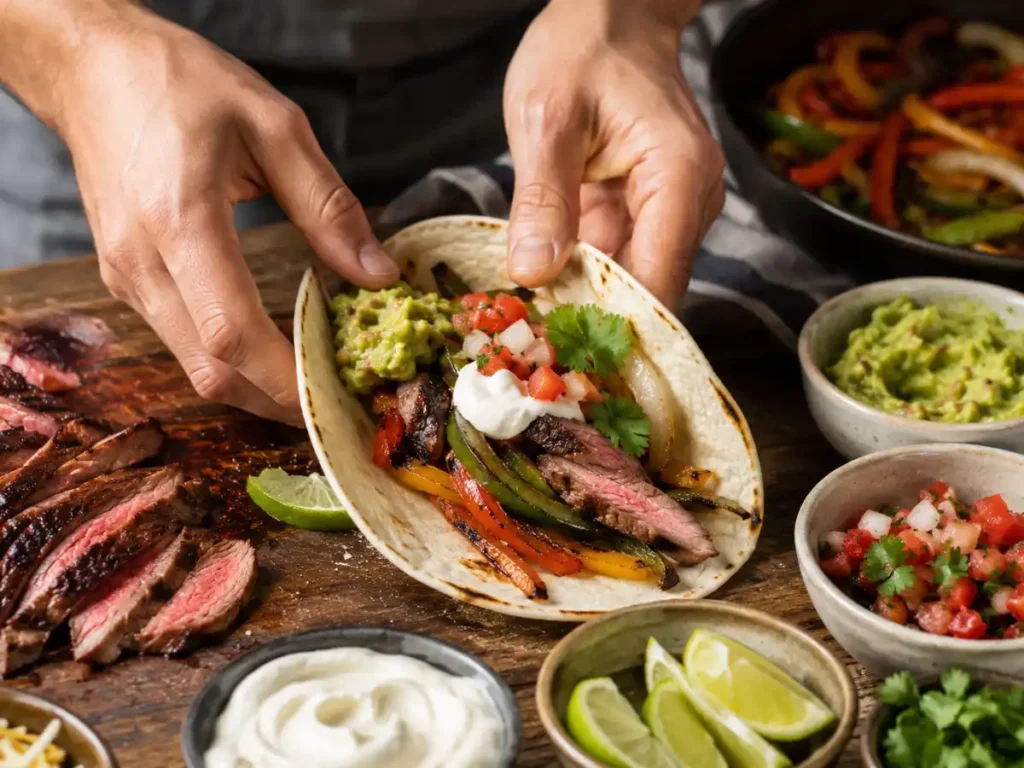
Flank steak fajitas are made for sharing. Warm your tortillas first (a few seconds in a dry skillet), then let everyone build their own.
Toppings: guacamole, pico de gallo, sour cream or crema, shredded cheese, salsa verde, fresh cilantro, and plenty of lime.
Sides: Mexican rice, refried or black beans, elote or corn salad, and chips with a scoop of cowboy caviar.
To drink: a cold mango margarita is hard to beat.
Leftovers: Cook Once, Eat Fajitas All Week
Most recipes give leftovers a single throwaway line. But lean flank is exactly the meat that gets ruined by careless reheating — so this is worth doing properly.
Store it right. Slice the steak thin and store it with the pan juices. That liquid is the moisture that keeps lean flank from drying out in the fridge. Keep the tortillas and toppings separate.
Reheat it gently. Warm it in a covered skillet over low-medium heat with a splash of the reserved juices or a little water. Go slow. A hard blast in the microwave is what turns leftover flank into leather.
Better yet, repurpose it:
- Fajita bowls — steak and peppers over rice with guac.
- Quesadillas — chop it up with the leftover peppers and plenty of cheese.
- Breakfast hash — with crispy potatoes and a fried egg on top.
- Steak salad — served cold over greens with a lime dressing.
Fridge: 3 to 4 days. Freezer: 2 to 3 months.
Make-Ahead & Meal Prep
- Marinate ahead — or better, freeze the steak in the marinade; it marinates itself as it thaws. Timings are all in my steak fajita marinade post.
- Slice the peppers and onions a day ahead and refrigerate.
- Cook once, eat three times — make a double batch of steak and veggies on Sunday and work through the leftover ideas above.
Lighter Flank Steak Fajitas
Flank is already one of the leaner steaks, so flank steak fajitas are easy to lighten:
- Skip the tortillas and serve as a fajita bowl over rice, greens, or cauliflower rice.
- Use lettuce wraps instead of tortillas.
- Load up on extra peppers and onions, and go easy on the cheese and crema.
More Flank Steak & Tex-Mex Recipes
Bought a big piece of flank? Try my flank steak with chimichurri. For more Tex-Mex, there’s my chicken fajitas and rich, slow-cooked beef birria tacos.
Frequently Asked Questions
Can you make flank steak fajitas in the oven?
Yes — and it’s an excellent method. Preheat the oven to 425°F with the sheet pan inside, spread the peppers and onions out in a single layer (don’t crowd them), roast for about 15 minutes, broil the steak 4 to 5 minutes per side, then finish the vegetables under the broiler for real char.
What’s the best steak for fajitas — flank or skirt?
Skirt is the traditional choice and the most flavorful; flank is leaner, milder, and much easier to find. Both make excellent fajitas as long as you slice them against the grain.
How long should you marinate flank steak for fajitas?
Aim for 2 to 4 hours, and don’t exceed 4 hours with a citrus-based marinade or the surface can turn chewy. My steak fajita marinade post has the full timing breakdown.
How do you keep flank steak fajitas tender?
Three things: don’t cook past medium (pull it at 130–135°F), rest it 5 to 10 minutes, and always slice thinly against the grain.
How do you slice flank steak for fajitas?
The grain on flank runs lengthwise. Turn the steak so those fibers run left to right, then cut straight across them into thin slices.
What temperature should flank steak be?
130–135°F for medium-rare, which is where flank is at its best. Don’t take it past 145°F — it’s lean and will toughen.
Can I make these without a grill?
Absolutely. The cast-iron skillet method and the sheet-pan oven method both work beautifully, and the oven version needs almost no attention.
How do you reheat steak fajitas without them getting tough?
Gently, in a covered skillet with a splash of the reserved juices, over low-medium heat. Avoid blasting them in the microwave.
What do you serve with flank steak fajitas?
Warm tortillas, guacamole, pico de gallo, sour cream, and cheese, with Mexican rice and beans on the side.
Great flank steak fajitas come down to three things: pull the steak at medium-rare, give the peppers room to char, and slice across that grain. Do those and you’ve got a genuinely restaurant-quality dinner — whichever of the three methods you pick. 🥩🌶️
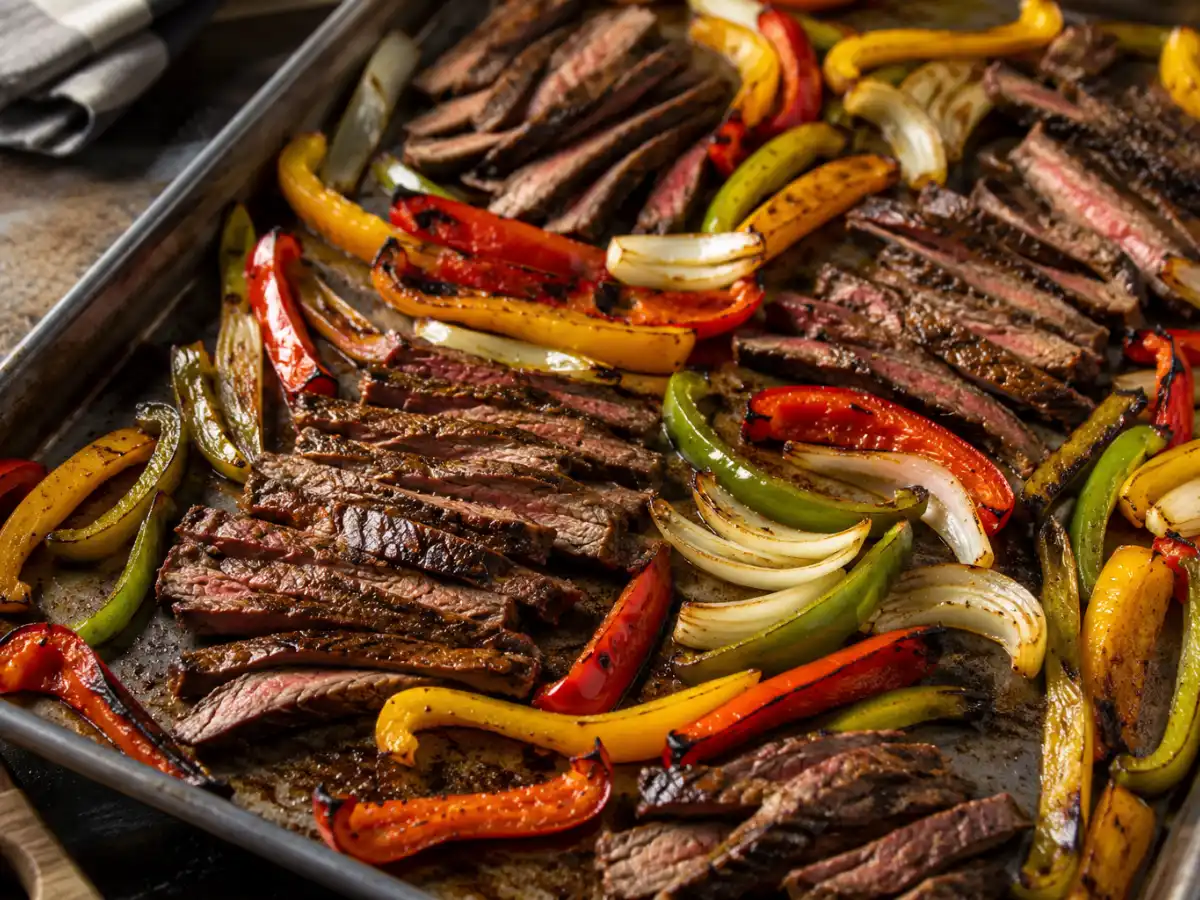

Flank Steak Fajitas
Ingredients
Equipment
Method
- Optional but recommended: marinate the flank steak 2 to 4 hours (don’t exceed 4 hours with a citrus marinade). Otherwise, season it well with the fajita seasoning.
- Skillet method: Heat a cast-iron skillet until screaming hot. Pat the steak dry, oil it, and sear the whole steak 3 to 5 minutes per side to 130–135°F. Set aside to rest.
- Grill method: Build a two-zone fire. Sear over direct heat 4 to 5 minutes per side, moving to the cooler side to finish if needed, to 130–135°F. Rest.
- Oven / sheet-pan method: Preheat oven to 425°F with the pan inside. Spread peppers and onions in a single layer (don’t crowd) and roast ~15 minutes. Broil the steak 4 to 5 minutes per side to 130–135°F, then finish the veggies under the broiler 2 to 3 minutes for char.
- Cook the peppers and onions over high heat until charred and tender-crisp, salting at the end (skillet and grill methods).
- Rest the steak 5 to 10 minutes, then slice thinly against the grain (the grain runs lengthwise on flank). Squeeze lime over, combine with the veggies, and serve with warm tortillas and toppings.