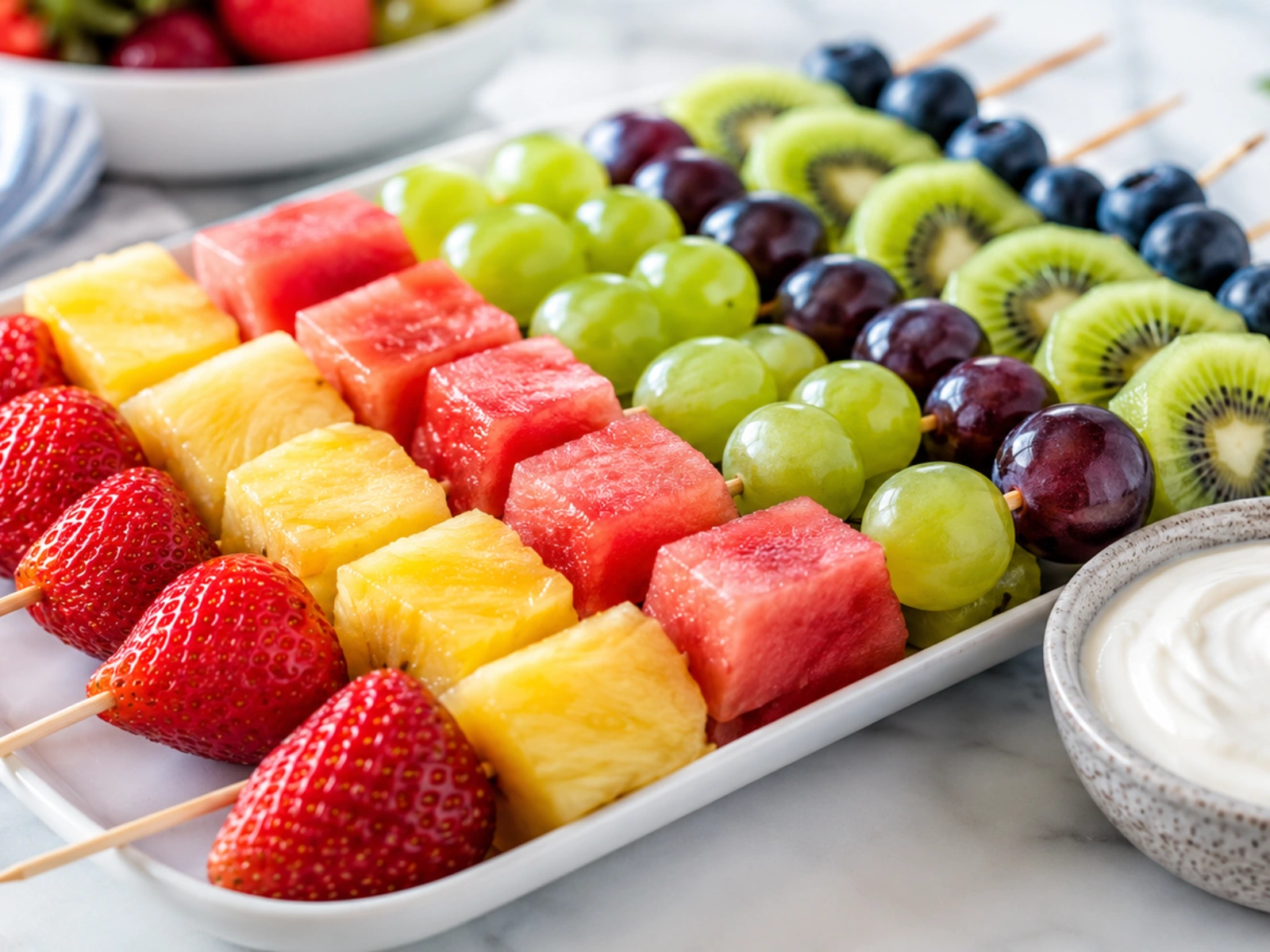
Fruit kabobs are the easiest way I know to make fresh fruit feel like a treat. You thread bite-sized pieces of your favorite fruits onto skewers, pair them with a creamy dip, and suddenly a plain bowl of fruit becomes the thing everyone reaches for first at the party. They take minutes, they’re naturally no-bake, and they work for everything from a Tuesday after-school snack to a full-blown summer cookout.
(Quick note before we dive in, because people always ask: it’s pronounced KAY-bobs, and you’ll see it spelled “kabob,” “kebab,” or just “fruit skewers” — they all mean the same thing. I’ll use kabobs and skewers interchangeably throughout.)
I’ve made these more times than I can count, so this isn’t just a recipe — it’s everything I’ve learned about which fruits hold up, how to stop them browning, how to build them ahead without a soggy mess, and 20 ideas you can steal for any occasion. If you like having a few easy, crowd-pleasing snacks in your back pocket, you’ll want to bookmark my healthy zucchini muffins too — same idea, different format.
Table of Contents
Best Fruits for Kabobs
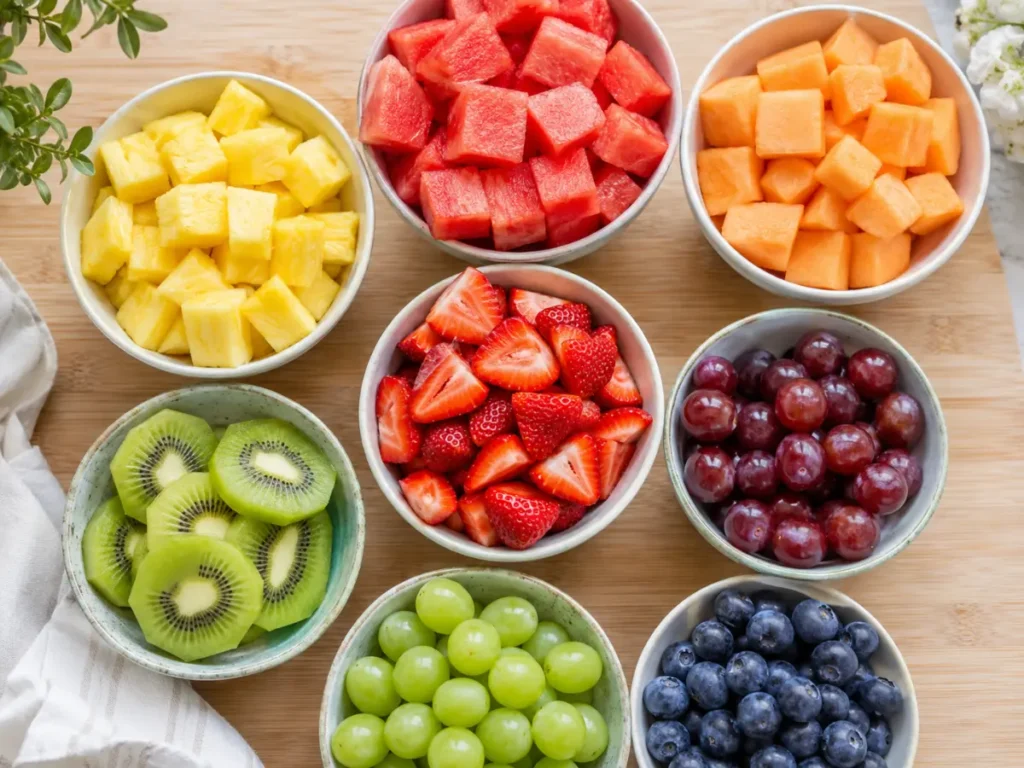
Almost any fruit works, but the best ones for kabobs share two traits: they’re firm enough to stay on the skewer without splitting, and they don’t turn brown the second you slice them. Here’s how the most popular choices stack up.
| Fruit | Texture on a skewer | Browning risk | Chef Linda’s tip |
|---|---|---|---|
| Strawberries | Firm, holds great | None | Thread through the pointed end so they sit upright |
| Grapes (red & green) | Excellent, no prep | None | The easiest fruit of all — no cutting needed |
| Pineapple | Firm, juicy | None | Cut into 1-inch cubes; great color anchor |
| Watermelon | Firm when chilled | None | Use a cookie cutter for stars and hearts |
| Cantaloupe & honeydew | Firm, holds well | None | A melon baller makes them party-pretty |
| Kiwi | Soft but stable | Low | Slice thick (½ inch) so it doesn’t tear |
| Blueberries & blackberries | Firm, tiny | None | Double them up so they don’t spin |
| Mango | Soft, juicy | Low | Cut larger cubes; it’s delicate |
| Banana | Soft | High | Add last, just before serving |
| Apple & pear | Firm | High | Needs the no-brown trick below |
| Peach & nectarine | Soft | High | Best for same-day, served fresh |
If you only remember one thing: build your kabobs around grapes, berries, melon, pineapple, and citrus, and treat apples, bananas, pears, and peaches as the fruits that need a little extra care. For a no-fuss spread, I lean on the same fruits I use in a summer fruit salad — they’re proven to hold their shape and color for hours.
How to Keep Fruit Kabobs from Browning
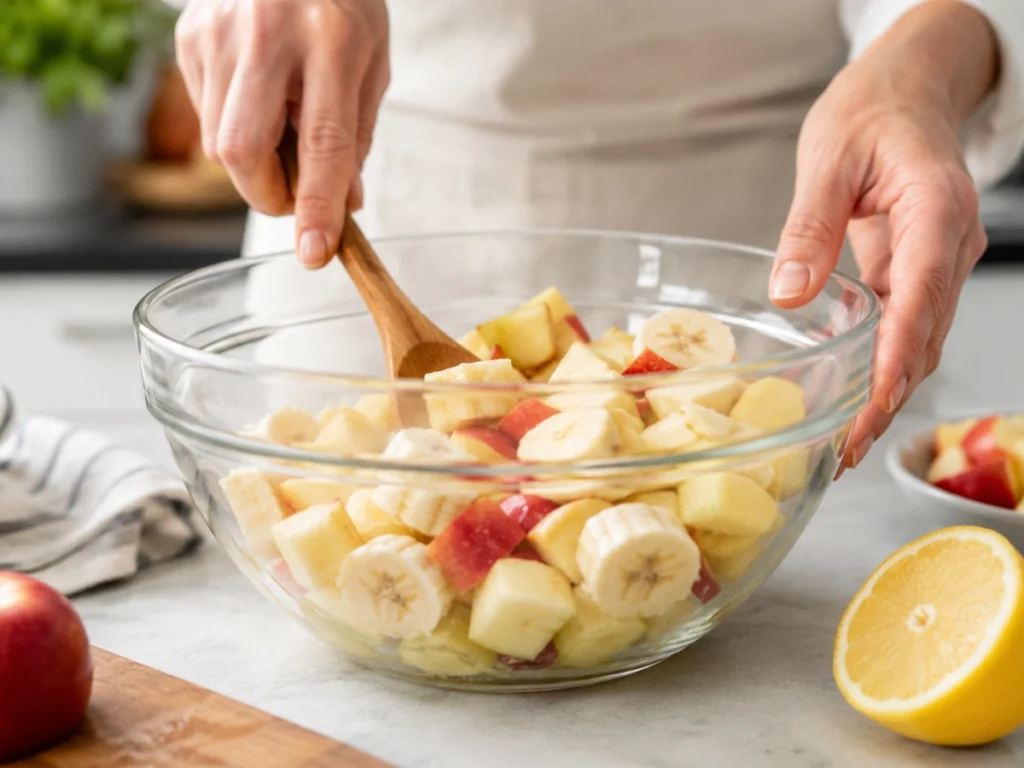
This is the question I get most, and the answer is simple chemistry. Cut fruit browns when the flesh hits oxygen. A quick splash of acid slows that reaction down dramatically. So for any browning-prone fruit — apple, pear, banana, peach — here’s the trick:
- Cut your fruit into chunks.
- Toss the pieces in a bowl with 1 tablespoon of lemon juice (or pineapple juice) per 2 cups of fruit. A 30-second gentle toss is plenty.
- Let them sit for a minute, then thread them on.
Pineapple juice works just as well as lemon and adds a touch of sweetness instead of tartness, so it’s my go-to for kids. If you’d rather skip the step entirely, just lean on the fruits that don’t brown at all (grapes, berries, melon, pineapple, citrus) and add banana or apple at the very last minute. Either approach keeps your platter looking fresh instead of sad and rusty.
Cut fruit browns when the flesh hits oxygen — what food scientists call enzymatic browning. A quick splash of acid disrupts the enzyme behind it, slowing the reaction dramatically. (If you’re curious about the science of enzymatic browning, the Institute of Food Science and Technology breaks it down well.) So for any browning-prone fruit — apple, pear, banana, peach — here’s the trick:
What You’ll Need (and Do You Have to Soak the Skewers?)
You need almost nothing to make fruit kabobs:
- Skewers — 6-inch wooden or bamboo skewers are perfect for snacks and parties. Longer 10–12 inch ones are great for grilling.
- A cutting board and a sharp knife
- A melon baller and a small cookie cutter (optional, but they make a huge difference for presentation)
- A platter and an airtight container if you’re prepping ahead
Now, about soaking — there’s a lot of conflicting advice out there, so let me clear it up. You only need to soak wooden skewers if you’re grilling them. Soaking stops them from scorching over an open flame. For raw, no-cook fruit kabobs, soaking does nothing useful. If you’re worried about splinters during assembly, that’s a quality issue, not a moisture one — buy smooth, well-sanded skewers and you’ll be fine. So: grilling, soak for 20–30 minutes; everything else, skip it.
How to Make Fruit Kabobs (Step by Step)
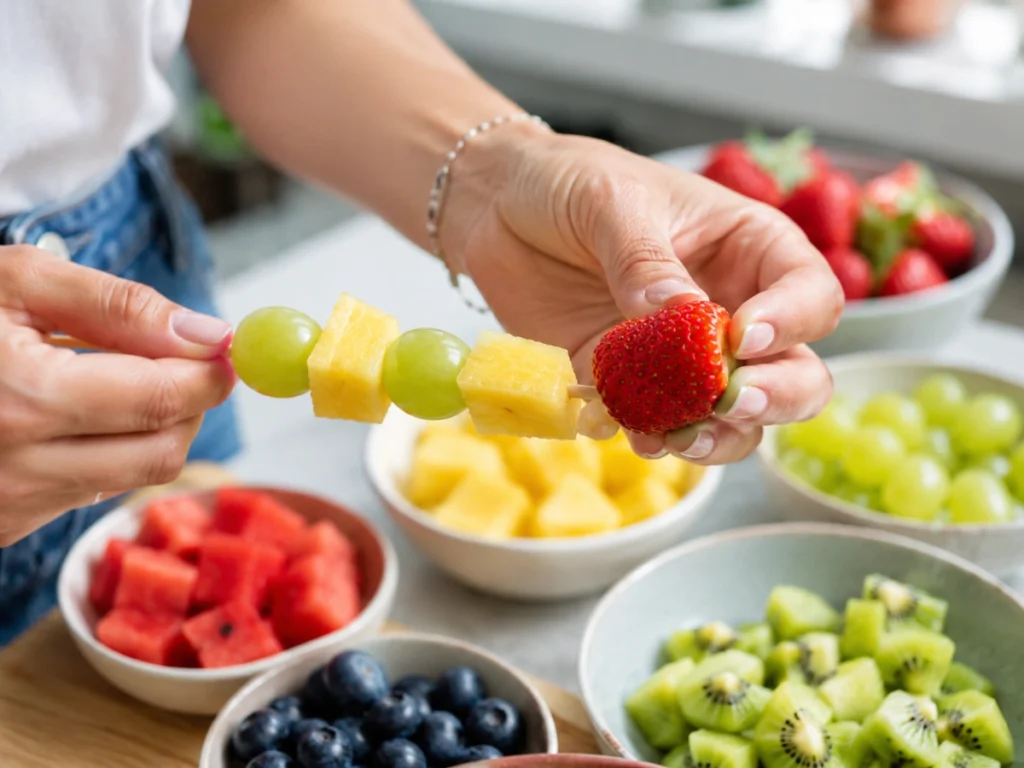
Here’s the basic method. It really is this easy.
- Wash and dry your fruit. Pat berries and grapes dry so the pieces don’t slide around as you thread them.
- Cut everything into similar-sized pieces, roughly 1 inch, so each skewer looks even and is easy to bite.
- Treat any browning-prone fruit with the lemon-or-pineapple-juice trick above.
- Thread the fruit on, alternating colors as you go for that bright, eye-catching look.
- Chill until serving, and pair with a dip (jump to my five favorites below).
That’s the whole thing. No cooking, no fancy technique — which is exactly why it’s such a great recipe to make with kids.
The Rainbow Color Guide
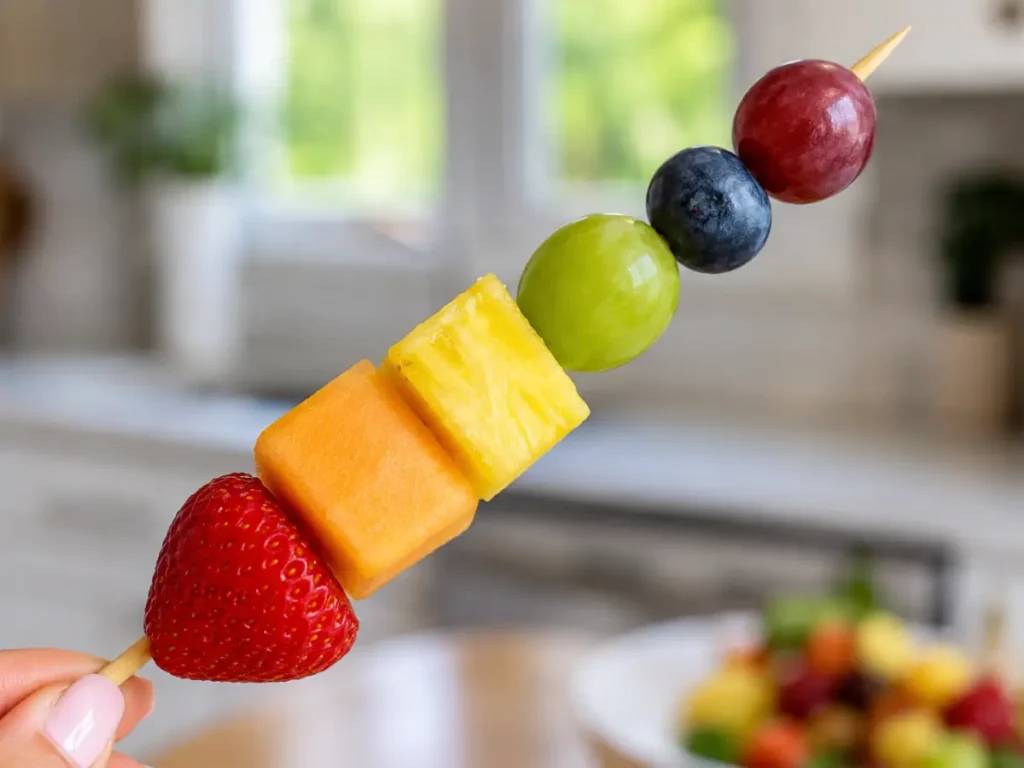
A rainbow fruit kabob is the most popular version for a reason: it’s gorgeous and it practically assembles itself once you know which fruit goes where. Build each skewer in this order and you’ll get a perfect rainbow every time:
- Red — strawberries, watermelon, cherries, raspberries
- Orange — cantaloupe, orange segments, nectarine
- Yellow — pineapple, yellow watermelon, banana
- Green — green grapes, kiwi, honeydew
- Blue — blueberries, blackberries
- Purple — purple grapes, plums
Thread them red-to-purple in that sequence and every skewer matches. It’s the version I make for birthdays and showers because it looks like you fussed when you really didn’t.
20 Fruit Kabob Ideas
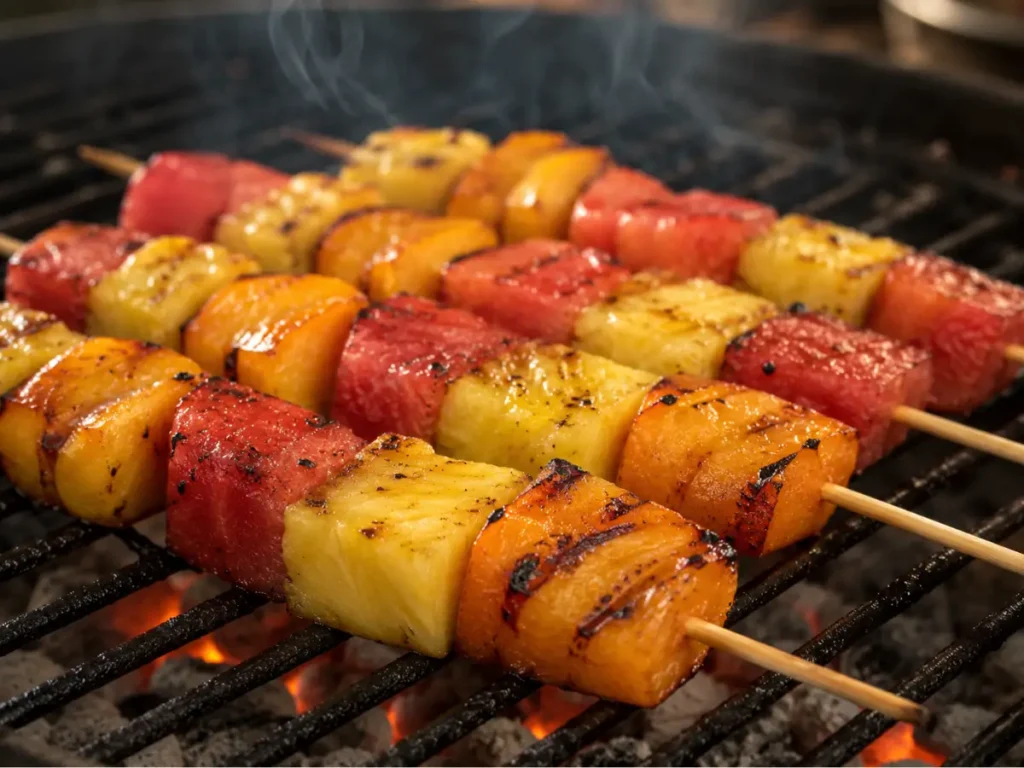
Once you’ve got the basics down, the fun is in the variations. Here are 20 ideas for every occasion and season.
- Classic Rainbow Kabobs — the red-to-purple sequence above. The crowd-pleaser.
- Grilled Fruit Kabobs — brush peaches, pineapple, and watermelon with a little honey, then grill 2–3 minutes per side until you get caramelized grill marks. (Soak those skewers first!) Serve warm with vanilla yogurt.
- Tropical Skewers — mango, pineapple, kiwi, and starfruit with a squeeze of lime.
- Red, White & Blue (4th of July) — strawberries, banana or white melon, and blueberries. A patriotic table favorite.
- Grinch Kabobs — a green grape, a banana slice, a strawberry “hat,” topped with a mini marshmallow. The cutest Christmas snack going, and kids go wild for them.
- Halloween Kabobs — dark red grapes and cantaloupe in orange-and-black tones, or clementine “pumpkins” with a tiny stem of green.
- Easter Pastel Kabobs — honeydew, cantaloupe, and pale grapes in soft spring colors.
- Fairy Wand Kabobs — top each skewer with a watermelon star cut from a cookie cutter and tie a ribbon bow at the base.
- Cookie-Cutter Shape Kabobs — stamp melon and watermelon into stars, hearts, and flowers for instant charm.
- Berry-Only Skewers — strawberry, blackberry, blueberry, raspberry for a deep-jewel look.
- Melon Trio Kabobs — watermelon, cantaloupe, and honeydew balls. Light and summery.
- Caprese-Style Sweet Kabobs — strawberry, a mini mozzarella ball, and a basil leaf with a honey drizzle.
- Chocolate-Dipped Kabobs — assemble, then drizzle one end with melted chocolate and chill.
- Yogurt-Drizzle Kabobs — a zigzag of vanilla Greek yogurt over the finished skewers.
- Mini Kabobs for Toddlers — short skewers, three soft pieces each (see the kids section below).
- Birthday Sprinkle Kabobs — finish with a yogurt dip rolled in rainbow sprinkles.
- Citrus & Grape Skewers — orange, clementine, and grapes — bright, refreshing, and budget-friendly.
- Frozen Fruit Pops — freeze assembled skewers for a popsicle-style summer treat. They’re fantastic alongside a scoop of homemade Grapico ice cream.
- Coconut-Dusted Tropical Kabobs — tropical fruit rolled in toasted coconut.
- Charcuterie-Board Kabobs — fruit plus cheese cubes for an appetizer that bridges sweet and savory.
Fruit Kabobs for Kids
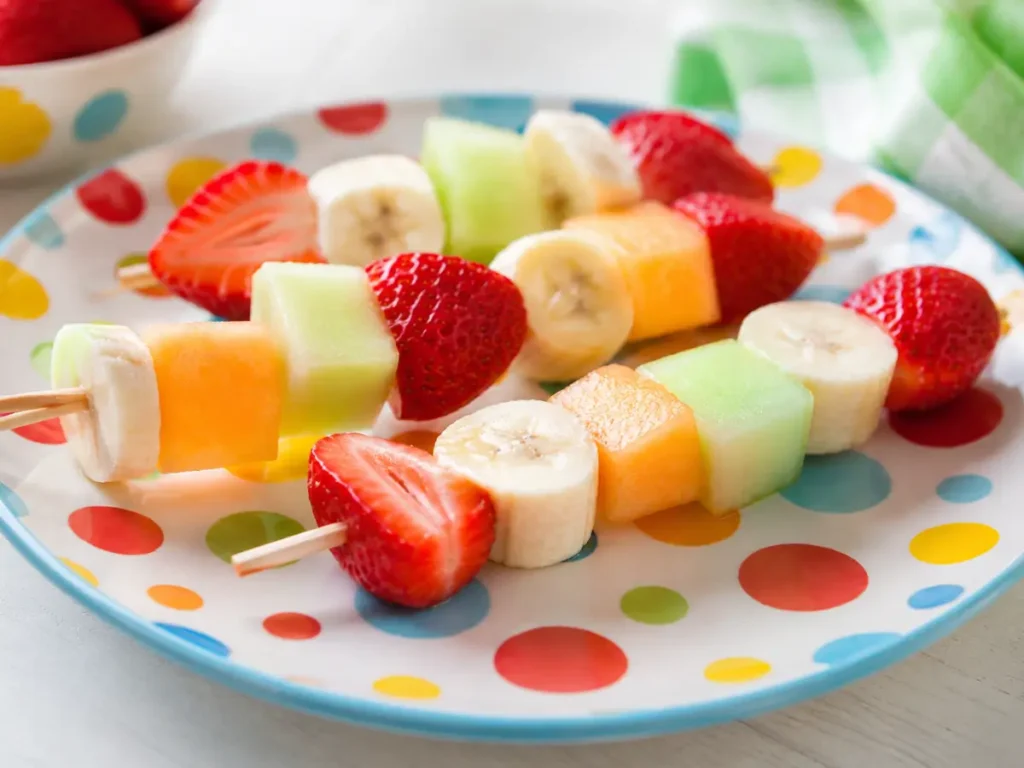
This is where fruit kabobs really shine. Something about food on a stick turns “eat your fruit” into a game, and I’ve watched kids who normally push fruit around their plate devour a whole skewer.
A few things make them safe and fun for little ones:
- Snip the sharp tip. For toddlers and preschoolers, cut the pointed end off the skewer with kitchen shears, or use blunt paper-straw skewers.
- Keep pieces small and soft — banana, strawberry, melon, and grapes (halved lengthwise for under-fours, since whole grapes are a choking hazard).
- Let them build their own. Set out bowls of prepped fruit and let kids assemble their skewers. They eat more when they make it themselves.
These are a brilliant addition to a lunchbox or a playdate spread. When I need a second snack that’s just as easy and equally popular, I make a batch of no-bake Snickers energy balls — the two together cover sweet cravings without anything processed.
How to Display Fruit Kabobs for a Party
Presentation is what takes kabobs from “nice” to “wow,” and it’s where most people stop too soon. Three easy display tricks:
- The watermelon base. Slice a watermelon in half, set it cut-side down, and stick the finished skewers into it. You get a dramatic edible centerpiece that holds dozens of kabobs upright.
- The foam-block stand. Cover a block of floral foam with greenery or paper and push skewers in to create a “fruit bouquet” tower — the edible-arrangement look for a fraction of the cost.
- The kabob wreath. Arrange skewers in a circle on a round platter, points to the center, with a bowl of dip in the middle.
For a polished spread, I plate kabobs alongside a few other easy bites — see my summer party recipes for things that travel well and hold up on a buffet table. A little height and a pop of color is all it takes to make the fruit the star.
5 Easy Dips to Serve
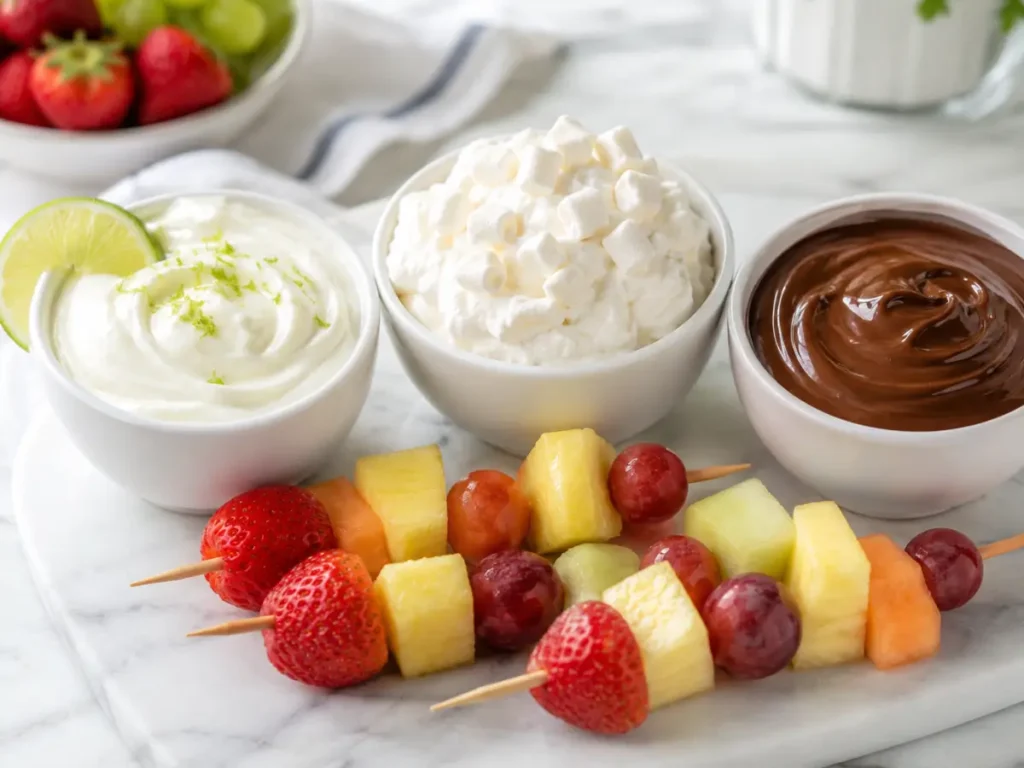
A good dip is non-negotiable — it’s what makes people come back for a third skewer. Here are five, from light to indulgent, so there’s one for every crowd.
- Honey-Lime Greek Yogurt (my favorite) — 1 cup Greek yogurt, 1 tablespoon honey, a squeeze of lime. Greek yogurt has more protein than regular, so it keeps kids fuller for longer.
- Marshmallow Cream Dip — fold marshmallow creme into softened cream cheese for a fluffy, sweet crowd-pleaser.
- Two-Ingredient Chocolate Dip — melt chocolate chips with a splash of cream; serve warm for fondue vibes.
- No-Added-Sugar Vanilla Dip — plain Greek yogurt with a little vanilla extract and a pinch of cinnamon. All the creaminess, none of the added sugar.
- Sweet Cream Drizzle — for a dessert-style finish, a thin ribbon of sweetened condensed milk over the skewers is pure indulgence.
Make-Ahead & Storage
Yes, you can absolutely make fruit kabobs ahead — you just need to know how far ahead each fruit can go, because that’s where most platters fall apart. Here’s my reliable timeline:
| When you’re prepping | What’s safe to do | Watch out for |
|---|---|---|
| 1–2 days ahead | Wash and cut firm fruits (melon, pineapple); store in airtight containers | Don’t skewer yet — fruit juices migrate |
| The day before | Assemble skewers with non-browning fruit only (grapes, melon, pineapple, berries) | Cover tightly so they don’t dry out |
| Morning of | Add citrus and kiwi; full assembly is fine | Dark fruit can bleed color into light fruit if packed too tightly |
| Just before serving | Add banana, apple, peach, and any acid-dipped fruit | These brown and soften fastest |
Store assembled kabobs flat in a single layer in an airtight container or wrapped tightly, and keep them cold — they’ll hold beautifully for up to 24 hours. I don’t recommend freezing assembled kabobs, since most fruit turns mushy once thawed (berries are the exception, and only if you’re blending them into smoothies later).
Nutrition
Fruit kabobs are about as wholesome as a treat gets. A single rainbow skewer (without dip) lands around 60–75 calories, with roughly 15–17g of natural carbohydrates, 2g of fiber, and a real hit of vitamin C and potassium from the melon and citrus. The sugar is the fruit’s own — there’s no added sugar in the skewers themselves, which is exactly why I reach for these instead of packaged snacks. Choose the plain Greek yogurt dip and you keep the whole thing light while adding a little protein to balance it out.
Frequently Asked Questions
How do you make fruit kabobs?
Wash and dry your fruit, cut it into roughly 1-inch pieces, thread them onto wooden or bamboo skewers alternating colors, and chill until serving. Pair with a dip. No cooking required.
How do you keep fruit kabobs from turning brown?
Toss browning-prone fruit (apple, banana, pear, peach) in 1 tablespoon of lemon or pineapple juice per 2 cups of fruit before threading, or simply use fruits that don’t brown — grapes, berries, melon, pineapple, and citrus — and add banana or apple at the last minute.
Can fruit kabobs be made ahead of time?
Yes. Assemble them with non-browning fruit up to 24 hours ahead and keep them cold and tightly covered. Add delicate or browning fruit just before serving for the freshest look.
How many days ahead can I prep the fruit?
You can wash and cut firm fruits like melon and pineapple 1–2 days ahead and store them airtight, but wait to assemble the skewers until the day before (or the morning of) so the fruit stays bright and the colors don’t bleed.
Which fruits can be prepped ahead?
Firm, non-browning fruits hold up best: watermelon, cantaloupe, honeydew, pineapple, grapes, strawberries, and blueberries. Save banana, apple, kiwi, and peach for closer to serving time.
Do you oil the skewers before grilling?
You don’t need to oil the skewers, but do soak wooden ones for 20–30 minutes so they don’t burn. Lightly brushing the fruit with a little oil or honey helps it caramelize and prevents sticking on the grill.
How do you display fruit kabobs for a party?
Stick the skewers into a halved watermelon for an edible centerpiece, build a “fruit bouquet” in a covered foam block, or arrange them in a wreath around a bowl of dip. Height and color make the fruit look like a centerpiece, not a side dish.
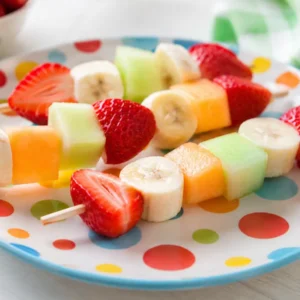
Rainbow Fruit Kabobs

Equipment
- Wooden or bamboo skewers (6-inch)
- Cutting board and sharp knife
- Melon baller
- Small star or flower cookie cutter (optional)
Ingredients
For the Kabobs
- 12 strawberries hulled
- 1 cup pineapple cut into 1-inch cubes
- 1 cup watermelon cubed or cut into stars
- 1 cup cantaloupe balled or cubed
- 12 green grapes
- 12 purple grapes
- 12 blueberries
- 2 kiwis peeled and thickly sliced
For the Honey-Lime Yogurt Dip
- 1 cup plain Greek yogurt
- 1 tbsp honey
- 1 tsp fresh lime juice
Instructions
- Wash all the fruit and pat it dry. Cut everything into roughly 1-inch pieces, and use a cookie cutter on the watermelon if you’d like stars.
- Thread the fruit onto each skewer in rainbow order: strawberry, cantaloupe, pineapple, green grape, kiwi, blueberry, then purple grape.
- In a small bowl, stir together the Greek yogurt, honey, and lime juice until smooth.
- Arrange the skewers on a platter and serve with the dip on the side. Chill until ready to serve.