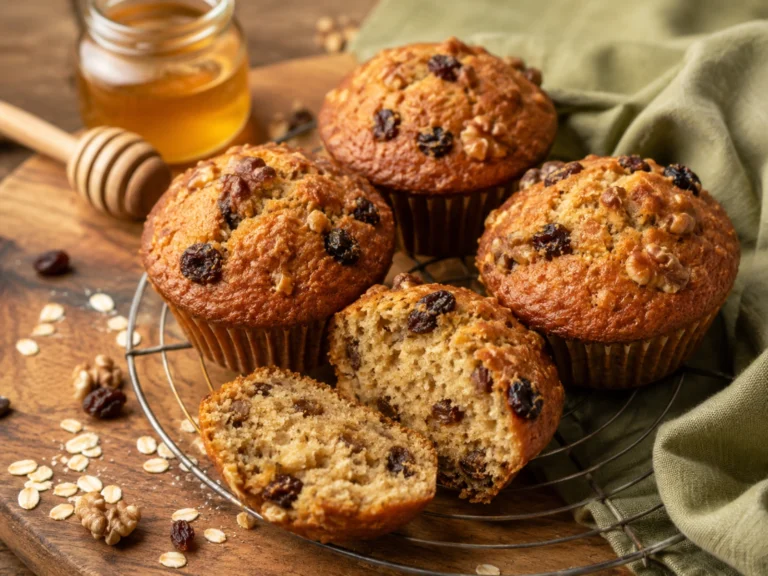

I have made these high protein Greek yogurt muffins so many times now that my family doesn’t even ask what’s in them anymore — they just grab one on the way out the door. And honestly? That’s the whole point. They’re soft, they’re fluffy, they’ve got 8 grams of protein each, and you would never guess they’re completely flourless, made with no protein powder, and sweetened with absolutely no refined sugar.
I tested batch after batch to nail the oats-to-yogurt ratio, and this is the one that finally won — tender, moist, never gummy, and filling enough to actually keep you going all morning instead of leaving you hungry an hour later. They’re my go-to for Sunday meal prep, and they freeze like a dream.
Table of Contents
Why You’ll Love These Greek Yogurt Protein Muffins
These high protein Greek yogurt muffins check every box I want in a healthy bake:
- 8 grams of protein per muffin — and it all comes from real food: Greek yogurt and eggs, no protein powder anywhere.
- Completely flourless and naturally gluten-free, made with nothing but blended oats.
- No refined sugar — just honey and sweet little bursts of raisins.
- About 207 calories each, so they fit into pretty much any kind of week.
- One bowl, one food processor, and roughly 38 minutes start to finish.
- Meal-prep and freezer friendly — bake once, snack all week.
If you love a healthy bake that pulls double duty as breakfast and a snack, these belong in your rotation right next to my reader-favorite healthy zucchini muffins, which use a similar oat-and-yogurt base.
Is Greek Yogurt Good in Muffins? (And Does It Really Add Protein?)
Short answer: yes, on both counts. Greek yogurt is one of my favorite baking secrets because it does two jobs at once — it adds protein and it keeps muffins incredibly moist without needing a lot of oil or butter. You get that tender, slightly tangy crumb that makes people think you bought them from a bakery.
Does baking with Greek yogurt add protein? It does. Heat doesn’t destroy the protein in yogurt or eggs, so what you mix in is what you get in the finished muffin. A cup of 0% Greek yogurt brings roughly 15 grams of protein to the bowl before you’ve even added the eggs.
What has more protein, 2 eggs or Greek yogurt? A cup of 0% Greek yogurt actually edges out two large eggs — two eggs land around 12 grams, while that cup of yogurt is closer to 15 or more. In this recipe you get the best of both, since they work together to push each muffin to a solid 8 grams. If you’re someone who likes a protein-forward treat, you’ll also love my 4-ingredient lemon cottage cheese donuts, which lean on dairy the same clever way.
Ingredients You’ll Need (and Why Each One Matters)
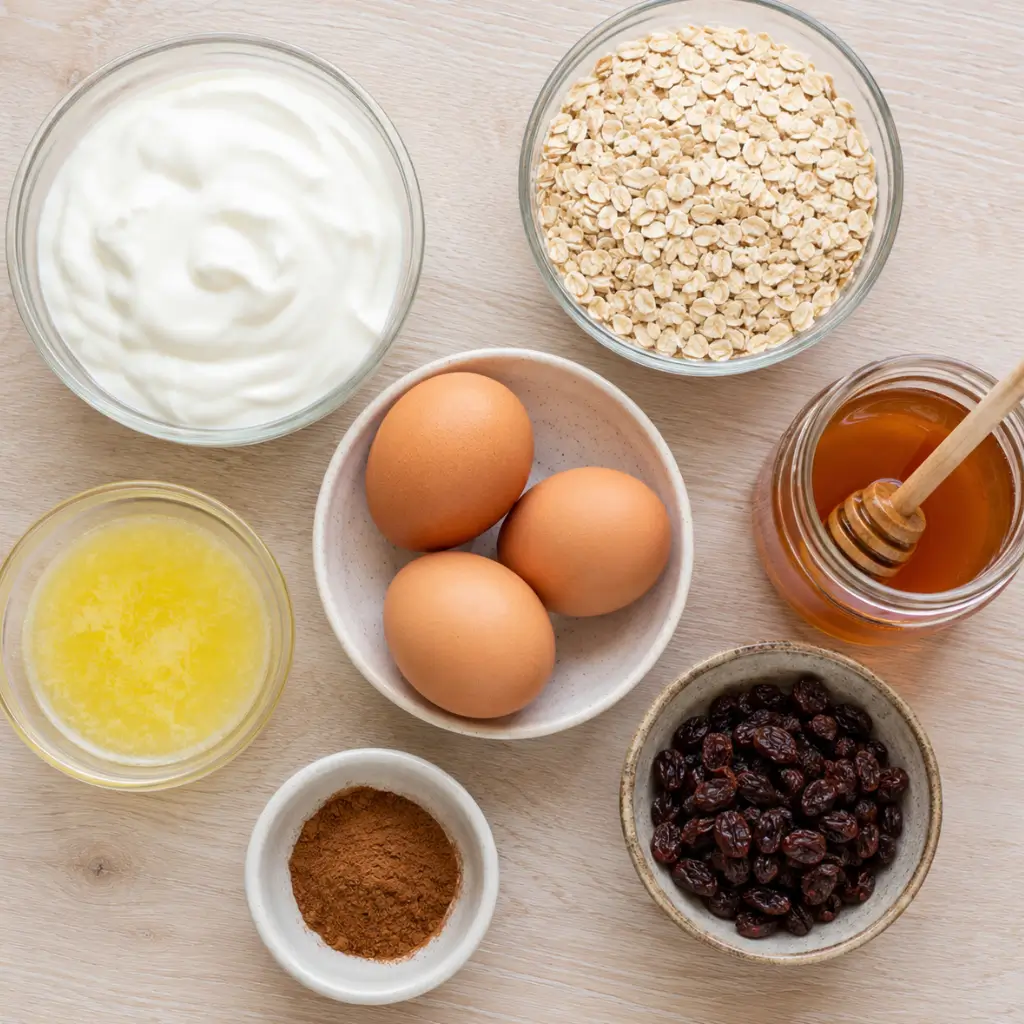
Here’s everything that goes into these high protein Greek yogurt muffins, and why each one earns its spot:
- 0% fat Greek yogurt — the protein-and-moisture backbone of the whole recipe. I use nonfat because it keeps the calories down, but 2% or full-fat will give you an even richer, more tender crumb if that’s your thing. Reach for authentic strained Greek yogurt, not the thinner “Greek-style” stuff.
- Quick oats, blended into oat flour — this is the flourless engine. Quick oats grind down finer and smoother than old-fashioned rolled oats, which gives you a softer muffin. This is also what makes the recipe naturally gluten-free (just use certified gluten-free oats if that matters for you).
- Eggs — they bind everything together, add structure, and bump the protein.
- Honey — my natural sweetener of choice here. Pure maple syrup swaps in one-for-one if you prefer.
- Coconut oil, melted — just a little fat for tenderness and a lovely soft texture. Any neutral oil works too.
- Cinnamon, baking powder, and a pinch of salt — warmth, lift, and balance.
- Raisins — my hero mix-in, for natural sweetness in every bite.
Can I swap the oil for more Greek yogurt? You can lighten things up by replacing some of the fat with yogurt. A reliable rule from U.S. Dairy is to swap out 1 cup of oil for ⅓ cup oil plus ⅔ cup Greek yogurt — you’ll keep the moisture while trimming the fat.
How to Make High Protein Greek Yogurt Muffins
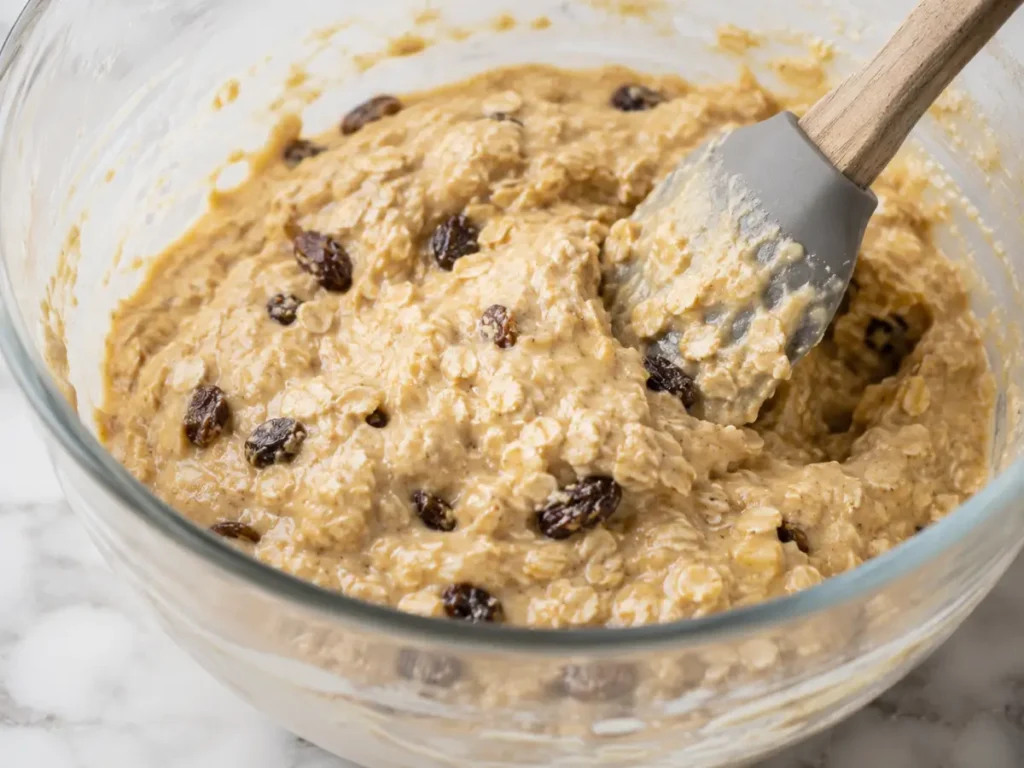
These high protein Greek yogurt muffins come together in one bowl, and the method is genuinely forgiving
- Make the wet base. Whisk the Greek yogurt, eggs, honey, and melted coconut oil until smooth and creamy.
- Blend your oats. Pulse the quick oats in a food processor until they look like a fine flour — no big flakes left.
- Combine. Add the oat flour to the wet base in two or three additions, along with the cinnamon, salt, and baking powder. Stir gently until just combined, then fold in the raisins.
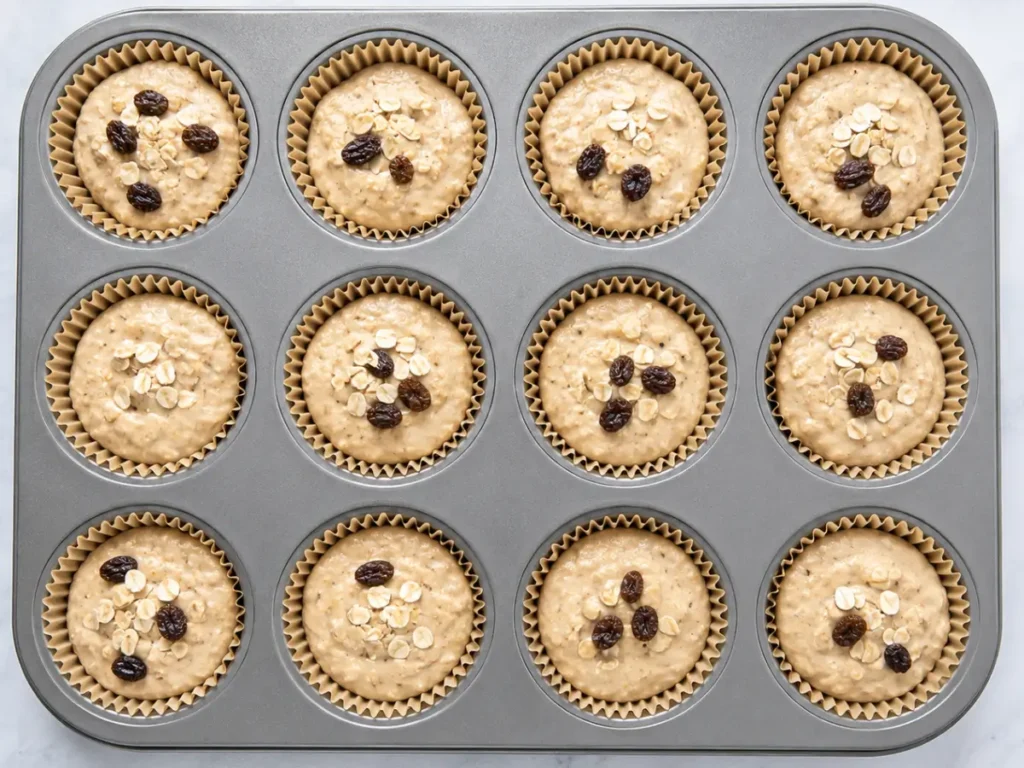
- Fill the tin. Divide the batter evenly between 12 lined muffin cups and scatter a few extra oats and raisins on top.
- Bake. Pop them into a 370°F (190°C) oven for about 18 minutes, until a toothpick comes out clean.
- Cool completely on a wire rack before peeling off the liners (more on why that matters below).
Chef Linda’s Tips for Perfect Muffins Every Time
I baked this recipe more times than I’d like to admit before publishing it, and these are the little things that made the biggest difference:
- Grind the oats fine. Coarse, uneven oats soak up liquid differently and can leave you with a dry or crumbly muffin. A smooth oat flour is your friend.
- Add the oat flour gradually. Every brand of oats absorbs a little differently, so add it in stages and stop when the batter is thick but still scoopable.
- Use parchment or non-stick liners. This batter is on the sticky side without much oil, and cheap liners will fight you.
- Cool completely before peeling. This is the golden rule. Peel a warm muffin and half of it stays glued to the paper — every time.
- Don’t overmix once the oat flour goes in. A few gentle folds keeps them light instead of dense.
Easy Variations
The base recipe is a blank canvas, so here are my favorite ways to switch it up:
Chocolate Chip Greek Yogurt Protein Muffins
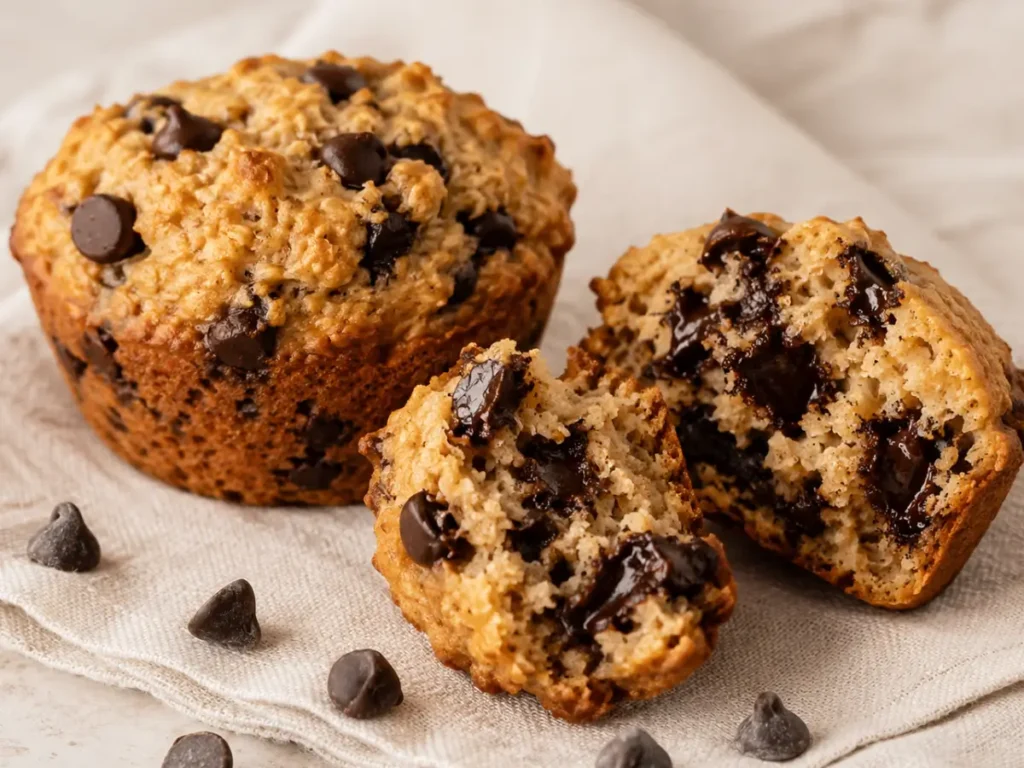
This is the one everyone asks for. Skip the raisins and fold in mini dark chocolate chips instead, reserving a few to press on top before baking. You get all the protein with a little melty chocolate in every bite — a healthier spin on the classic chocolate chip muffin.
Blueberry
Fold in fresh or frozen blueberries, but toss them in a spoonful of the oat flour first so they don’t all sink to the bottom.
Banana
Mash one very ripe banana into the wet base and pull back slightly on the honey. Cozy, naturally sweet, and great for using up that lonely spotty banana.
Make Them Eggless or Dairy-Free
Swap the eggs for flax eggs and use a thick dairy-free yogurt. The texture will be a touch denser, but they still bake up beautifully. If you love a grab-and-go muffin format, my cinnamon sugar French toast muffins are another fun one to try next.
Nutrition & Macros (Per Muffin)
Here’s roughly what you’re working with per muffin (this will shift a little depending on your mix-ins):
| Per muffin | Amount |
|---|---|
| Calories | ~207 |
| Protein | 8 g |
| Carbohydrates | ~30 g |
| Fat | ~6 g |
| Fiber | ~3 g |
| Sugar | naturally from honey + raisins |
What I love about these high protein Greek yogurt muffins: at 8 grams of protein with no protein powder and no flour, they out-protein most of the “healthy” Greek yogurt muffins out there, which usually land around 5 to 6 grams for a flour-based version. Keep in mind that adding chocolate chips will nudge the sugar and fat up a bit.
Storage, Freezing & Meal Prep
These were practically built for batch baking:
- Room temperature: store in an airtight container for up to 2 days.
- Refrigerator: they’ll keep up to a week — I think they’re best warmed for 10 to 15 seconds in the microwave.
- Freezer: wrap them individually and freeze for up to 2 months. Thaw overnight or microwave straight from frozen.
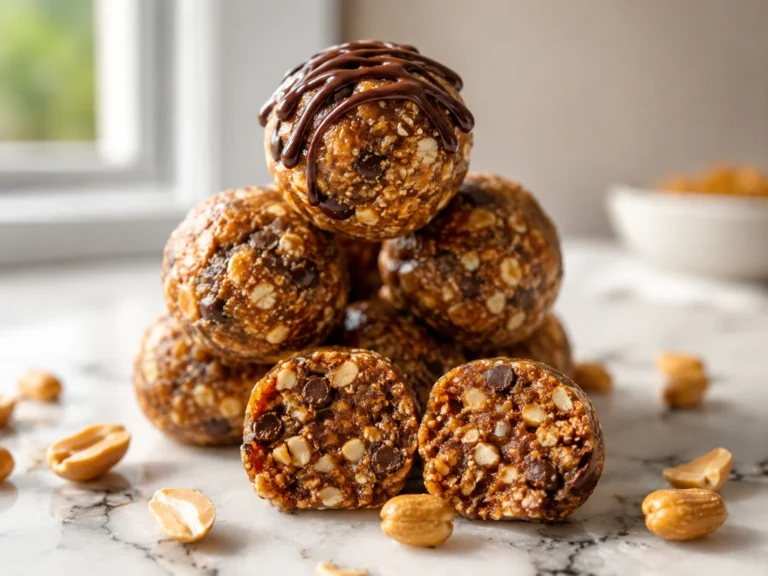
My favorite move is to bake a batch on Sunday and grab one with a coffee or a piece of fruit every morning. If you like keeping high-protein snacks on hand, my no-bake Snickers energy balls are the perfect make-ahead partner to stash alongside them.
Troubleshooting — Why Did My Muffins Turn Out Wrong?
If something’s off, it’s almost always one of these:
- Gummy or too moist? Your oats probably weren’t ground fine enough, or you peeled the liners while the muffins were still warm. Grind finer and cool completely.
- Dense or heavy? Usually overmixing, or adding all the oat flour at once. Fold gently and add it in stages.
- Sunken middles? They likely needed another minute or two, or your oven runs cool. Always check with a toothpick.
- Sticking to the liners? Use parchment or non-stick liners and give them time to cool fully before peeling.
Frequently Asked Questions
Does Greek yogurt add protein to muffins?
Yes. Greek yogurt is naturally high in protein, and baking doesn’t destroy it, so it carries straight through into your muffins. Combined with eggs, it’s how these muffins reach 8 grams of protein each without any protein powder.
Is Greek yogurt good in muffins?
Absolutely. It adds protein, keeps muffins moist and tender, and gives the crumb a subtle tang. It also lets you use less oil or butter, which makes for a lighter, more satisfying muffin.
What to mix with Greek yogurt for high protein?
For baking, eggs and oats are the perfect partners — they add protein and structure while keeping things whole-food and powder-free. Stir-ins like nuts, seeds, or hemp hearts boost it even further. This recipe is a great template.
Does baking with Greek yogurt add protein?
It does. Heat doesn’t reduce the protein content, so whatever protein goes into the batter stays in the finished bake. That’s why Greek yogurt is such an easy, natural way to make muffins more filling.
What has more protein, 2 eggs or Greek yogurt?
A cup of 0% Greek yogurt has a slight edge — around 15 grams of protein versus roughly 12 grams in two large eggs. In these muffins you don’t have to choose, since both work together for the highest protein payoff.
Is there a downside to Greek yogurt?
For most people it’s a genuinely nutrient-dense choice. The main things to watch are sodium and lactose if you’re sensitive, and flavored versions can sneak in added sugar. Plain Greek yogurt, like we use here, sidesteps all of that — you can read more about its benefits and considerations at Cleveland Clinic.