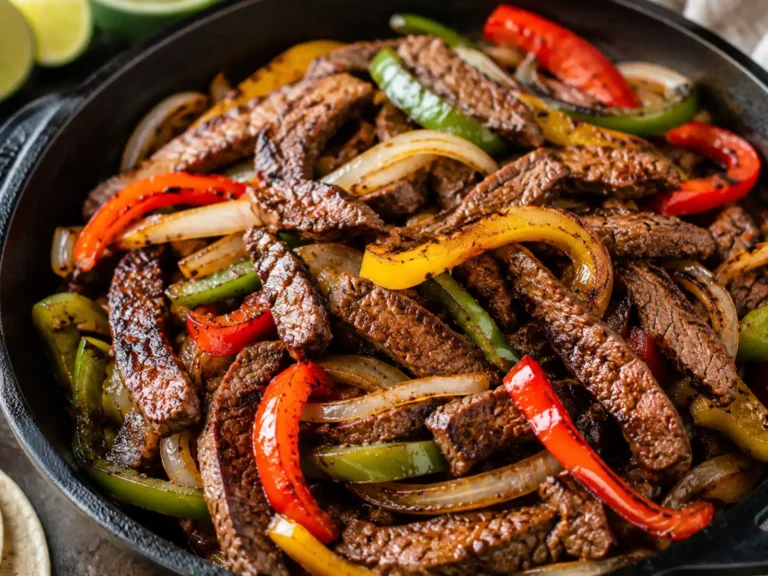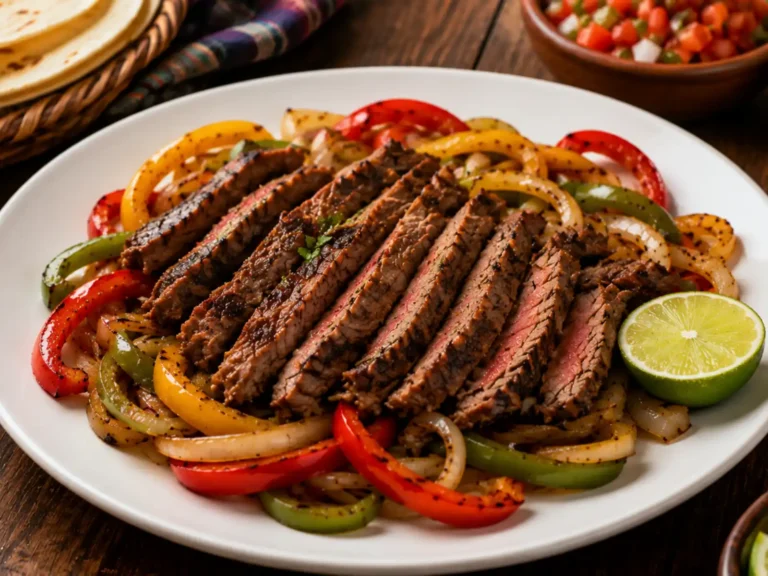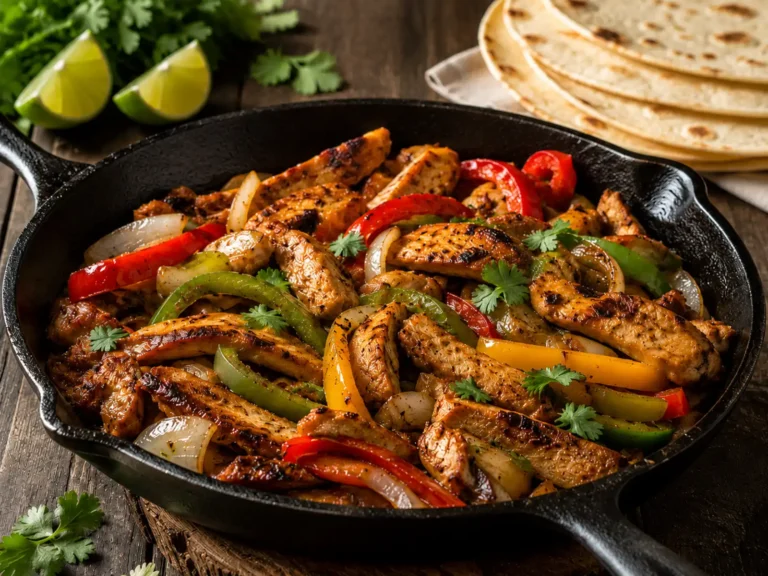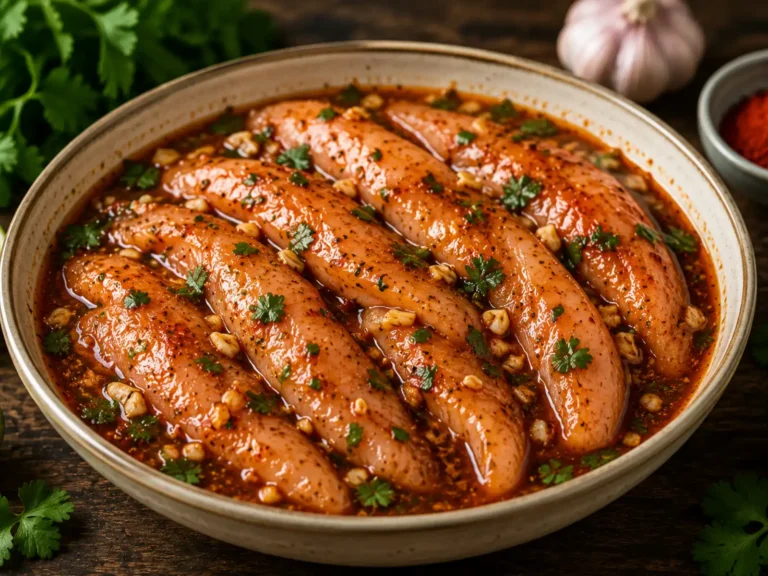
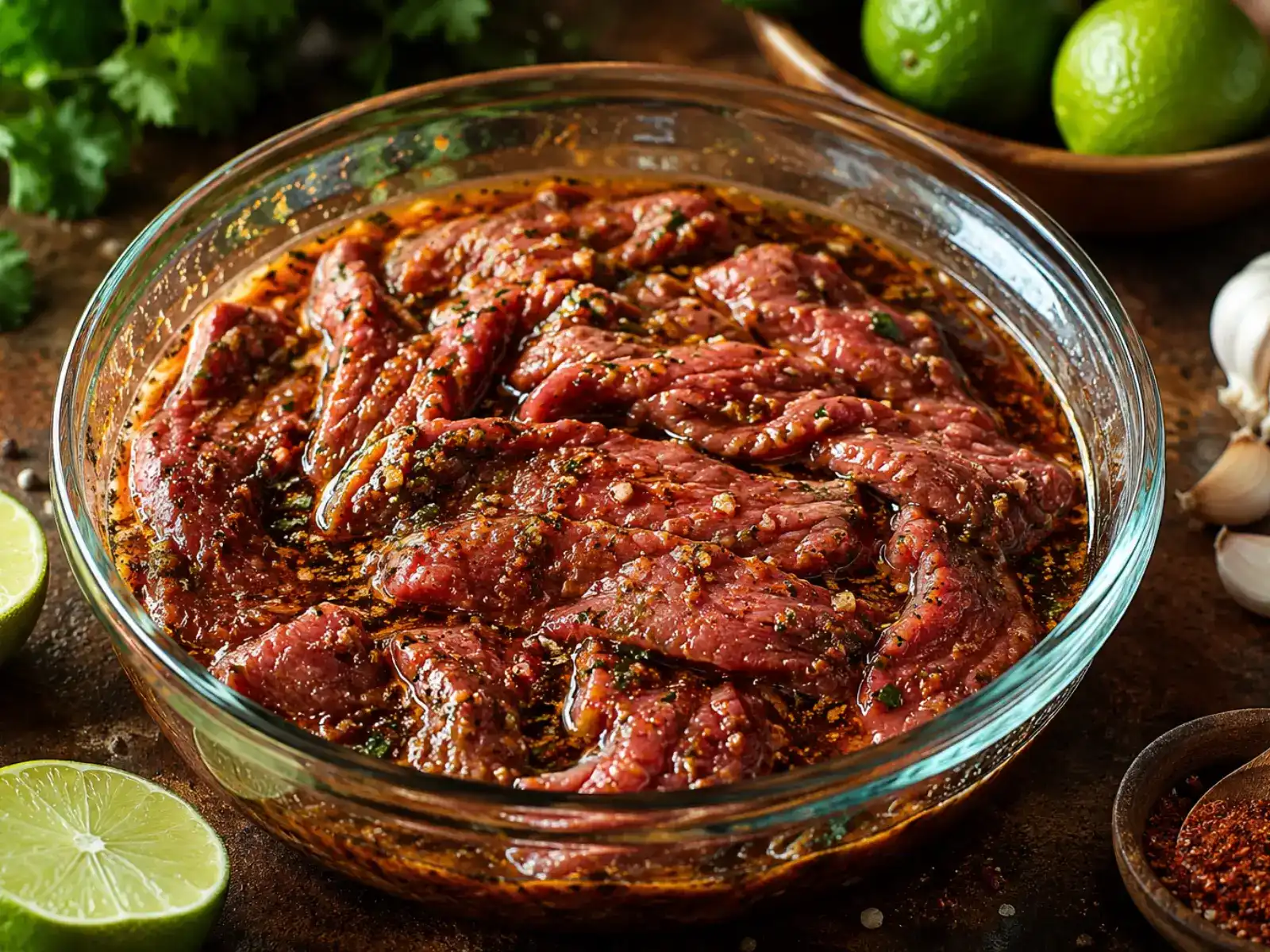
A great steak fajita marinade does two jobs at once: it makes a tough, cheap cut genuinely tender, and it packs it with bold, smoky Tex-Mex flavor. Get it right and skirt or flank steak turns into something that tastes like it came off a sizzling cantina platter. Get it wrong — and this is where most recipes quietly fail you — and you end up with steak that’s either bland or weirdly mushy. For everything beyond the marinade — which cut to buy, every cooking method, and why restaurant versions are so tender — see my complete steak fajitas guide.
Here’s the thing almost nobody tells you: the recipes you’ll find online flatly contradict each other on how long to marinate. One says never go past 4 hours. Another says leave it overnight. They’re both right — because it depends entirely on what’s doing the tenderizing. In this guide I’ll give you my tested marinade, explain the simple formula behind it, show you exactly how long to marinate (with a chart), and tell you which cut to buy. If you loved my chicken fajitas, this is the steak counterpart. Let’s get into it.
Table of Contents
What Makes a Great Steak Fajita Marinade (The Blueprint)
Once you understand the formula, you’ll never need to follow a recipe again. Every good steak fajita marinade is built from four parts:
- Fat (oil) — carries the fat-soluble flavors from the spices and helps protect the surface from the fierce heat of a grill.
- Acid (citrus) — tenderizes the surface of the meat and brings brightness that cuts through rich beef.
- Salt and umami (soy sauce or Worcestershire) — this is the workhorse. Salt is the only element that truly penetrates deep into the meat, and it helps the steak brown better.
- Aromatics and spices — garlic, cumin, chili powder, and paprika deliver that unmistakable fajita flavor.
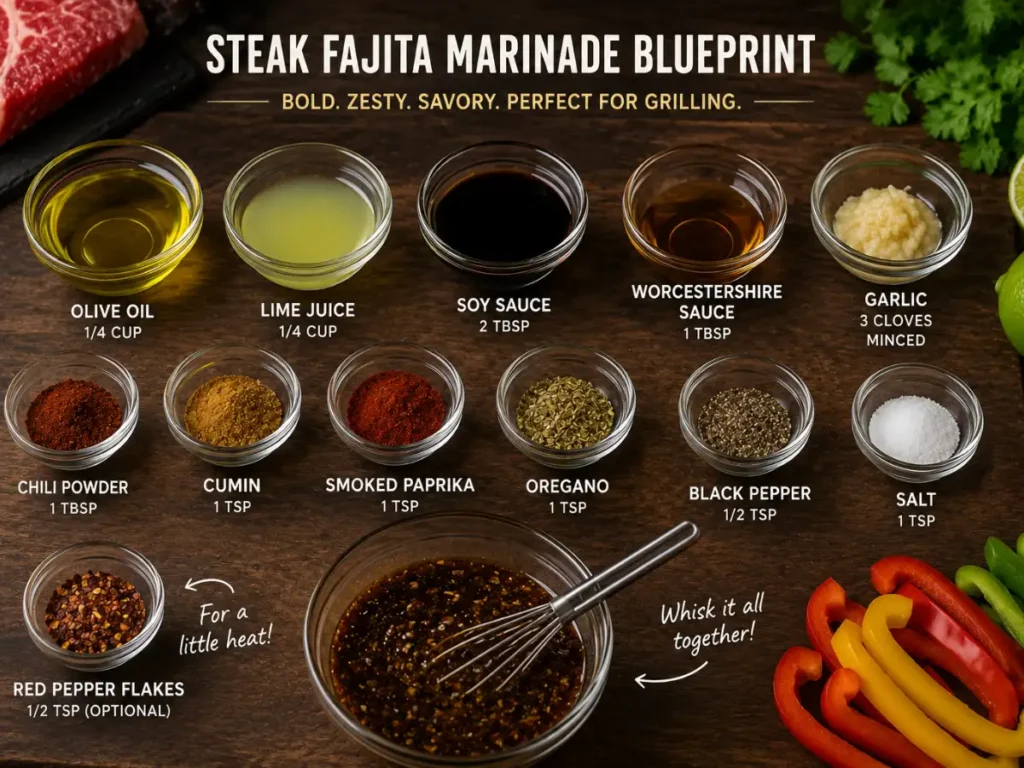
For every 1 pound of steak, a reliable starting point is about 3 tablespoons oil, 3 tablespoons acid, 1 tablespoon soy sauce, and 2 teaspoons of spices. Scale from there, and adjust to taste.
What Actually Tenderizes the Steak?
This is the part that changes everything — and it’s why those competing recipes disagree. There are three different tenderizing mechanisms, and each one runs on a completely different clock:
- Acid (lime, lemon, vinegar). Works fast, but only on the surface. It denatures the proteins on the outside of the meat. Leave it too long and that surface goes past tender into chalky and mushy. This is why lime-heavy marinades come with a strict time limit.
- Enzymes (pineapple juice). Pineapple contains bromelain, an enzyme that breaks down protein aggressively. It works very quickly — and if you leave it too long, it turns steak to mush. Hard cap required.
- Salt. The unsung hero. Salt works slowly, penetrates deeply, and genuinely improves texture from the inside out. It’s essentially a brine, and it’s very hard to overdo.
- No acid at all. Some marinades are just spiced oil. They add flavor but do no tenderizing — which means there’s no time risk at all.
And here’s the trick hiding in plain sight: the single highest-rated steak fajita marinade on Google lists water as its first ingredient — more water than lime juice. That’s not filler. Diluting the acid softens its bite, helps the marinade coat the meat evenly, and widens the safe marinating window. Nobody explains this, but it’s why that recipe can be left longer without turning the steak chewy. It’s a genuinely smart move, and you can use it.
How Long to Marinate Steak for Fajitas
So how long should a steak fajita marinade sit? It depends on which mechanism you’re using. Here’s the chart I wish someone had given me years ago:
| Marinade type | Minimum | Sweet spot | Too long |
|---|---|---|---|
| Classic lime (undiluted) | 30 minutes | 2 to 4 hours | Over 4 hours → chewy |
| Diluted (with water) | 1 hour | 4 to 8 hours | Over 12 hours |
| Pineapple (enzyme) | 20 minutes | 30 to 90 minutes | Over 2 hours → mushy |
| Spiced oil (no acid) | 30 minutes | 2 hours to overnight | Time-safe |
Can you marinate steak fajitas overnight? Only with a diluted or low-acid marinade. Never leave steak overnight in straight lime juice or pineapple — you’ll wake up to a mushy surface and a disappointing dinner.
Beef vs chicken: beef can generally handle a longer soak than chicken, because it’s denser and has more connective tissue. If you’re doing chicken instead, the timing shifts — see my chicken fajita marinade for the specifics.
My recipe below is the classic lime version, so aim for that 2-to-4-hour sweet spot.
Which Cut? Skirt vs Flank vs Sirloin
The cut you choose matters as much as the steak fajita marinade itself — and it changes how long you should marinate. Here’s the honest breakdown:
| Cut | Flavor | Grain | Marinate | Best for |
|---|---|---|---|---|
| Skirt steak | Richest, beefiest | Loose, very obvious | 1–3 hours (soaks fast) | The classic fajita cut. High-heat grilling. |
| Flank steak | Leaner, milder | Tighter | 2–4 hours | Grill or skillet. Widely available. |
| Sirloin | Mildest, tender | Fine | 1–2 hours | Budget-friendly. Don’t overcook it. |
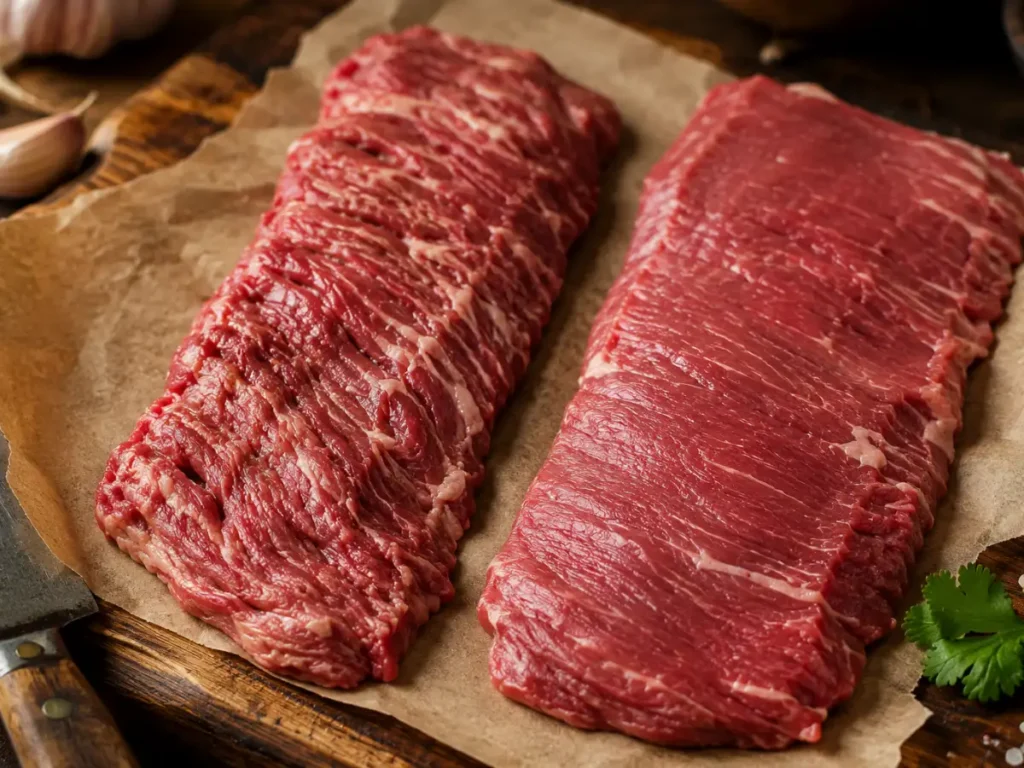
My pick: skirt steak. It’s the traditional fajita cut for a reason — loose-grained, deeply beefy, and it drinks up marinade faster than anything else. Flank is the reliable runner-up and easier to find; it’s the same cut I use for flank steak with chimichurri. Either one works beautifully here.
Ingredients You’ll Need
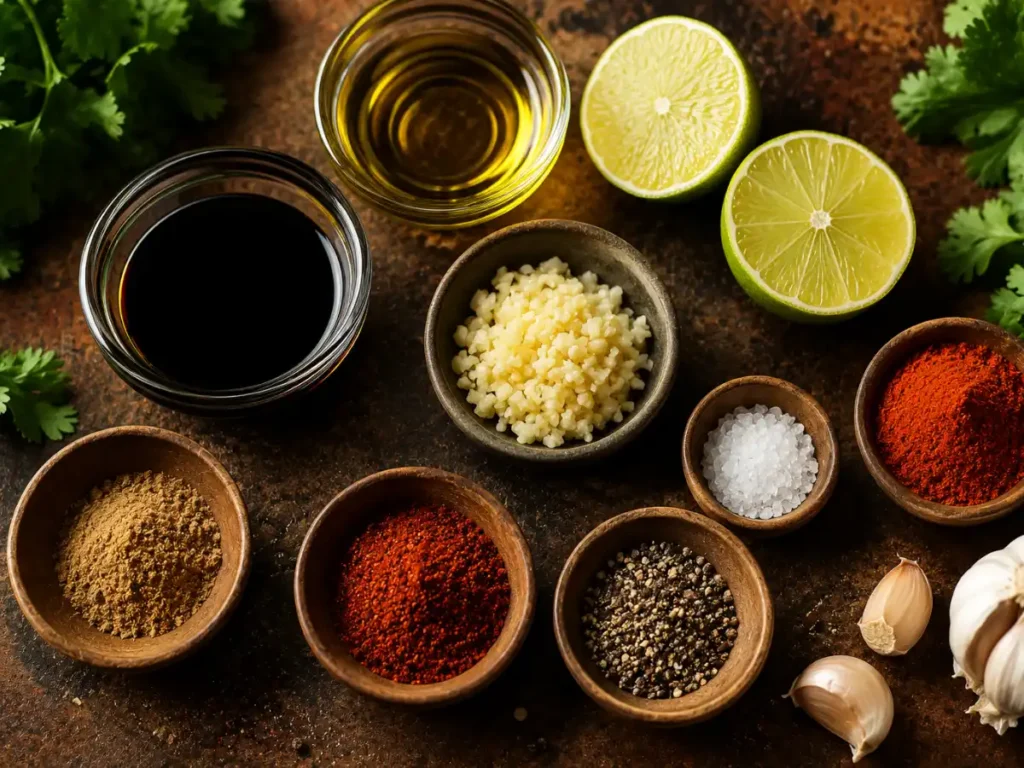
For about 1½ to 2 pounds of steak (exact amounts in the recipe card):
- Olive oil — the flavor carrier.
- Lime juice — the classic acid.
- Soy sauce (or Worcestershire) — don’t skip this. It brings umami depth, salt that actually penetrates, and sugars that help the steak char beautifully. Some popular recipes leave it out; mine doesn’t, and it’s a big part of why this one tastes richer.
- Garlic — fresh, minced.
- Cumin, chili powder, smoked paprika — the fajita backbone.
- Salt and black pepper.
- Fresh cilantro — optional.
These are the same warm spices in my homemade fajita seasoning, so if you keep a jar around, about 2 tablespoons works in place of the individual spices.
How to Make Steak Fajita Marinade
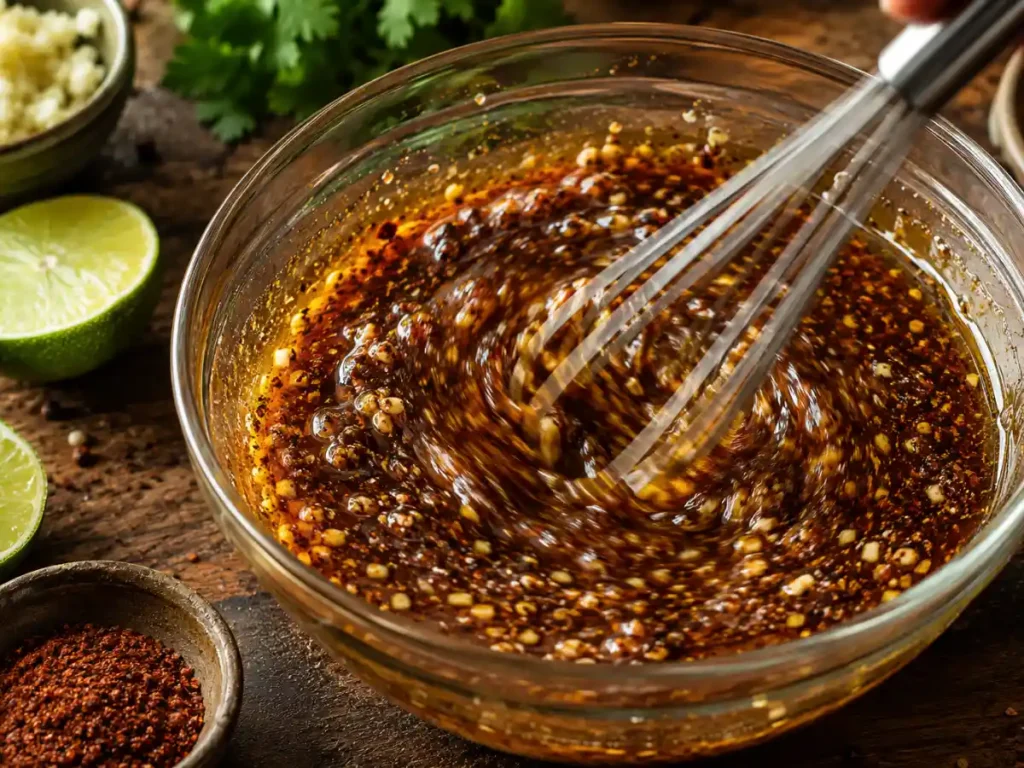
- Whisk the steak fajita marinade. Combine the oil, lime juice, soy sauce, garlic, spices, salt, and pepper in a bowl.
- Coat the steak. Put the steak in a zip-top bag or shallow dish and pour the marinade over, turning to coat.
- Chill. Refrigerate for 2 to 4 hours (see the chart above).
- Cook. Remove the steak, discard the used marinade, and cook.
Marinade Variations
Pineapple Juice (The Texas Restaurant Secret)
Swap some of the lime for pineapple juice and you get a sweeter, tangier steak fajita marinade with serious tenderizing power — this is a trick a lot of Texas steakhouses use. But cap it at 90 minutes. The bromelain works fast, and past two hours you’ll get mush. This is the one variation where the timer really matters.
No Lime? Use Orange, Lemon, or Vinegar
Out of limes? No problem:
- Lemon juice — swap 1:1. Slightly softer flavor.
- Orange juice — sweeter and milder; use a touch more, and it gives a lovely, almost al pastor-like depth.
- Vinegar — a tablespoon of white or apple cider vinegar in a pinch.
Coca-Cola Marinade
It sounds odd, but a cola-based steak fajita marinade genuinely works: cola brings acidity and sugar, which tenderizes and helps the steak caramelize. Replace about half the acid with cola. Watch it on the grill — that sugar can burn, so keep the heat moderate and the eye on it.
Authentic Mexican-Style
Tex-Mex fajita marinades lean bold and sometimes sweet. For a more traditional Mexican-style version, use ancho chili powder, Mexican oregano, a splash of vinegar, plenty of lime, and fresh cilantro. Less sweet, more earthy and smoky.
Can You Use This on Chicken Too?
Yes — this steak fajita marinade is genuinely dual-purpose, and one batch can handle both proteins if you’re feeding a crowd. The one thing that changes is the timing: chicken is more delicate, so aim for 2 to 4 hours and don’t push past about 8. For chicken-specific ratios and tips, head to my chicken fajita marinade.
How to Cook & Slice It
On the Grill
This marinade is made for the grill. Get it hot and cook over direct heat — about 3 to 4 minutes per side for skirt steak, a little longer for flank. You want a hard char on the outside and medium-rare to medium in the middle. Oil the grates first so nothing sticks.
In a Skillet or on a Griddle
No grill? A screaming-hot cast-iron skillet does the job. Don’t crowd the pan, and don’t move the steak until it’s built a crust. A Blackstone griddle is excellent here too — all that surface area means great char.
Cook to about 145°F for medium-rare, then let it rest.
Rest, Then Slice Against the Grain
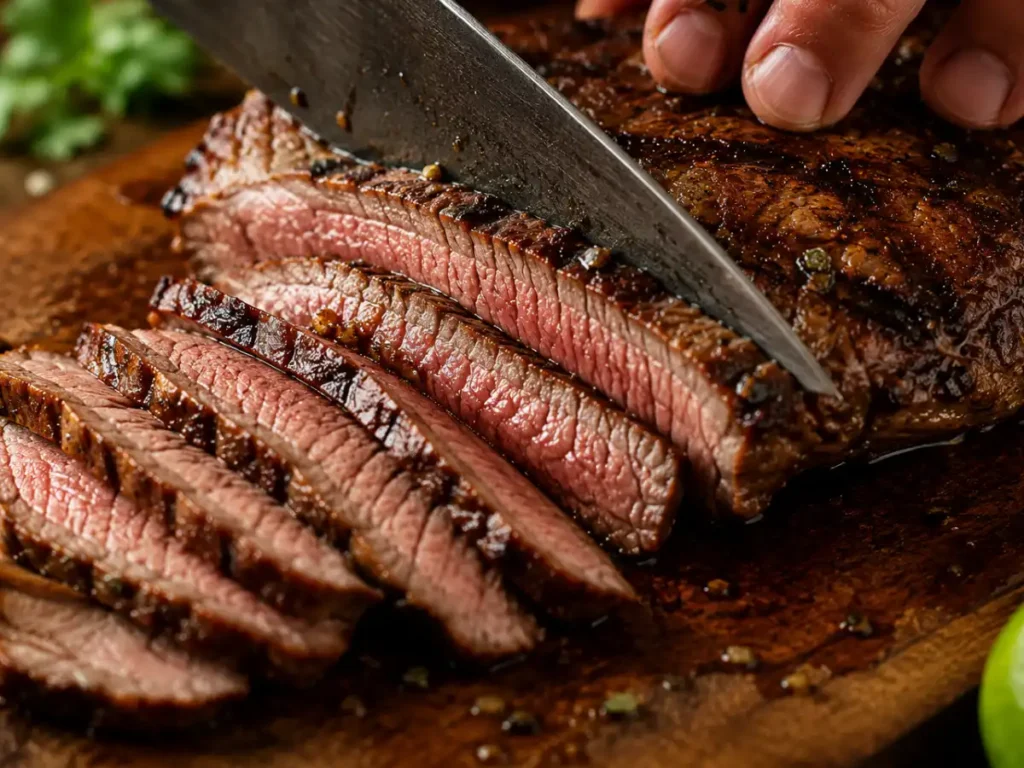
This step is non-negotiable, and it’s the one that separates tender fajitas from chewy ones. Rest the steak 5 to 10 minutes, then look closely at the surface — you’ll see the muscle fibers running in one direction, like grain in wood. Slice thinly across those lines, not along them. On loose-grained cuts like skirt and flank, cutting with the grain leaves you chewing long, tough fibers. Cutting across them shortens every fiber, and the same steak suddenly eats tender.
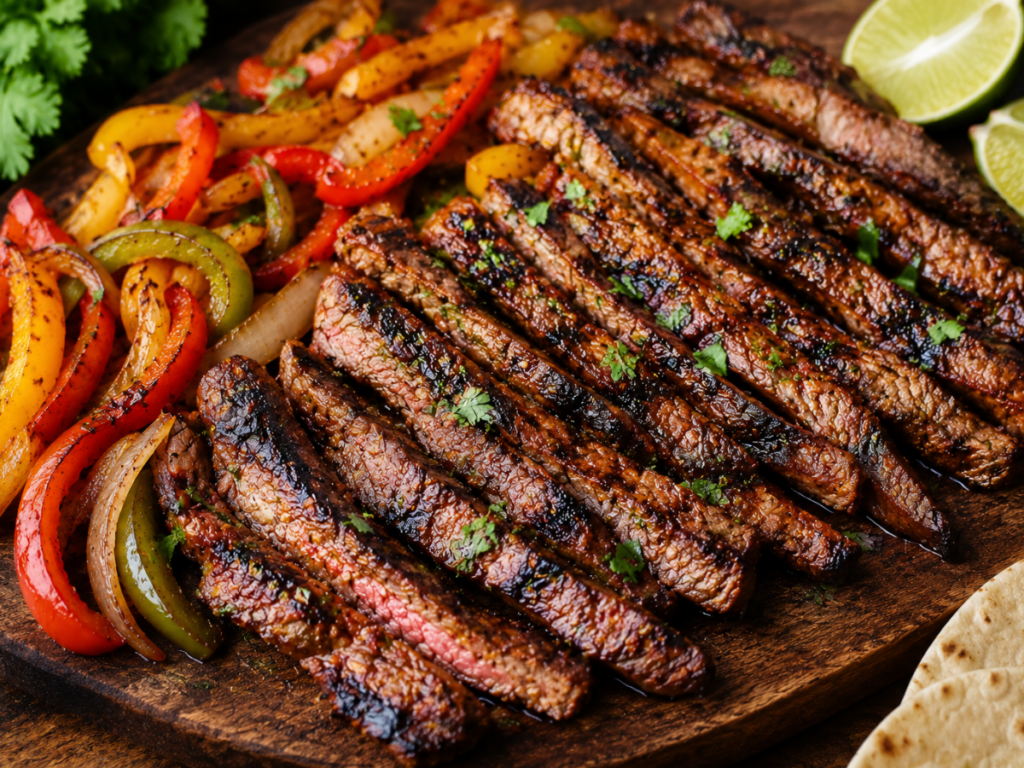
Tips for the Best Results
- Pat the steak dry before it hits the heat — wet meat steams instead of searing.
- Marinate in the fridge, always, in a zip-top bag for even coverage.
- Never reuse marinade that touched raw meat.
- Set aside a little clean marinade (before it touches the steak) to drizzle over the sliced meat.
- Respect the clock — check the chart above, especially with pineapple.
- Let the steak sit out for 20 minutes before cooking so it cooks evenly.
Make-Ahead & Storage
Marinate and freeze: combine the raw steak and marinade in a freezer bag and freeze it flat. It marinates itself as it thaws in the fridge, so it’s ready to cook the moment it’s defrosted. Keeps up to 3 months.
Cooked leftovers keep 3 to 4 days in the fridge. Reheat quickly in a hot skillet — low and slow will just overcook it.
Frequently Asked Questions
How do you marinate steak for fajitas?
Whisk together oil, lime juice, soy sauce, garlic, and Tex-Mex spices, then coat the steak in a zip-top bag and refrigerate for 2 to 4 hours. Discard the used marinade, cook over high heat, rest, and slice against the grain.
How long should you marinate steak for fajitas?
For a classic lime-based steak fajita marinade, 2 to 4 hours is the sweet spot. Thirty minutes still adds flavor. Past 4 hours, the acid can start to turn the surface chewy.
How do you marinate skirt steak for fajitas?
Skirt steak is loose-grained and absorbs marinade faster than other cuts, so 1 to 3 hours is plenty. Cook it hot and fast, then slice thinly across the grain.
What is a good marinade for steak fajitas?
A good one balances fat, acid, salt/umami, and spices: olive oil, lime juice, soy sauce, garlic, cumin, chili powder, and smoked paprika. That combination tenderizes the meat and delivers classic fajita flavor.
Can you marinate steak for fajitas overnight?
Only with a diluted or low-acid marinade. Straight lime juice will make the steak chewy after about 4 hours, and pineapple juice will turn it mushy in under 2. If you want to prep ahead, freeze the steak in the marinade instead.
Can I use the same marinade for chicken and steak?
Yes — this marinade works on both. Chicken just needs slightly different timing; see my chicken fajita marinade for the details.
Can I make it without lime? Absolutely
Swap in lemon juice 1:1, use orange juice for a sweeter result, or use a tablespoon of vinegar in a pinch.
What’s the best cut of steak for fajitas?
Skirt steak is the classic and the most flavorful. Flank steak is a great, widely available alternative. Both need to be sliced against the grain.
Nail the steak fajita marinade and the rest of fajita night takes care of itself. Mix it up, respect the clock, get your pan or grill screaming hot, and slice against that grain — and you’ll have steak fajitas that genuinely rival the restaurant. 🥩🌶️
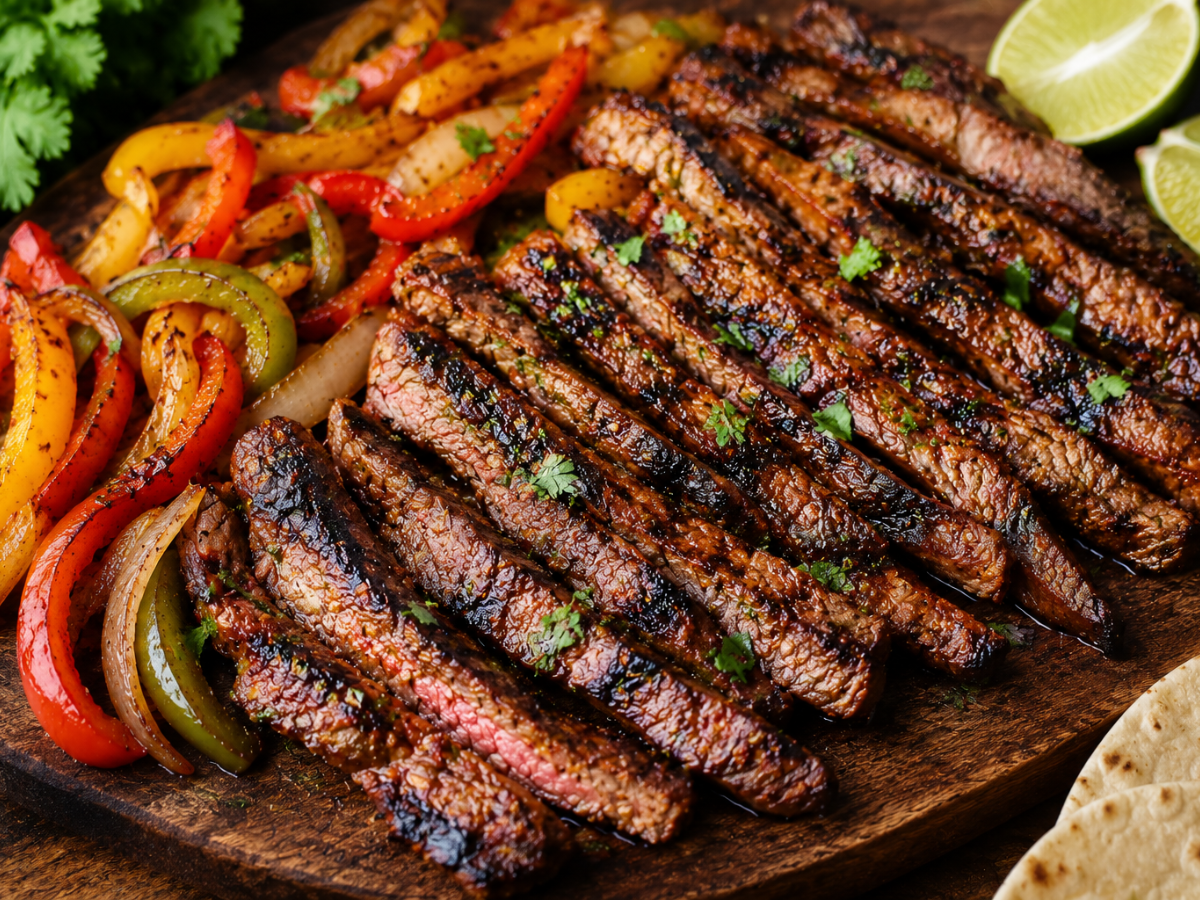

Steak Fajita Marinade
Ingredients
Equipment
Method
- In a bowl, whisk together the olive oil, lime juice, soy sauce, garlic, cumin, chili powder, smoked paprika, salt, pepper, cayenne, and cilantro.
- Place the steak in a zip-top bag or shallow dish and pour the marinade over, turning to coat both sides.
- Seal and refrigerate. Marinate 2 to 4 hours for the best results (1 to 3 hours for skirt steak, which absorbs faster). Do not exceed 4 hours — the lime juice can turn the surface chewy.
- Remove the steak and discard the used marinade. Pat the steak dry and let it sit at room temperature for about 20 minutes.
- Cook over high heat — on a hot grill or in a screaming-hot cast-iron skillet — about 3 to 4 minutes per side for skirt steak, until well charred and 145°F for medium-rare.
- Rest the steak 5 to 10 minutes, then slice thinly against the grain. Serve in fajitas with peppers, onions, and warm tortillas.