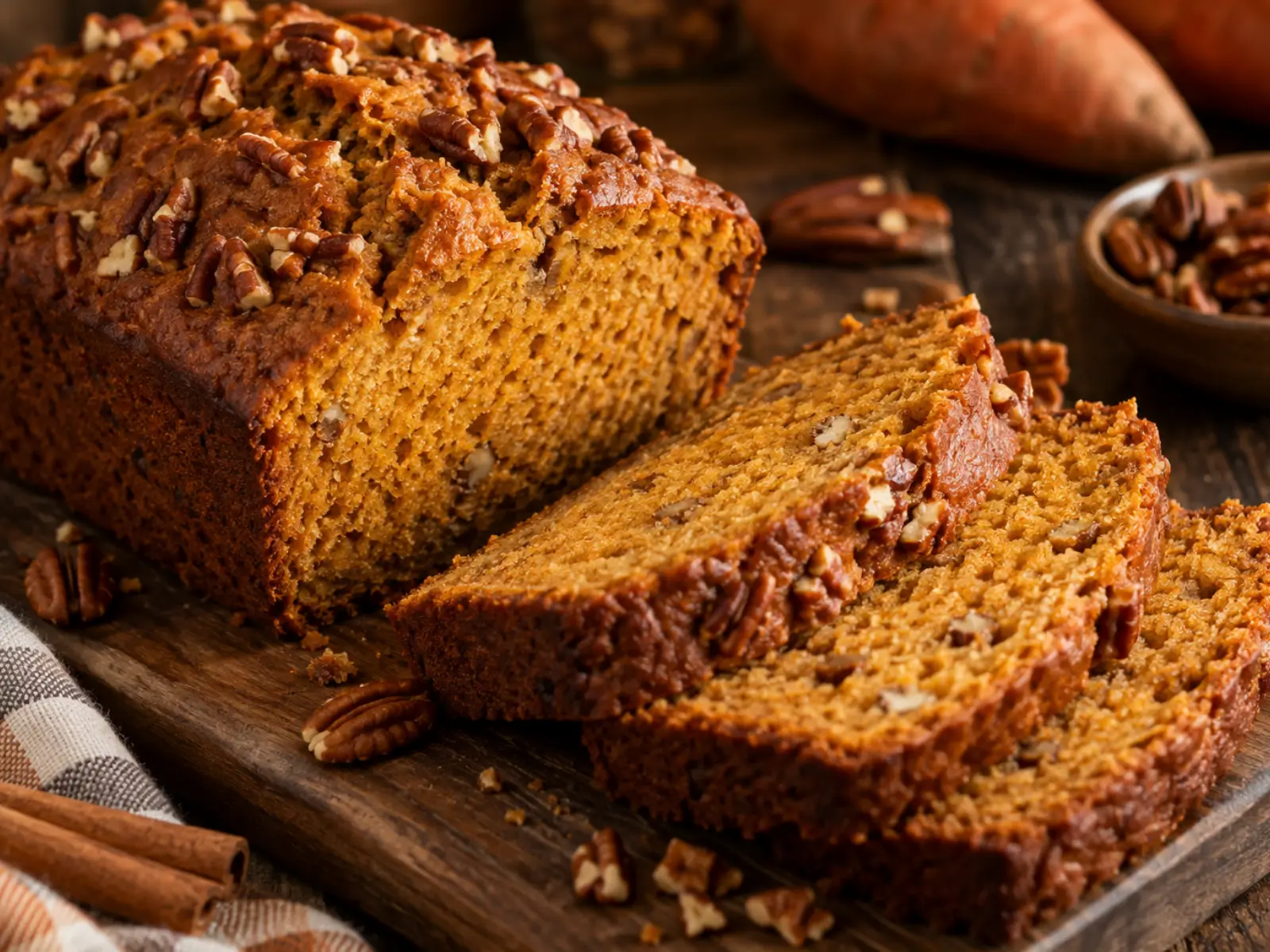
If you’ve got a sweet potato and a loaf pan, you’re already most of the way to a really good loaf.
This sweet potato bread recipe bakes up soft and moist, with warm cinnamon, nutmeg, and just enough sweetness to make a slice feel like a treat without turning the whole thing into cake. The sweet potato gives the loaf its color, body, and plenty of moisture, while brown sugar and neutral oil help the crumb stay tender even after it cools.
The only part that needs a little attention is moisture. Sweet potatoes can hold very different amounts of water depending on how they’re cooked, so measure the mash instead of relying on “one sweet potato.” Get that right, mix the batter gently, and bake the center all the way through, and you’ll have clean, tender slices instead of a gummy streak down the middle.
Table of Contents
Quick Overview
| Detail | Info |
|---|---|
| Prep Time | 15 minutes |
| Bake Time | 55–65 minutes |
| Cooling Time | About 1 hour |
| Yield | 1 loaf, about 10 slices |
| Pan | 9×5-inch loaf pan |
| Oven | 350°F / 175°C |
| Skill Level | Beginner-friendly |
Note: These times assume your sweet potato is already cooked. If you’re roasting it from raw, add roughly 45–60 minutes.
Why This Sweet Potato Bread Stays Moist
This is a quick bread, which means there’s no yeast, no kneading, and no waiting around for dough to rise. Once the batter is mixed, it goes straight into the loaf pan.
The sweet potato keeps the middle soft, but there’s a limit. Adding extra mash because you have some left over can actually make the center heavy and slow to bake.
Brown sugar gives the loaf a deeper flavor, neutral oil keeps it tender once cool, and the spices stay in the background instead of covering up the sweet potato.
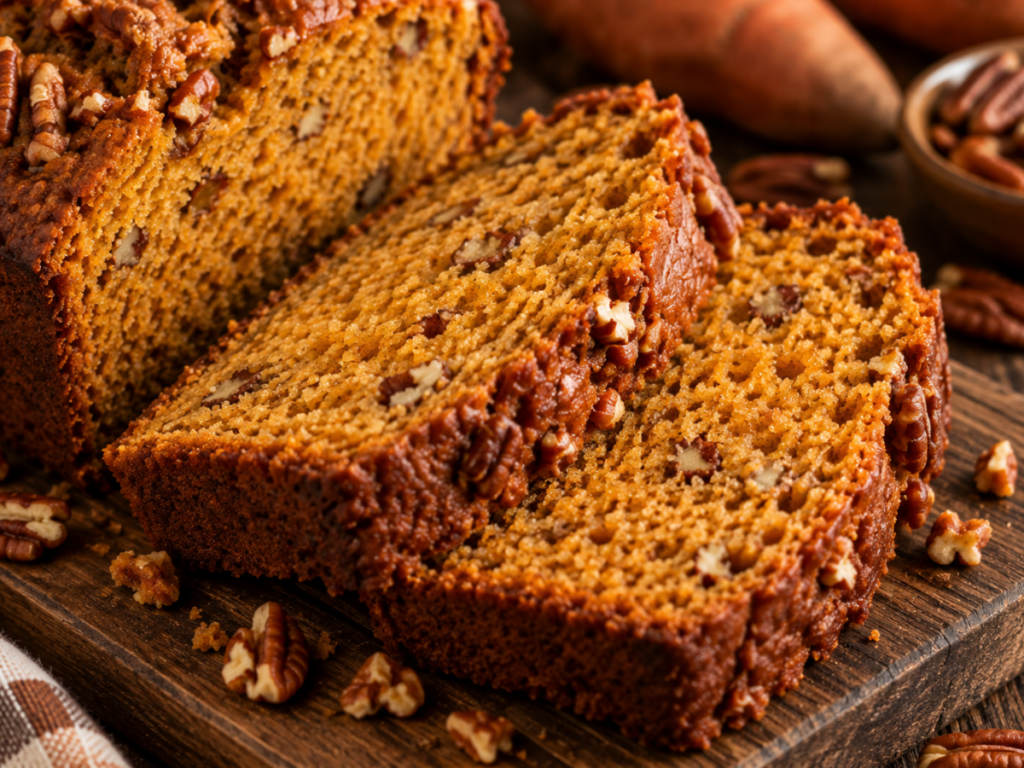
A properly baked slice should feel moist and soft, but not sticky or wet. Let the loaf cool before cutting it and the crumb should hold together cleanly.
Ingredients You’ll Need
Sweet Potato
Use 1 cup (240 g) cooked, mashed sweet potato.
Aim for a smooth mash. Tiny bits are fine, but large chunks can leave damp pockets inside the finished loaf.
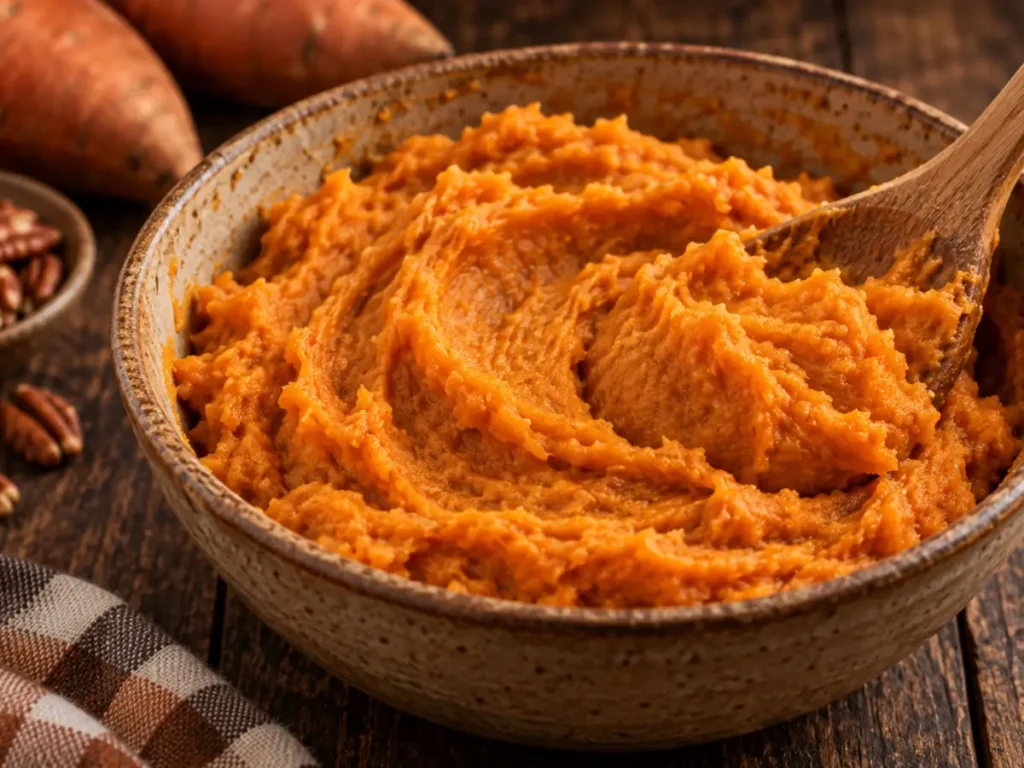
Let the mash cool before adding it to the batter.
All-Purpose Flour
You’ll need 1¾ cups (210 g).
A kitchen scale is worth using here. Flour is easy to overmeasure with a cup, and too much flour can turn a soft loaf dry surprisingly fast.
King Arthur Baking also recommends weighing flour when possible for more consistent baking results: how to measure flour accurately.
Brown Sugar and Granulated Sugar
Brown sugar brings a little caramel depth and helps the crumb stay soft.
A smaller amount of granulated sugar rounds out the sweetness without making the loaf overly rich.
Eggs
Two large eggs give the bread structure and help hold the moist crumb together.
Neutral Oil
Canola, vegetable, avocado, or another mild-tasting oil works.
Oil stays fluid after the loaf cools, which helps keep quick breads tender the next day.
Cinnamon, Nutmeg, and Ginger
Cinnamon does most of the work, while nutmeg and a small amount of ginger fill out the flavor.
The spices should support the sweet potato, not make the loaf taste like spice cake.
Pecans
Pecans are optional, but they add a nice bit of crunch against the soft crumb.
Toast them first if you want a stronger nutty flavor.
The Best Way to Prepare Sweet Potatoes for Bread
There are several ways to cook sweet potatoes, but they don’t all leave behind the same amount of moisture.
Baking or Roasting
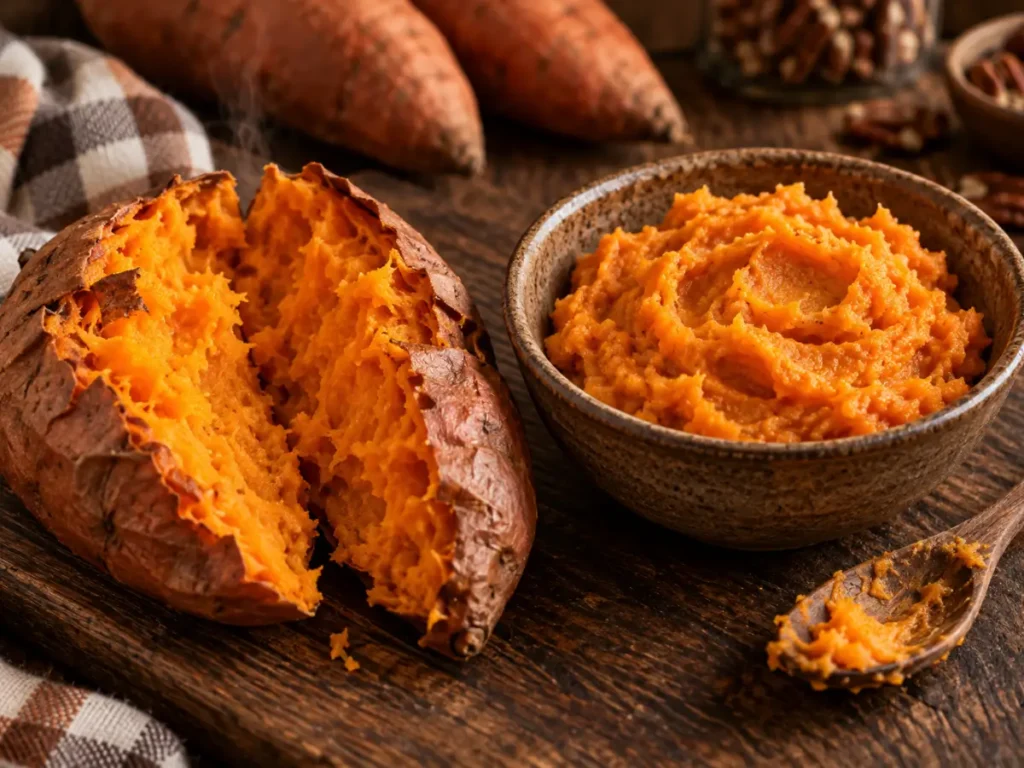
Roasting is a great choice because the potato cooks without sitting in water.
Bake a whole sweet potato at 400°F (200°C) for about 45–60 minutes, depending on size, until a knife slides easily through the center.
Let it cool, remove the skin, then mash until smooth.
University of Illinois Extension also lists baking, boiling, microwaving, and puréeing among practical ways to prepare sweet potatoes: preparing sweet potatoes.
Boiling
Boiling works too. The important part comes afterward.
Peel and cut the sweet potato into chunks, simmer until completely tender, then drain thoroughly. Leave the pieces in the colander for a few minutes so excess steam can escape before mashing.
Any extra water left in the potato eventually ends up in the batter.
The same moisture issue matters in our sweet potato casserole recipe, where well-drained mashed sweet potatoes make a noticeable difference.
Microwaving
For the fastest method, pierce the sweet potato several times with a fork and microwave until completely tender.
Let it cool enough to handle, scoop out the flesh, and mash.
Go by tenderness rather than an exact number of minutes because potato size and microwave power vary.
Can You Use Canned Sweet Potatoes?
Yes, but plain sweet potato or unsweetened purée is the safer choice.
Be careful with sweet potatoes packed in syrup. The extra liquid and sugar can change both the sweetness and the texture of the bread.
Whatever preparation method you use, measure out 240 g of thick mashed sweet potato before making the batter.
How to Make Sweet Potato Bread
1. Prepare the Pan
Preheat the oven to 350°F (175°C).
Grease a 9×5-inch loaf pan lightly and line it with parchment paper, leaving enough overhang to lift the loaf out after baking.
2. Mix the Wet Ingredients
In a large bowl, whisk together:
- 1 cup (240 g) mashed sweet potato
- ⅔ cup (135 g) packed light brown sugar
- ¼ cup (50 g) granulated sugar
- ½ cup (120 ml) neutral oil
- 2 large eggs
- 1 teaspoon vanilla extract
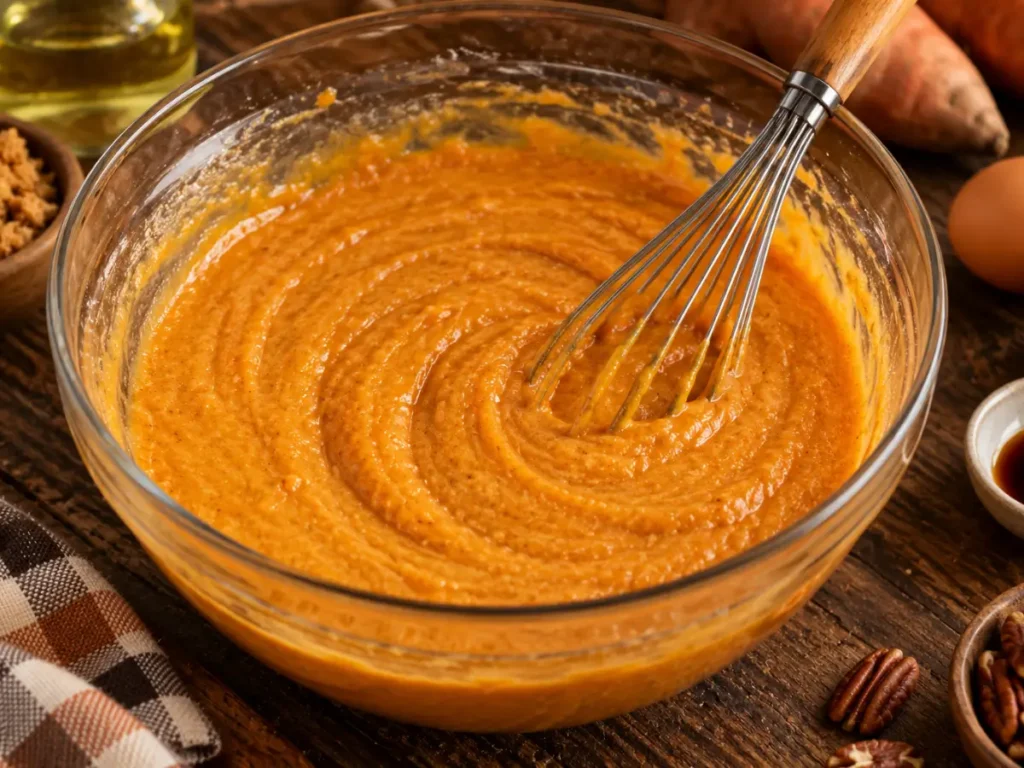
Whisk until the mixture is smooth and evenly orange, with no visible streaks of egg or large sweet potato lumps.
3. Mix the Dry Ingredients
In a separate bowl, whisk together:
- 1¾ cups (210 g) all-purpose flour
- 1 teaspoon baking soda
- ½ teaspoon baking powder
- ½ teaspoon fine salt
- 1½ teaspoons ground cinnamon
- ½ teaspoon ground nutmeg
- ¼ teaspoon ground ginger
Mixing the dry ingredients separately helps distribute the leavening and spices evenly.
4. Bring the Batter Together
Add the dry ingredients to the sweet potato mixture.
Fold gently with a spatula just until the last streaks of flour disappear.
Then stop.
A few small lumps are completely fine. Mixing until the batter looks perfectly smooth can develop too much gluten and leave the bread heavier than it needs to be.
Fold in ½ cup chopped pecans if using.
5. Fill the Pan
Scrape the batter into the prepared loaf pan and smooth the surface.
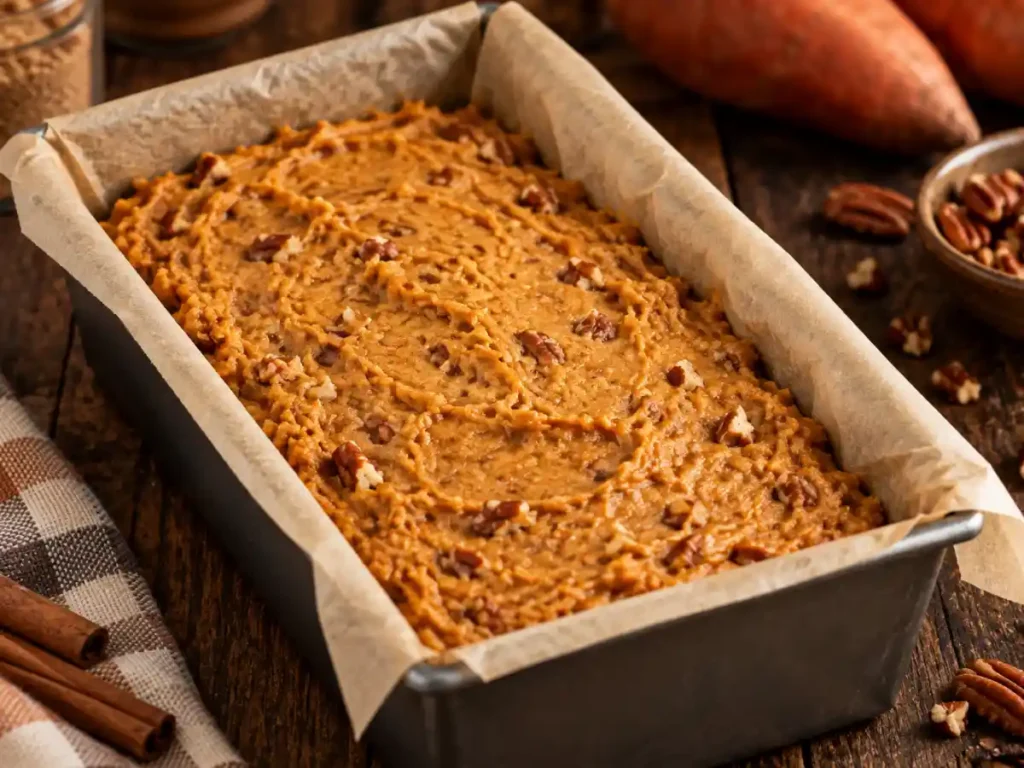
The batter should be thick enough to mound slightly when it falls from the spatula, but soft enough to spread without much effort.
6. Bake
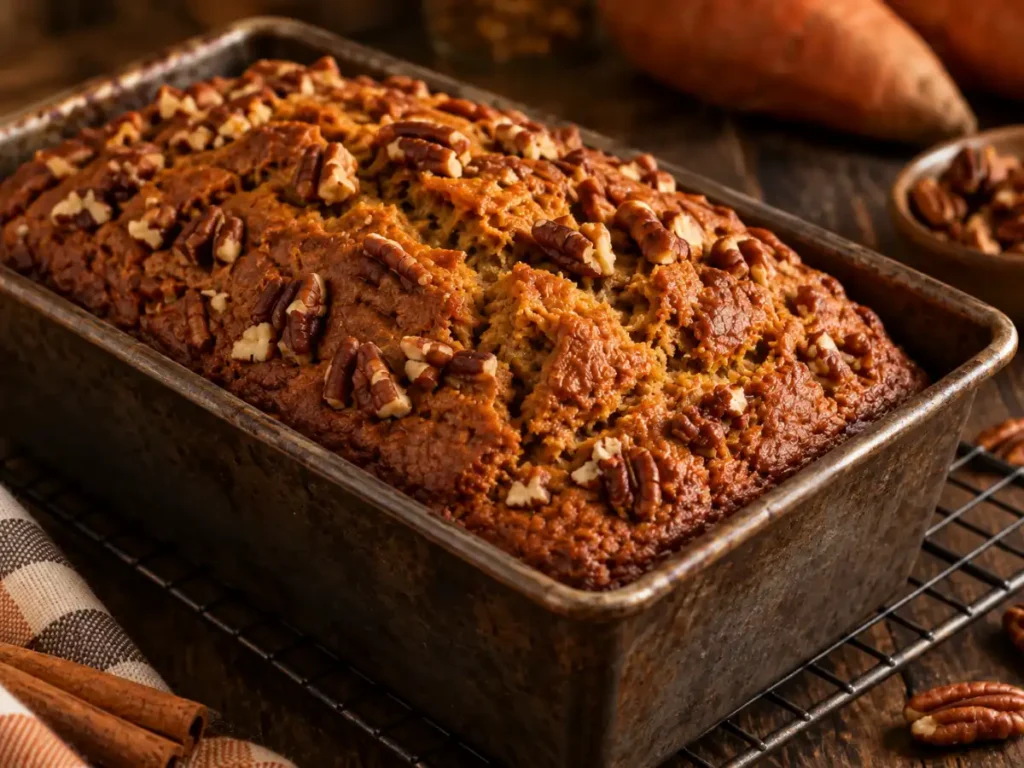
Bake for 55–65 minutes.
Start checking around the 50-minute mark.
If the top is already nicely browned but the center needs more time, place a loose sheet of foil over the loaf and continue baking.
The loaf is ready when a skewer inserted into the center comes out with a few moist crumbs but no shiny wet batter.
7. Cool Before Slicing
Leave the bread in the pan for about 15 minutes, then transfer it to a wire rack.
Let it cool for at least another 45 minutes before slicing.
Warm quick bread can look gummy even when it’s properly baked because the crumb hasn’t finished setting yet.
What Should Sweet Potato Bread Batter Look Like?
“Mix until combined” doesn’t tell you much if you don’t know what the batter is supposed to look like.
The finished batter should be thick, glossy, and spoonable.
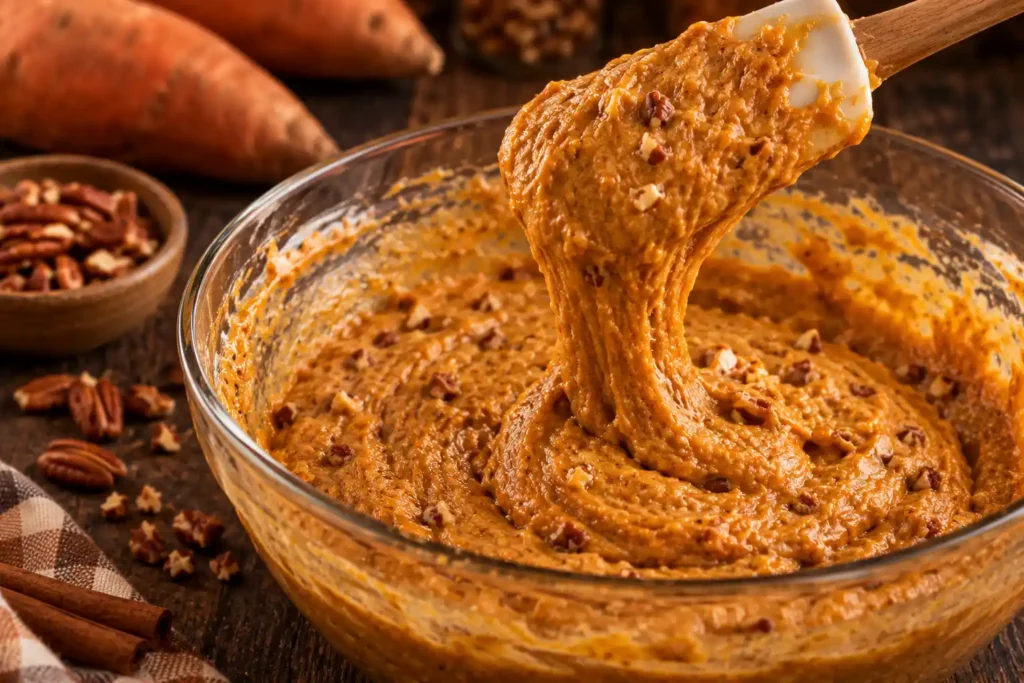
Lift the spatula and it should fall back into the bowl in heavy ribbons. It should not pour like pancake batter.
If it runs easily, the sweet potato may be carrying too much water.
If it feels unusually stiff and difficult to fold, check the flour measurement before adding anything else.
And don’t add extra mashed sweet potato simply because you have some left. More sweet potato doesn’t automatically mean a moister loaf. Too much can make the center dense and slow to bake.
Small Details That Make a Better Loaf
Measure the sweet potato. Use 240 g rather than “one potato.” Sweet potatoes vary enormously in size.
Drain boiled potatoes well. Give them a few minutes to steam off after cooking.
Weigh the flour if possible. Extra flour means a drier crumb.
Stop mixing when the flour disappears. Overmixing works against the soft texture we want.
Use a 9×5-inch loaf pan. A narrower pan makes a deeper loaf that will usually need more time.
Wait before slicing. The crumb continues setting as the loaf cools.
How to Tell When Sweet Potato Bread Is Done
Use the bake time as a range rather than a guarantee.
Look for three things.
The Top
It should look dry and set with a gently risen center.
A crack running along the top is completely normal.
The Toothpick
Insert a toothpick or thin skewer into the thickest part of the loaf.
A few moist crumbs: done.
Shiny wet batter: give it more time.
The Center
Gently move the pan. The middle shouldn’t wobble.
If the outside looks finished before the center is ready, cover the top with foil and continue baking in short intervals.
Sweet Potato Bread Troubleshooting
| Problem | Likely Cause | What to Do |
|---|---|---|
| Gummy center | Excess moisture or underbaking | Measure the sweet potato, drain boiled potatoes well, and bake until the center is fully set |
| Loaf sank in the middle | Center wasn’t baked through or batter was too wet | Judge doneness in the center rather than relying only on the timer |
| Dense bread | Overmixed batter or too much flour | Fold gently and weigh the flour when possible |
| Dry bread | Excess flour or overbaking | Stick close to 210 g flour and begin checking early |
| Top browned too quickly | Strong oven heat or dark pan | Cover loosely with foil once the top has enough color |
| Bread stuck to the pan | Pan wasn’t prepared well | Grease and line with parchment |
For another loaf where moisture and doneness matter just as much, try our chocolate chip banana bread recipe.
Variations Worth Making
Keep the basic loaf intact and change one thing at a time.
Pecan Sweet Potato Bread
Fold ½ cup chopped pecans into the batter.
You can scatter a few extra pieces over the top before baking.
Walnut Sweet Potato Bread
Replace the pecans with the same amount of chopped walnuts.
Chocolate Chip Sweet Potato Bread
Use ½ cup semi-sweet chocolate chips instead of nuts.
Cranberry-Orange Sweet Potato Bread
Fold in ½ cup dried cranberries and add 1 teaspoon finely grated orange zest to the wet ingredients.
The tart cranberries work especially well with the mellow sweetness of the potato.
How to Store Sweet Potato Bread
Let the loaf cool completely before wrapping it.
Wrapping warm quick bread traps condensation, which can leave the outside sticky.
Room Temperature
Store tightly wrapped or in an airtight container for about 3 days in a cool kitchen.
Colorado State University Extension lists baked quick breads among foods that generally do not require refrigeration when used within roughly 3–4 days: quick bread storage guidance.
Freezing
Sweet potato bread freezes very well.
For easy portions:
- Cool the loaf completely.
- Slice it.
- Wrap individual slices tightly.
- Transfer them to a freezer-safe bag or container.
For best quality, use frozen quick bread within about 2–3 months.
Thaw slices at room temperature, then warm briefly if you like.
Sweet Potato Bread FAQ
Can I use canned sweet potatoes?
Yes, as long as they’re plain rather than packed in heavy syrup. Drain excess liquid and measure 240 g before adding them to the recipe.
Can I use leftover mashed sweet potatoes?
Plain mashed sweet potatoes are usually much easier to work with than leftover casserole.
A casserole may already contain butter, milk, sugar, marshmallows, or other ingredients that change the moisture and sweetness of the batter.
Do I need to peel the sweet potato?
Not before roasting it whole.
Bake it with the skin on, let it cool, then scoop out the flesh.
If you’re boiling chunks, peeling first is simpler.
Can I make muffins instead?
The batter can be divided among muffin cups, but the baking time will be much shorter than the loaf time.
Begin checking early rather than using the loaf timing.
Does sweet potato bread need to be refrigerated?
Not for short-term storage if there’s no perishable frosting or filling.
Keep it well wrapped at room temperature for a few days, or freeze it for longer storage.
Is sweet potato bread healthy?
Sweet potatoes themselves provide nutrients, including provitamin A carotenoids, but this is still a sweet quick bread made with flour, sugar, and oil.
So it makes more sense to judge the full recipe and serving size than to label the loaf simply “healthy.”
The NIH Office of Dietary Supplements lists baked sweet potato as a rich dietary source of vitamin A: Vitamin A and carotenoids.
More Recipes to Try
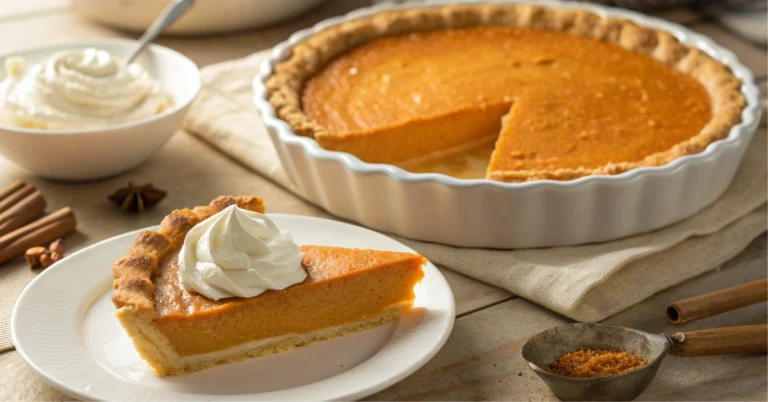
If you still have sweet potatoes on hand, our sweet potato pie recipe is the natural next bake.
For a classic holiday side, try our sweet potato casserole recipe.
If you’re in a quick-bread mood, try the chocolate chip banana bread recipe.
For an especially simple loaf, there’s also our 4-ingredient banana bread recipe.