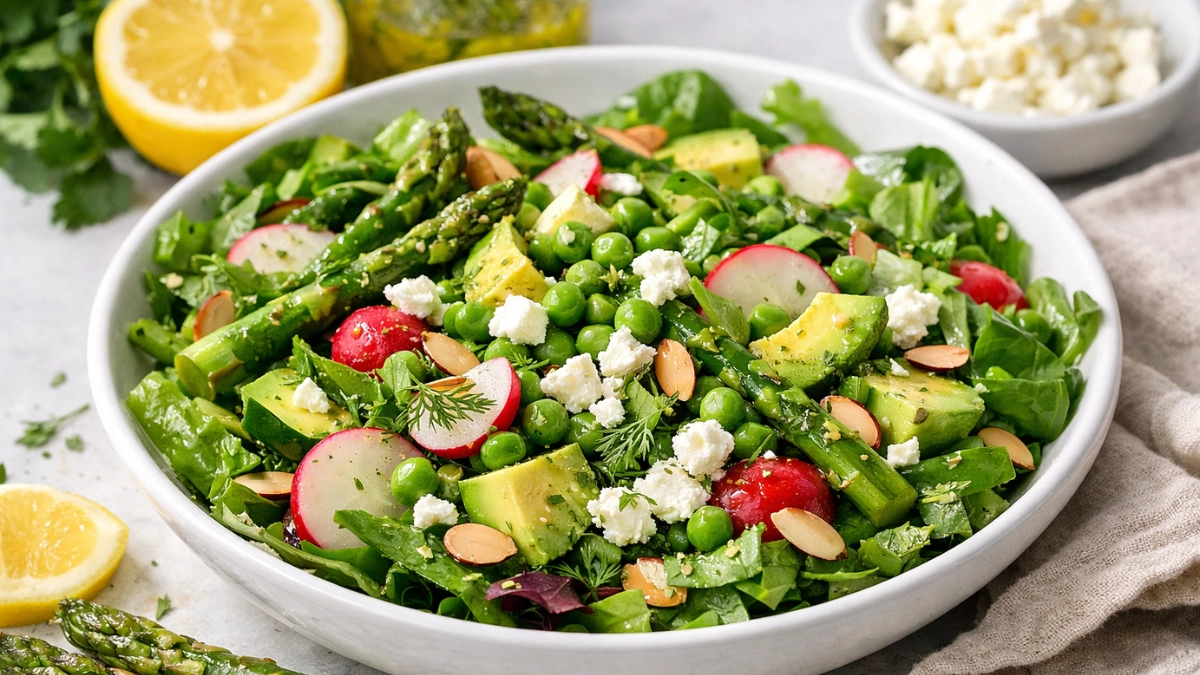
This spring salad recipe is crisp, colorful, and built around the ingredients people actually want to eat this time of year. It combines tender greens, asparagus, peas, radishes, avocado, fresh herbs, and a bright lemon-herb vinaigrette for a salad that feels light but still satisfying. It works as an easy lunch, a fresh dinner side, or part of a brunch or holiday spread.
Table of Contents
Quick Answer: What Makes This Spring Salad So Good?
A good spring salad tastes fresh right away, but what makes it memorable is contrast. You want tender greens, crisp vegetables, creamy avocado, salty cheese, crunchy toppings, and a dressing with enough acid to wake everything up. This version checks all of those boxes while staying flexible enough for different meals and easy enough for real life.
The best spring ingredients to use
The best spring salad ingredients are the ones that feel bright, tender, and seasonal. Mixed greens, baby spinach, butter lettuce, asparagus, peas, radishes, cucumber, avocado, and fresh herbs all work especially well. These ingredients keep the salad light and colorful without making it feel random or overloaded.
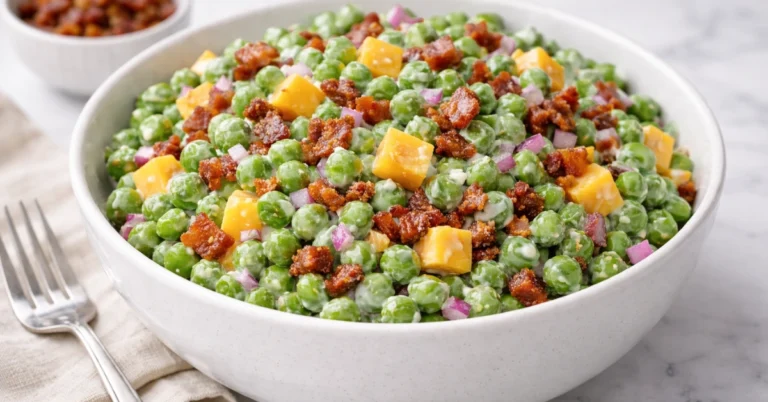
Asparagus and peas instantly give the salad a spring identity. Radishes add bite, avocado adds richness, and herbs like dill, chives, mint, or parsley make the flavor fresher. If you already enjoy peas in cold salads, my classic pea salad recipe is another good example of how sweet peas bring freshness and texture to the table.
The flavor and texture balance
The reason this salad feels more complete than a basic side salad is balance. Every bite should give you something crisp, something tender, something creamy, and something bright. The greens keep it light, the vegetables add freshness, the cheese brings salt and tang, and the nuts or seeds add crunch.
The vinaigrette matters just as much as the produce. A lemon-herb dressing keeps the salad lively and clean-tasting. Heavy dressings can hide the delicate flavor of spring vegetables, while a lighter vinaigrette lets the produce stay in the lead.
When to serve it
This spring salad recipe works in more settings than most salads. It fits a quick lunch, a dinner side, a brunch spread, an Easter table, or a potluck where you want something fresh among heavier dishes.
You can also turn it into more than a side. Add a protein and it becomes a lunch-worthy main. Keep it simple and it stays elegant enough for spring entertaining.
Why You’ll Love This Spring Salad
This is the kind of recipe that looks special without being difficult. It gives you fresh flavor, strong texture, and flexibility, which is exactly what most page-one competitors only partly deliver.
Fresh, colorful, and easy
The ingredients are easy to find, the prep is simple, and the finished salad looks beautiful without extra work. That combination matters. A recipe is more useful when it is both practical and appealing enough to serve to guests.
The color also does a lot of the work for you. Greens, peas, radishes, herbs, and avocado naturally create a bowl that looks seasonal and inviting, even before you add the dressing.
Flexible for lunch, brunch, or gatherings
Some salads only work as a side dish, but this one can do more. Serve it lightly dressed with brunch, bulk it up with protein for lunch, or set it out family-style for a spring gathering.
That flexibility makes it more valuable than a one-purpose salad. It adapts to weekday meals just as easily as it does to entertaining.
Easy to customize
This recipe gives you a structure, not a limitation. If you do not have asparagus, use snap peas or cucumber. If you do not want goat cheese, use feta or shaved Parmesan. If you want more substance, add chicken, salmon, chickpeas, or eggs.
That flexibility helps the recipe stay useful even when your fridge or occasion changes.
Ingredients You’ll Need
This salad works best when each ingredient has a clear role. The greens form the base, the spring vegetables bring freshness, the toppings add contrast, and the vinaigrette connects everything.
Greens and spring vegetables
Use a mix of tender greens such as spring mix, butter lettuce, baby spinach, or arugula. Then add spring vegetables like asparagus, peas, radishes, and cucumber.
A reliable combination is:
- spring mix or baby greens
- asparagus
- peas
- radishes
- cucumber
- avocado
- fresh herbs
This blend gives you freshness, sweetness, bite, and enough variety to make each forkful interesting.
Creamy, crunchy, and salty toppings
The toppings are what make the salad feel finished instead of flat. Avocado adds creaminess. Feta or goat cheese adds salt and tang. Toasted almonds, pistachios, walnuts, or seeds bring the crunch that keeps the salad satisfying.
You do not need a huge amount of each. Even a small handful of crunchy topping and a modest crumble of cheese can change the whole texture of the salad.
Lemon-herb vinaigrette ingredients
A simple lemon-herb vinaigrette is usually the best match for spring ingredients. Use olive oil, lemon juice, Dijon mustard, a little honey or maple syrup, garlic or shallot, salt, pepper, and chopped herbs.
The goal is a dressing that tastes bright and lively, not heavy. It should support the greens and vegetables, not cover them up.
Ingredient Notes and Easy Swaps
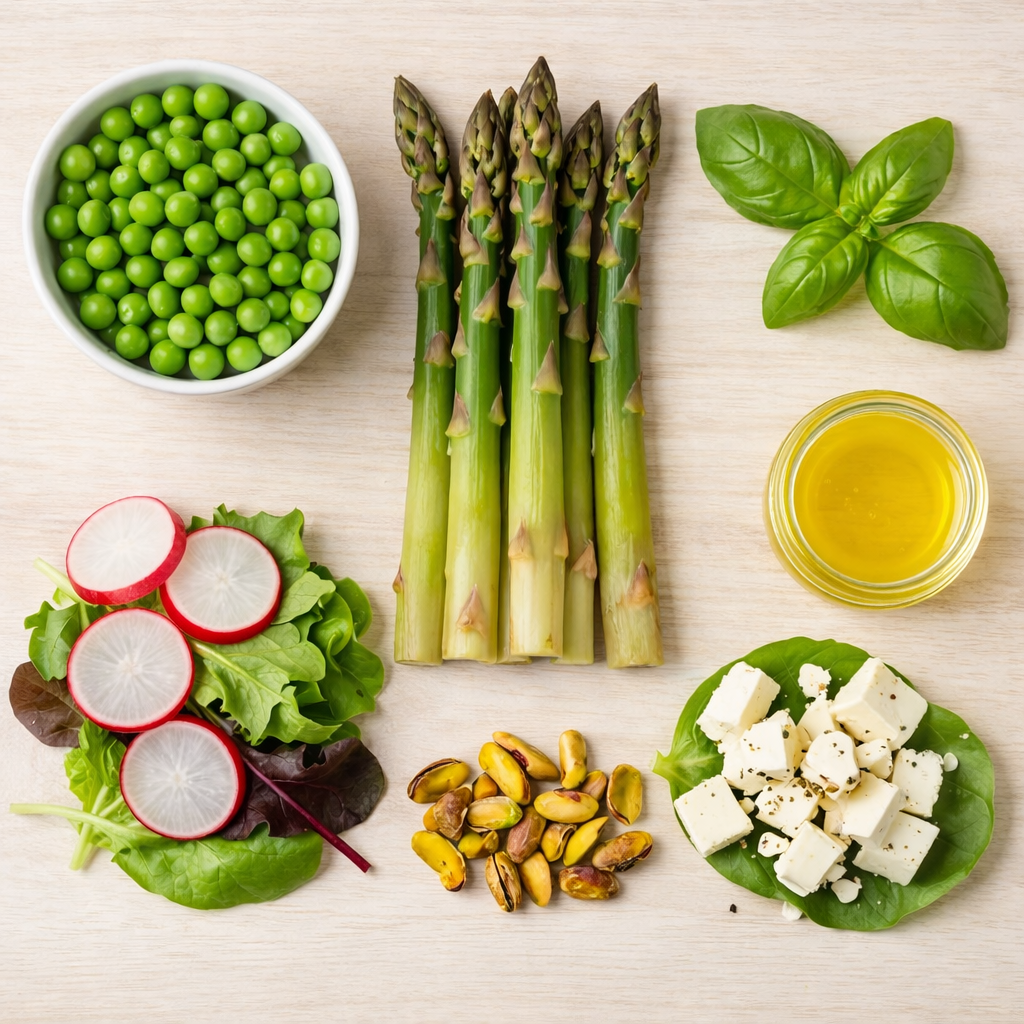
This section is what makes the recipe genuinely helpful. Instead of only listing ingredients, it helps you make smart substitutions while keeping the salad balanced.
Best greens for spring salad
The best greens depend on the texture you want. Spring mix and butter lettuce make the salad soft and delicate. Baby spinach adds more body. Arugula gives it a peppery edge that works especially well with lemon and cheese.
For the best result, combine two different textures. A soft lettuce with a slightly sturdier green usually creates a better overall bite than using only one type.
Fresh vs frozen peas
Fresh peas are excellent when in season, but frozen peas are often the better everyday choice. They are convenient, sweet, and easy to prepare without much effort.
For a salad, slightly firm peas work better than overcooked ones. A quick thaw or brief blanch is enough. If peas are one of the main ingredients you love in cold salads, the flavor profile overlaps nicely with this classic pea salad recipe.
Raw vs blanched or roasted asparagus
Raw asparagus can work if it is very thin and sliced into ribbons or very small pieces, but blanched asparagus is usually the best choice here. It keeps a crisp-tender texture and bright green color without tasting too tough or grassy.
Roasted asparagus adds deeper flavor, but it changes the overall feel of the salad. If your goal is a lighter, fresher spring salad, blanching is the better method.
Cheese, herb, and nut swaps
Feta gives the salad a salty, tangy bite. Goat cheese makes it creamier. Parmesan works if you want something more savory and less soft. Dill, parsley, mint, and chives all fit the spring profile well.
For crunch, almonds and pistachios are especially good because they taste clean and light. Walnuts are slightly richer, while sunflower seeds or pumpkin seeds are useful if you need a nut-free version.
Vegan, dairy-free, and nut-free options
For a vegan version, skip the cheese and use maple syrup instead of honey in the dressing. Add chickpeas, white beans, or extra avocado so the salad still feels satisfying. If you want another plant-based salad idea for the same audience, my raw vegan taco salad recipe fits naturally into that cluster.
For dairy-free, leave out the cheese and let herbs, crunch, and a well-seasoned vinaigrette do the flavor work. For nut-free, use toasted seeds instead of nuts.
How to Make Spring Salad Step by Step
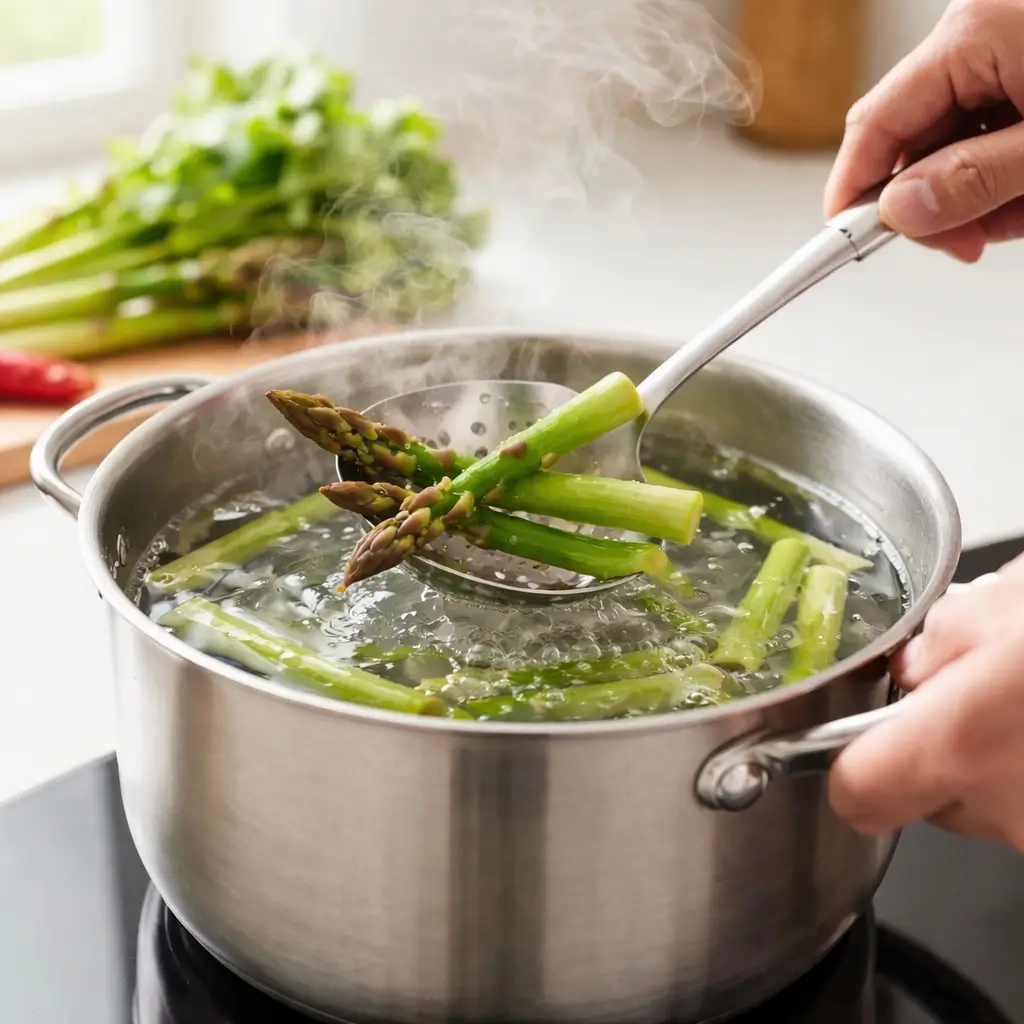
The method is simple, but the order matters. A salad that is assembled well stays crisp, tastes brighter, and looks better on the table.
Prep the vegetables
Wash and dry the greens thoroughly.
For extra food safety guidance when washing salad ingredients, see the FDA’s Selecting and Serving Produce Safely.
Trim the asparagus and blanch it for 1 to 2 minutes in salted boiling water, then move it to ice water to stop the cooking. Slice the radishes thinly, prep the cucumber, and thaw the peas if needed. Cut the avocado just before serving.
Make the dressing
Whisk together olive oil, lemon juice, Dijon mustard, honey or maple syrup, garlic or shallot, salt, pepper, and chopped herbs. Taste it before using it.
The dressing should taste slightly brighter and more seasoned than you think it needs to be. Once it coats the greens and vegetables, that sharpness softens.
Assemble in the right order
Start with the greens in a large bowl. Add asparagus, peas, radishes, cucumber, herbs, cheese, and part of the crunchy topping. Hold back the avocado and some of the nuts or seeds until the end.
This order keeps delicate ingredients from getting crushed and makes the finished salad look more layered and appealing.
Toss, taste, and serve
Add part of the dressing first, toss gently, and add more only if needed. Finish with avocado, extra herbs, more cheese, and the remaining crunchy topping.
Before serving, taste a final bite. If something feels off, it usually needs more salt, more acid, or one more layer of texture.
Expert Tips for the Best Texture and Flavor
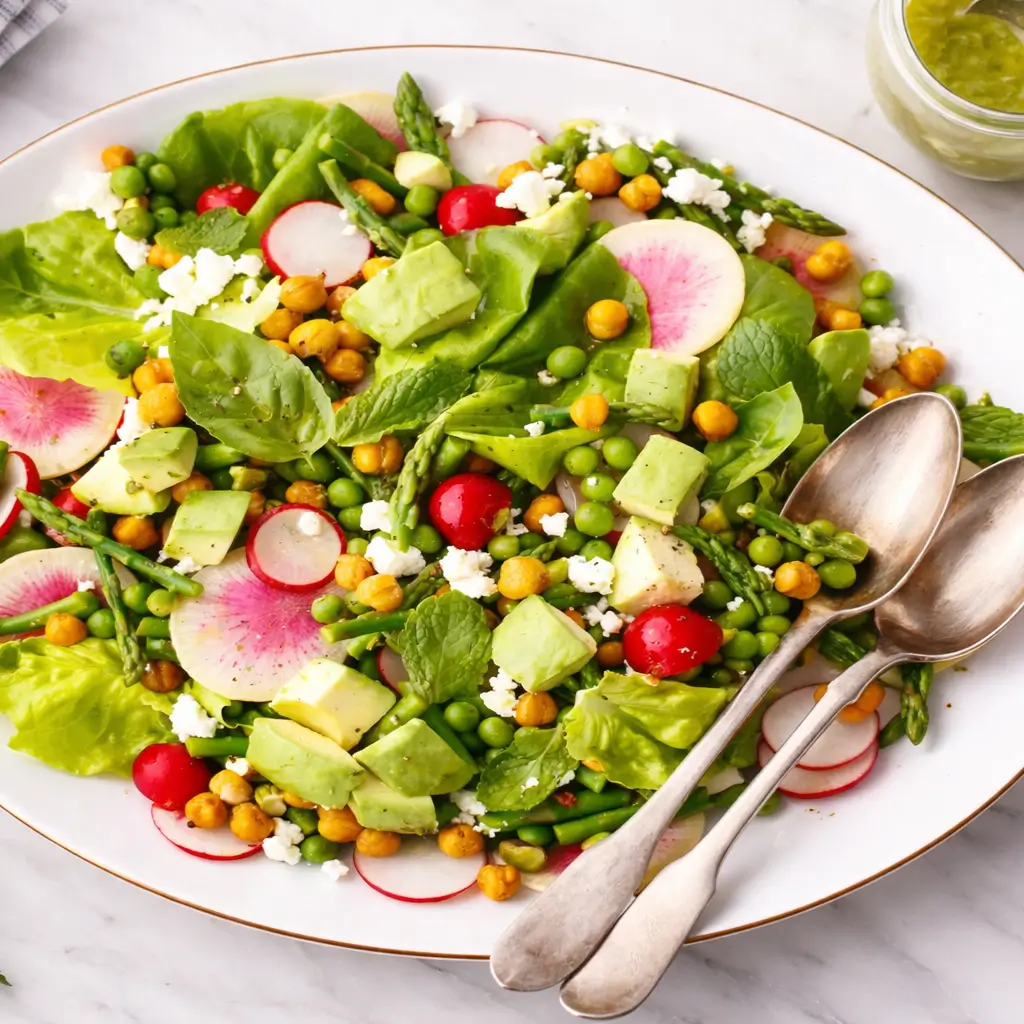
Small choices make a big difference in a salad like this. These are the details that help it outperform more basic versions.
How to keep the salad crisp
Dry the greens well, cool the asparagus quickly after blanching, and wait to dress the salad until shortly before serving. If you are prepping ahead, store the dressing separately and keep watery vegetables from sitting on the greens too long.
A large bowl also helps. It lets you toss the salad gently instead of compressing everything into a crowded pile.
When to add avocado, herbs, and crunchy toppings
Avocado should go in at the end so it stays neat and creamy. Delicate herbs should also be added right before serving so their flavor stays bright. Nuts or seeds should be the last addition so they keep their crunch.
That timing also improves leftovers. If those ingredients stay separate until the end, the salad tastes fresher for longer.
How to balance acid, salt, and creaminess
If the salad tastes dull, it usually needs more acid or salt. If it tastes too sharp, it may need a little sweetness or more creamy elements like avocado or cheese. If it feels too rich, lemon can bring it back into balance.
The best salads are not just fresh. They are balanced enough that every element makes the others taste better.
Common Mistakes to Avoid
Most weak salads fail because of timing and texture, not because the ingredient list was wrong.
Overcooking asparagus
Asparagus should be crisp-tender, not soft. If it goes too far, the salad loses one of its most appealing textures and starts to feel flat.
Thin asparagus needs less time than thick stalks. When in doubt, err on the side of slightly underdone.
Using wet greens
Wet greens dilute the dressing and make the salad soggier faster. Drying them well is one of the simplest ways to improve the final result.
This one step matters more than many people think. Dry greens hold dressing better and taste fresher.
Assembling too early
If you fully assemble and dress the salad too soon, the greens wilt and the crunchy toppings soften. Prep ahead if needed, but combine the components closer to serving time.
This is especially important for spring entertaining, where the salad needs to stay attractive on the table.
Overdressing the salad
A spring salad should be lightly coated, not soaked. Start with less dressing than you think you need and add more only if needed after tossing.
Too much dressing weighs down the greens and hides the delicate flavor of the spring vegetables.
Easy Variations
This recipe is flexible enough to work for different meals and preferences while still keeping its spring character.
High-protein spring salad
To turn this into a main dish, add grilled chicken, salmon, shrimp, hard-boiled eggs, tofu, chickpeas, or white beans. If your audience also likes hearty, protein-rich salads for lunch, a dense bean salad recipe is another strong internal link to keep within the same meal-prep and salad cluster.
Choose the protein based on the role you want the salad to play. Eggs and beans are great for brunch or lunch. Salmon and chicken work especially well for dinner.
Vegetarian and vegan version
The vegetarian version is easy as written with cheese included. For vegan, skip the cheese, use maple syrup in the dressing, and add beans, avocado, or seeds to keep the salad satisfying.
This version also works well for readers who already enjoy plant-based salads like my raw vegan taco salad recipe.
Easter or brunch version
For Easter or brunch, lean into soft greens, peas, asparagus, fresh herbs, cheese, and maybe a few sliced hard-boiled eggs. That gives the salad a spring holiday feel without making it too heavy.
It pairs especially well with egg dishes and savory brunch recipes, including Mediterranean baked feta eggs, which make a natural companion on a spring brunch table.
Picnic or potluck version
For picnics or potlucks, use slightly sturdier greens like baby spinach mixed with spring greens. Keep the dressing separate and wait to add avocado and crunchy toppings until serving time.
This version travels better and stays fresher longer, which makes it more practical for real gatherings.
What to Serve With Spring Salad
This salad can act as a side or become part of a fuller seasonal meal depending on what you serve with it.
Light lunch pairings
For lunch, pair it with soup, quiche, a small sandwich, or simple grilled chicken. If you want another filling salad for the same type of reader, my dense bean salad recipe is a strong related option for meal prep and high-protein lunches.
The key is keeping the rest of the meal simple enough that the salad still feels fresh and central.
Brunch pairings
For brunch, serve it with quiche, egg bakes, roasted potatoes, smoked salmon, or Mediterranean baked feta eggs. The salad adds brightness and texture to richer brunch dishes.
This is one of the easiest ways to make a brunch spread feel more complete without adding something heavy.
Dinner pairings
At dinner, it pairs especially well with grilled or baked fish, roast chicken, or lighter pasta dishes. A good in-site match is this salmon and spinach recipe, which keeps the meal fresh and balanced.
If the main dish is rich, keep the salad lighter. If the main dish is simple, you can make the salad more substantial with extra avocado, cheese, or nuts.
Make-Ahead, Meal-Prep, and Storage
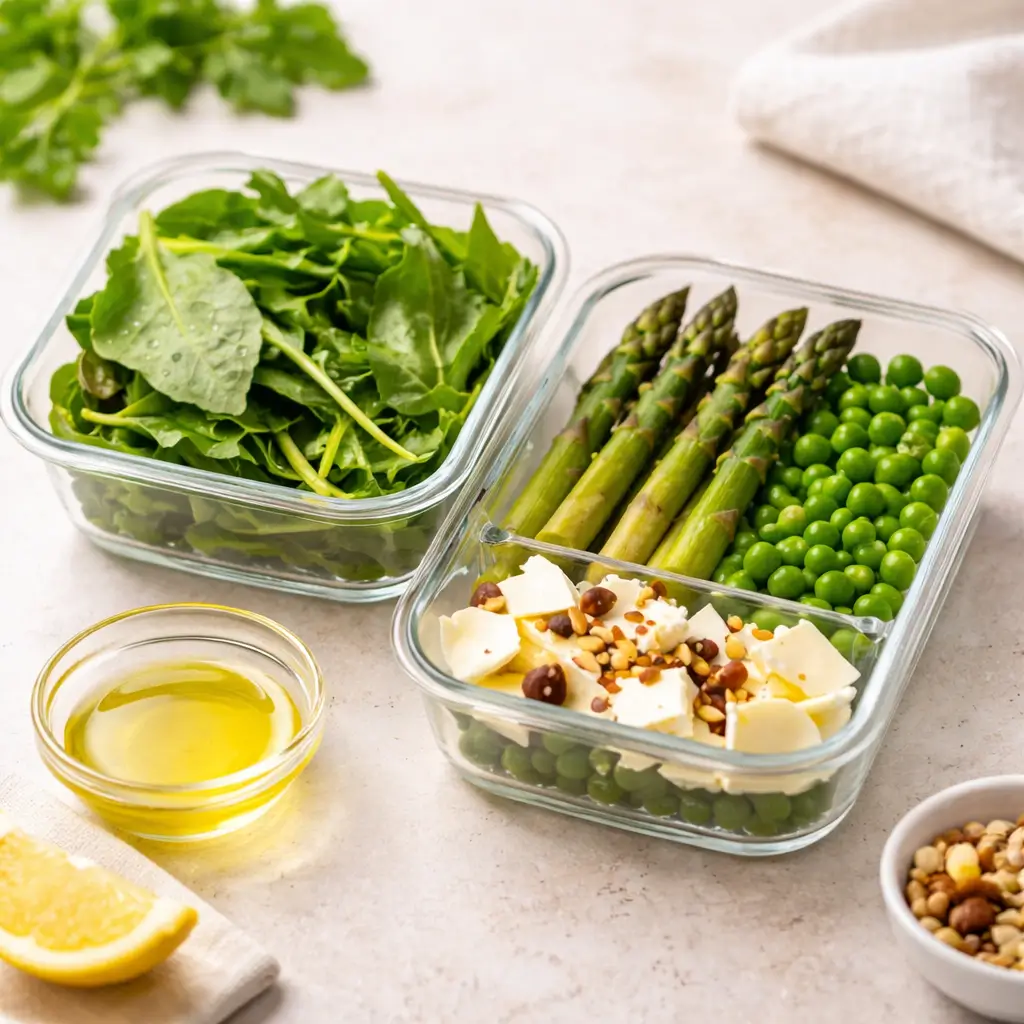
A spring salad can be prepped ahead successfully, but only if you separate the components correctly.
What to prep 1–2 days ahead
You can wash and dry the greens, blanch the asparagus, slice the radishes, mix the dressing, and toast the nuts 1 to 2 days in advance. Store each component separately in airtight containers.
This keeps the final assembly fast without sacrificing freshness.
What to keep separate until serving
Keep the dressing, avocado, delicate herbs, cheese, and crunchy toppings separate until close to serving. If possible, keep moisture-heavy ingredients away from the greens until the end.
That one habit makes the salad noticeably fresher and helps preserve its texture.
How to store leftovers
If the salad is already dressed, leftovers are best eaten the same day or by the next day. Store them in an airtight container in the refrigerator.
If the components are separate, they will hold much better. That is the best strategy for meal prep.
How long it lasts
Undressed components usually last 2 to 3 days in the fridge, depending on the ingredients. Dressed salad is best the day it is made. Avocado is the shortest-lived ingredient, so add it only when needed.
If the greens wilt or the crunch disappears, the salad is already past its best texture.
Spring Salad FAQs
These are the follow-up questions users often have once they decide to make the salad.
Can I make spring salad the day before?
You can prep almost all of it the day before, but do not fully dress and assemble it unless you are fine with a softer texture. The best approach is to prep the greens, vegetables, dressing, and toppings separately, then combine them closer to serving.
What dressing goes best with spring salad?
A lemon-herb vinaigrette is usually the best choice because it keeps the salad bright and supports delicate spring vegetables. Dijon vinaigrette or a light shallot vinaigrette also work well.Heavy creamy dressings can work, but they usually mute the fresh spring feel.
What are the best greens for spring salad?
Spring mix, butter lettuce, baby spinach, and arugula are all great choices. The best result usually comes from mixing two greens with different textures.
That gives you softness, structure, and more interesting bites throughout the salad.
Can I use frozen peas or raw asparagus?
Yes. Frozen peas work very well and are often the easiest option. Raw asparagus can work if it is sliced very thin, but blanched asparagus is usually better for texture and easier eating.
What protein can I add?
Grilled chicken, salmon, shrimp, hard-boiled eggs, chickpeas, tofu, or white beans all work well. The right choice depends on whether you want the salad to stay light or become more filling.
If you want something closer to a full hearty salad meal, the audience for this recipe will often also respond well to my crispy chicken salad with homemade ranch.
How do I keep it from getting soggy?
Dry the greens well, cool cooked vegetables before assembling, store ingredients separately, and add the dressing only when you are ready to serve. Also wait until the end to add avocado and crunchy toppings.
Those small timing choices make the biggest difference.
What is a spring salad?
A spring salad is a fresh salad made with ingredients that are especially popular in spring, such as tender greens, asparagus, peas, radishes, cucumber, herbs, and a light vinaigrette. It usually tastes lighter and brighter than heavier fall or winter salads and is often served for lunch, brunch, or as a seasonal side dish
What is bright spring salad?
A bright spring salad is a spring salad with fresh, lively flavors and colorful ingredients. The word “bright” usually refers to sharp, refreshing flavors from lemon juice, herbs, crisp vegetables, and a light vinaigrette. In this recipe, the lemon-herb dressing, radishes, peas, and fresh herbs give the salad that bright spring flavor
Are salads ok for diabetics?
Salads can be a good option for people with diabetes because they often include fiber-rich vegetables and can be built in a balanced way with healthy fats and protein. The best choice depends on the ingredients and dressing. For a more balanced spring salad, keep sugary dressings light and add protein like grilled chicken, eggs, salmon, chickpeas, or seeds. If someone is managing diabetes closely, it is always best to adjust ingredients based on their own dietary needs or medical guidance.
More Spring Recipes to Pair With It
If you want to build a stronger spring menu or create better internal topical flow, these are the most useful related recipes to explore next:
- Classic Pea Salad Recipe
- Dense Bean Salad Recipe
- Mediterranean Baked Feta Eggs
- Salmon and Spinach Recipe
- Raw Vegan Taco Salad Recipe
- Crispy Chicken Salad with Homemade Ranch
- Korean Cucumber Salad Oi Muchim
These links work because they extend the reader journey naturally: another pea-based salad, a heartier protein salad, a spring brunch pairing, a light dinner pairing, a vegan salad option, a crunchy chicken salad alternative, and one more refreshing vegetable side.
Spring Salad Recipe

Equipment
- Large Mixing Bowl
- Small bowl
- Whisk
- Saucepan
- Colander or slotted spoon
- Knife
- Cutting board
Ingredients
Salad
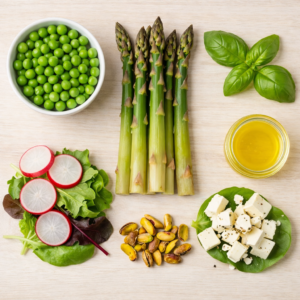
- 5 oz spring mix or baby greens washed and dried well
- 1 bunch asparagus trimmed and cut into bite-size pieces
- 1 cup peas fresh or thawed frozen peas
- 5 radishes thinly sliced
- 1 small cucumber thinly sliced or chopped
- 1 avocado cut just before serving
- 0.33 cup feta cheese crumbled
- 0.25 cup fresh herbs such as dill, parsley, mint, or chives, chopped
- 0.25 cup toasted sliced almonds or pistachios, walnuts, or seeds
Lemon-Herb Vinaigrette
- 0.25 cup olive oil
- 3 tbsp lemon juice freshly squeezed
- 1 tsp Dijon mustard
- 1 tsp honey or maple syrup
- 1 small shallot finely minced, or use 1 small garlic clove
- 1 tbsp fresh herbs chopped
- 0.5 tsp salt plus more to taste
- 0.25 tsp black pepper plus more to taste
Instructions
- Wash and dry the greens thoroughly. Bring a saucepan of salted water to a boil, blanch the asparagus for 1 to 2 minutes until crisp-tender, then transfer it to ice water to stop the cooking. Drain well. Slice the radishes, prep the cucumber, thaw the peas if needed, and cut the avocado just before serving.
- In a small bowl, whisk together the olive oil, lemon juice, Dijon mustard, honey or maple syrup, shallot or garlic, chopped herbs, salt, and pepper until smooth and bright-tasting.
- Add the greens to a large bowl. Top with the asparagus, peas, radishes, cucumber, herbs, feta, and part of the toasted almonds or other crunchy topping.
- Drizzle in part of the dressing and toss gently. Add more dressing only as needed so the salad stays lightly coated rather than overdressed.
- Finish with the avocado, extra herbs, more feta if desired, and the remaining crunchy topping. Taste and adjust with extra salt, lemon juice, or pepper before serving.