
Ingredients
Equipment
Method
- Step 1 – Toast the bread
Preheat the oven to 350°F (175°C). Slice the bolillo rolls into thick 1/2-inch rounds. Lightly butter both sides of each slice and arrange them in a single layer on a baking sheet. Toast in the oven for 6–8 minutes, flipping halfway through, until the bread is dry and lightly golden around the edges but not rock-hard. Set aside to cool slightly. - Step 2 – Make the piloncillo syrup
In a large saucepan, combine the piloncillo cones, water, cinnamon sticks, and whole cloves. Bring to a boil over medium-high heat, then reduce the heat and simmer gently for 15–20 minutes, stirring occasionally, until the piloncillo is fully dissolved and the syrup has slightly thickened and smells strongly of cinnamon and caramel. Strain the syrup into a heatproof bowl or measuring cup to remove the spices. Keep the syrup warm. - Step 3 – Build the layers
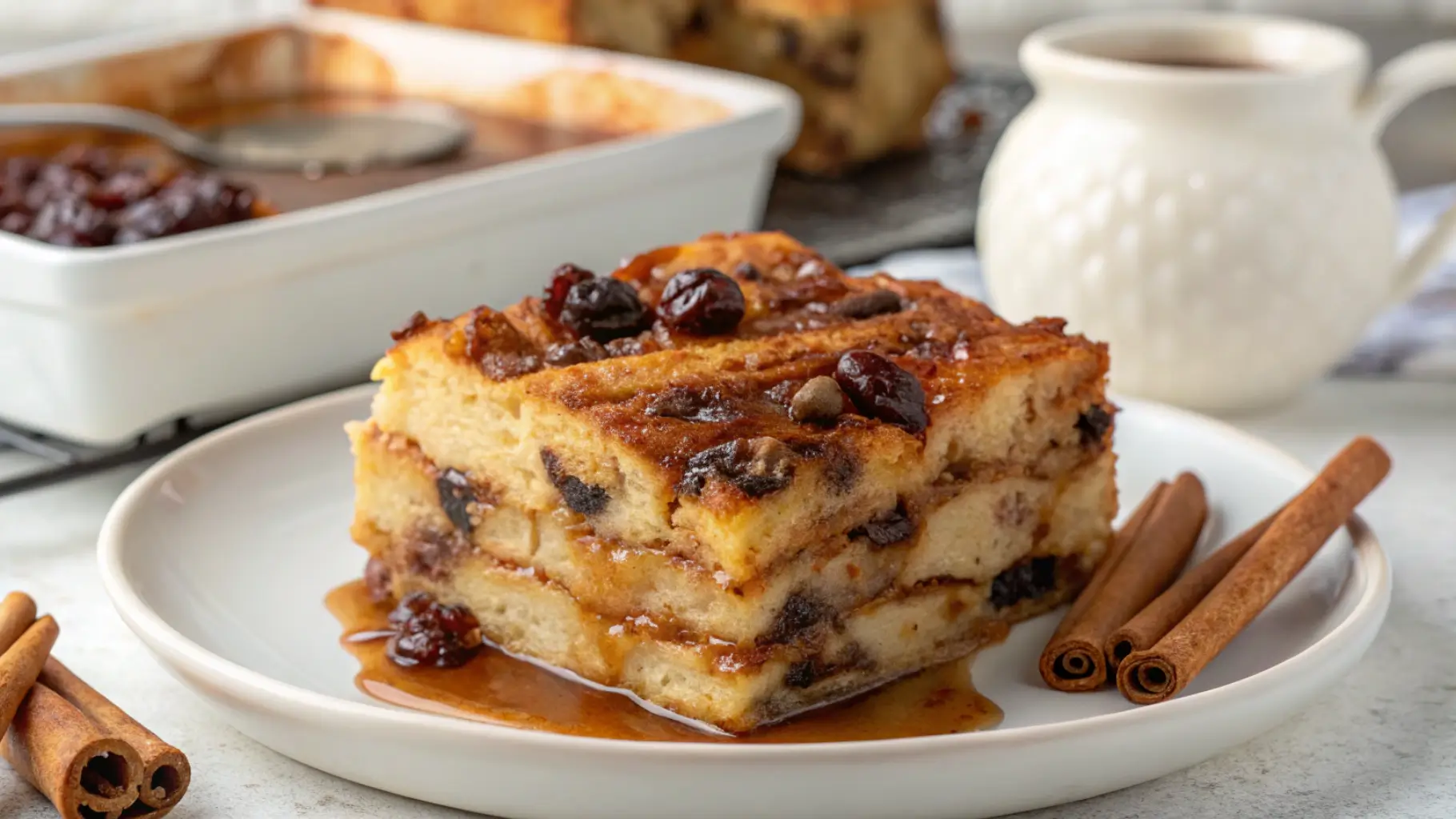
Lightly spray a 9x13-inch baking dish with nonstick spray. Arrange a layer of toasted bread slices on the bottom of the dish, fitting them snugly. Sprinkle a handful of raisins and nuts (if using) over the bread, then scatter some of the shredded cheese on top. Slowly ladle warm piloncillo syrup over the layer until the bread is generously moistened but not swimming. Let the bread sit and absorb the syrup for about 10 minutes, then repeat the layers (bread, raisins/nuts, cheese, syrup) 2 more times, resting briefly between each layer. Finish with a final layer of bread, raisins, and plenty of cheese on top. - Step 4 – Bake
Spray a sheet of foil with nonstick spray and cover the baking dish, sprayed side down so it doesn’t stick to the cheese. Bake the Capirotada at 350°F (175°C) for 40 minutes. Remove the foil and bake for 8–10 more minutes, or until the top is lightly browned and the cheese is melted and bubbly. Let the casserole rest for at least 10 minutes before serving so the layers can set slightly. Serve warm, at room temperature, or even chilled the next day.
Notes
Storage: Let the Capirotada cool completely, then cover tightly or transfer to an airtight container. Refrigerate for up to 4 days. For longer storage, wrap well and freeze for up to 2 months; thaw overnight in the fridge.
Reheating: Reheat covered in a 350°F (175°C) oven for 10–15 minutes, or warm individual portions in the microwave in short bursts. Add a splash of cream or extra piloncillo syrup if the bread looks dry.
Variations: Swap the raisins for dried cranberries, chopped dates, or dried apricots. Try different cheeses like queso fresco, queso Oaxaca, or a mix of Monterey Jack and cheddar. You can also add shredded coconut, sliced bananas, or a few rainbow sprinkles on top for a playful regional touch.