
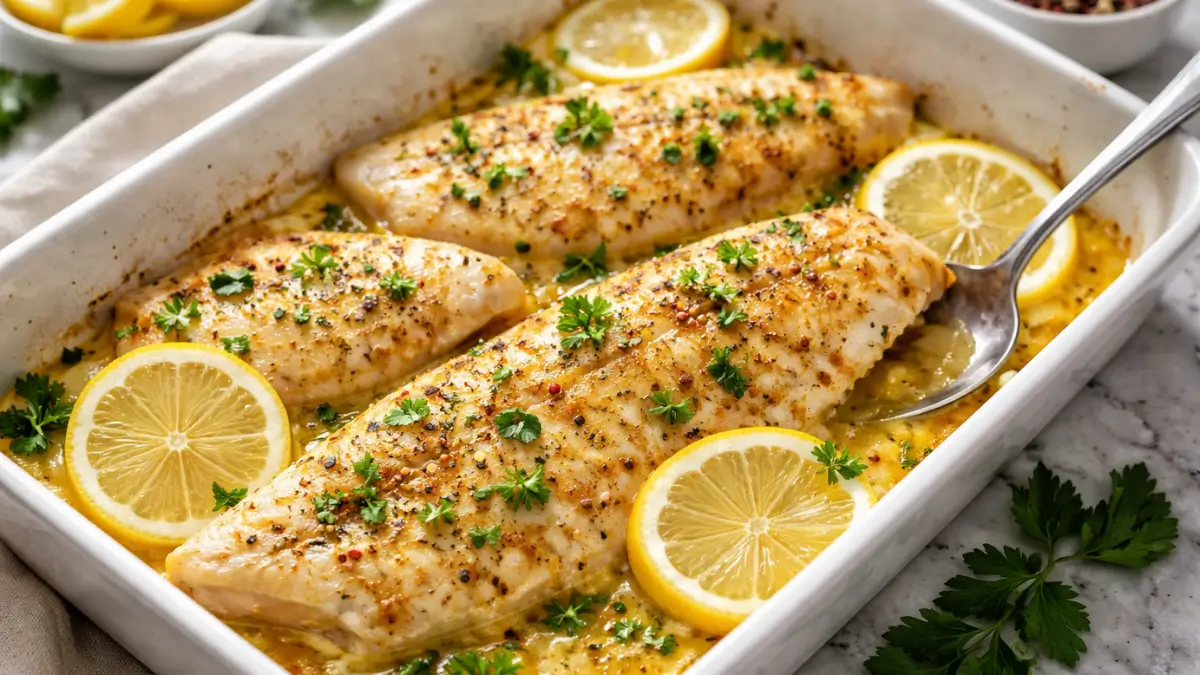
This baked orange roughy recipe is one of the easiest fish dinners you can make when you want something light, flaky, and fast. Orange roughy has a mild flavor and delicate texture, so it works especially well with simple seasonings, a little butter or olive oil, and fresh lemon.
What makes this recipe so useful is how beginner-friendly it is. You do not need a long ingredient list or complicated steps to get tender, moist fish that feels dinner-worthy. As long as you use the right oven temperature, avoid overbaking, and know what doneness looks like, this recipe comes out beautifully.
In the guide below, you will find the best oven temperature, orange roughy bake time, doneness cues, prep tips, and easy serving ideas. And if easy seafood dinners are already part of your weeknight rotation, this recipe fits right in with favorites like my bang bang salmon.
Table of Contents
Quick Answer: Best Temperature, Bake Time, and Doneness
The best way to bake orange roughy is at 400°F. For average fillets, a good starting point is about 15 to 20 minutes, but the exact time depends on thickness. Thin fillets can finish sooner, while thicker pieces may need a little longer.
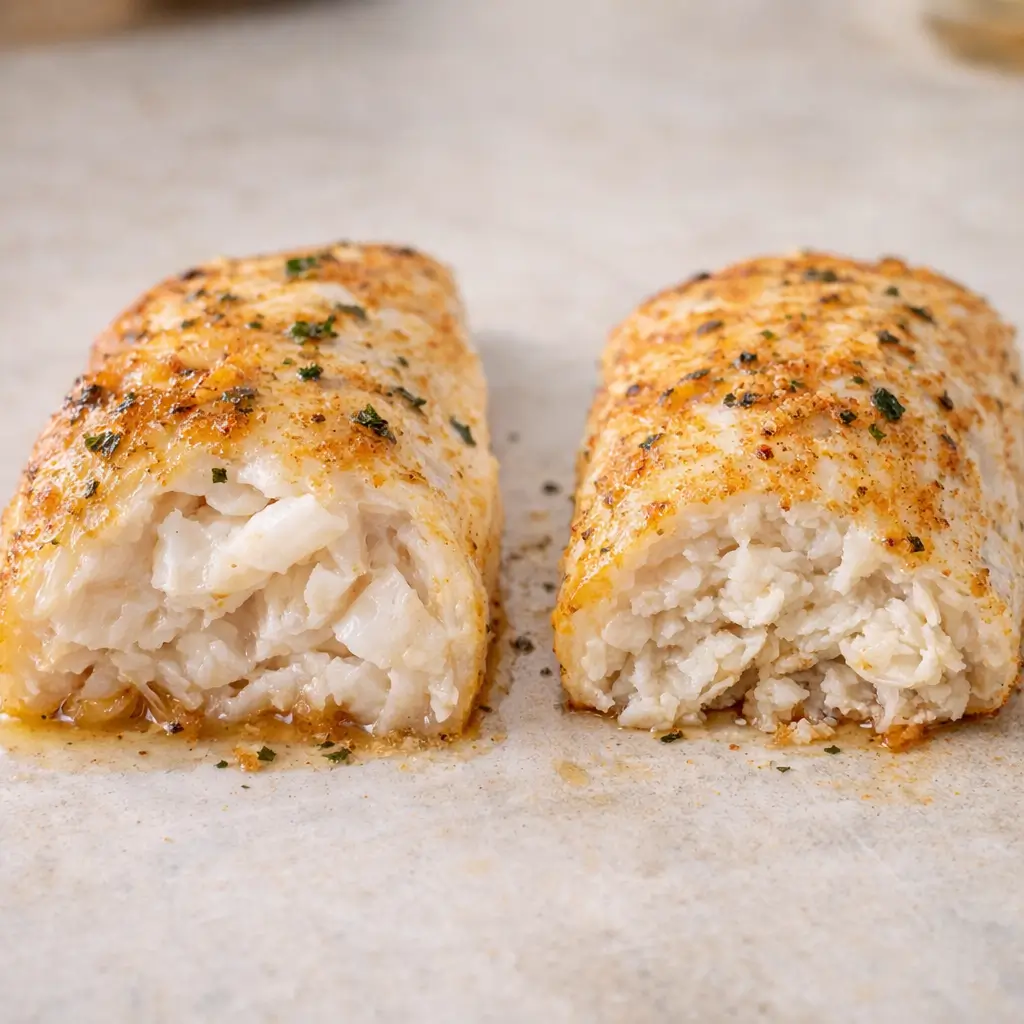
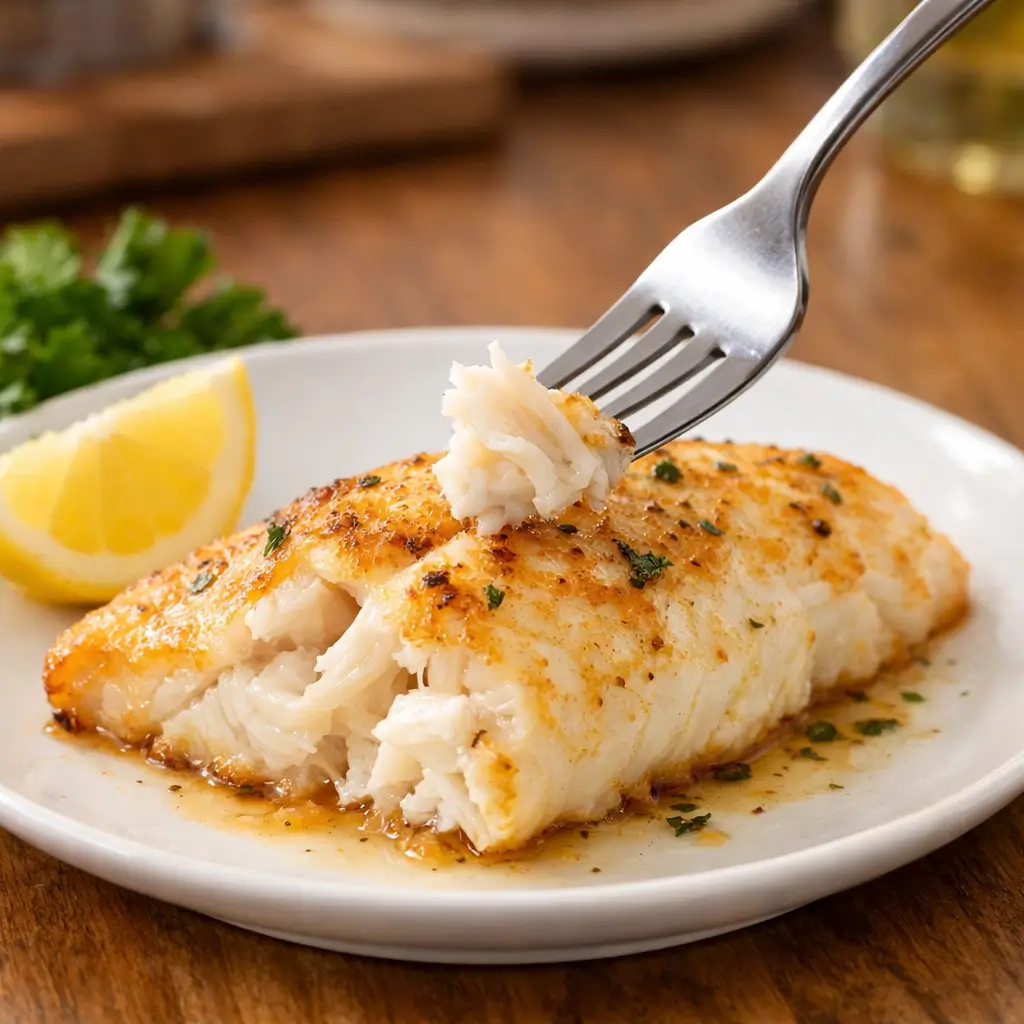
For doneness, the fish should look opaque, flake easily with a fork, and reach 145°F (63°C) in the thickest part.
The biggest mistake is leaving it in the oven too long. Orange roughy is a lean, delicate white fish, so it can go from tender to dry quickly. Start checking a little early, especially if your fillets are thin.
Why This Baked Orange Roughy Recipe Works
This recipe works because it keeps the method simple and lets the fish do what it already does best. Orange roughy is naturally mild, tender, and delicate, so it does not need heavy breading or a long marinade to taste good. A little fat, a little acidity, and a short bake are usually all it takes.
It is also a great recipe for beginners because the steps are straightforward and the ingredients are familiar. You dry the fillets, season them evenly, bake them just until flaky, then finish with lemon for brightness. That combination gives you a clean, balanced flavor without overpowering the fish.
Another reason this method works so well is that it fits real weeknights. It is quick enough for busy evenings, flexible enough for simple swaps, and easy to pair with vegetables, rice, or potatoes. If you like uncomplicated seafood dinners, it also pairs nicely with the same easy-dinner mindset as my salmon and spinach recipe.
What Orange Roughy Tastes Like
Flavor and texture
Orange roughy has a mild, delicate flavor and a tender, flaky texture that stays light rather than rich. It is one of those fish that works especially well for people who want a seafood dinner that does not taste too strong or overly “fishy.” When baked properly, the flesh turns opaque, moist, and gently flakes apart with a fork.
Who will enjoy this fish most
This fish is a great choice for beginners, picky eaters, or anyone who usually prefers milder white fish over bolder seafood. If you like clean, simple fish dinners with lemon, butter, herbs, or garlic, orange roughy is a very easy fish to enjoy. It is also a smart option when you want something lighter than salmon or a less pronounced seafood flavor than tuna.
Best white fish substitutes if you cannot find orange roughy
If you cannot find orange roughy, use another mild white fish with a delicate to medium texture. Good options include cod, haddock, or ocean perch. The exact bake time may change a little depending on thickness, but the same basic method still works well.
If you enjoy easy fish dinners in general, this is also the kind of recipe that fits nicely alongside simple seafood favorites like baked rockfish or grilled swordfish.
Before You Start
Fresh vs frozen orange roughy
Both fresh and frozen orange roughy can work well for this recipe. In many cases, frozen fillets are the easiest option to find, and properly frozen orange roughy still holds its quality well.
How to thaw, dry, and prep the fillets properly
For the best texture, thaw frozen fillets in the refrigerator overnight. If you need a faster method, seal the fish in a bag and thaw it in cold water, or use the microwave defrost setting only if you will cook it right away.
Drying the fillets matters more than many people expect. Excess moisture can make the fish steam instead of bake properly, which hurts both texture and browning. A dry surface helps the seasoning stick better and gives the fish a cleaner baked finish.
Best baking dish, sheet pan, foil, or parchment setup
A lightly greased baking dish or a sheet pan lined with parchment both work well. If you want easy cleanup, parchment is usually the simplest option. The main goal is to give each fillet a little space so the heat can circulate well and the fish bakes evenly instead of sitting in trapped moisture.
When to use butter, olive oil, or lemon
Butter gives orange roughy a richer finish, while olive oil keeps the flavor a little cleaner and lighter. Lemon adds brightness and helps balance the mild fish without overpowering it. For a simple weeknight version, a small amount of oil or melted butter plus lemon, salt, pepper, and garlic is usually all you need.
Ingredients You’ll Need
Core ingredients for the fish
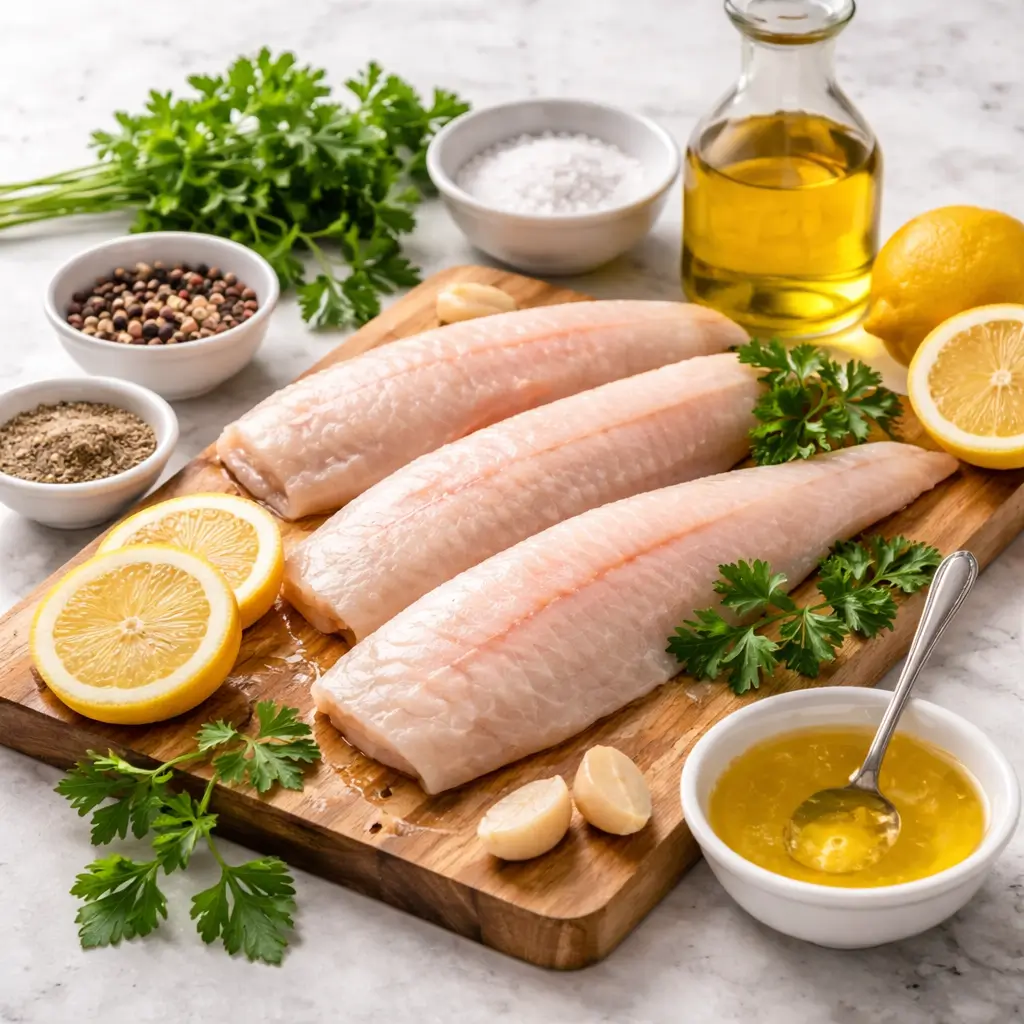
You only need a short ingredient list for a good baked orange roughy recipe:
- orange roughy fillets
- butter or olive oil
- lemon
- salt
- black pepper
- garlic or garlic powder
These basics keep the recipe simple while still giving the fish enough flavor and moisture.
Best seasoning options for a mild white fish
Because orange roughy is so mild, it works best with seasonings that support the fish instead of covering it up. Garlic, paprika, parsley, Italian seasoning, onion powder, and a little cayenne can all work, depending on the style you want. A lemon-garlic version is often the safest starting point because it adds flavor without making the fish feel heavy.
Simple substitutions and swaps
You can use olive oil instead of butter for a lighter version, or use melted butter if you want a richer finish. Fresh garlic can be swapped for garlic powder, and dried parsley or Italian seasoning can stand in for fresh herbs. If orange roughy is unavailable, cod, haddock, or ocean perch are the closest easy substitutes for this kind of baked preparation.
How to Bake Orange Roughy Step by Step
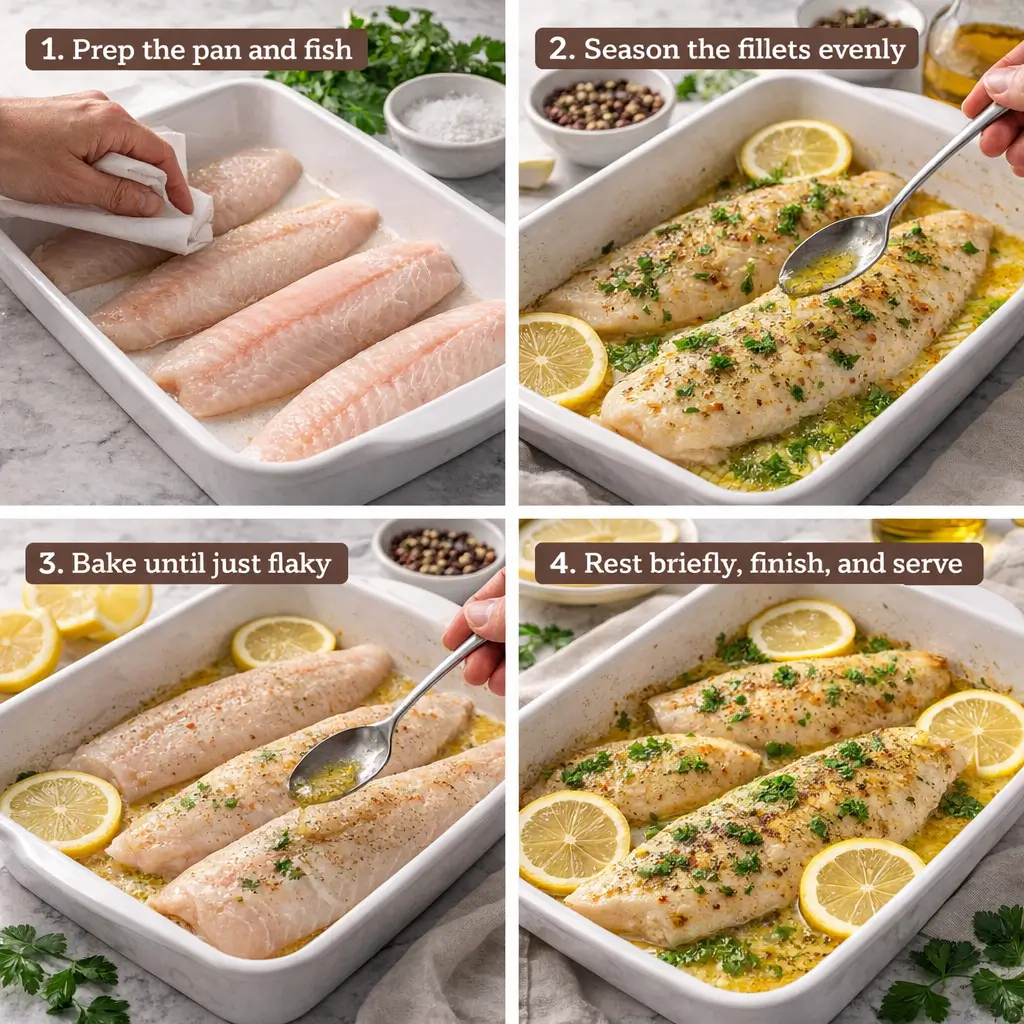
Step 1: Prep the pan and fish
Start by preheating your oven and lightly greasing a baking dish or lining a sheet pan with parchment paper. Pat the orange roughy fillets very dry with paper towels, then place them in a single layer with a little space between each piece. This helps the fish bake more evenly and keeps it from sitting in excess moisture.
Step 2: Season the fillets evenly
Brush the fillets lightly with melted butter or olive oil, then season with salt, black pepper, garlic, and a squeeze of lemon if you like. Because orange roughy is such a mild fish, even seasoning makes a big difference. You want enough flavor to support the fish, but not so much that it covers its delicate texture.
Step 3: Bake until just flaky
Bake the fish until it turns opaque and begins to flake easily. Thin fillets will cook faster, so start checking early rather than waiting until the very end. The goal is tender, moist fish that just separates with a fork, not fillets that look dried out around the edges.
Step 4: Rest briefly, finish, and serve
Once the fish is done, let it rest for a minute or two. Then finish it with extra lemon, a little more melted butter, chopped herbs, or a simple light sauce. That quick finishing step helps the fish taste fresher and more balanced right before serving.
How to Tell When Baked Orange Roughy Is Done
Internal temperature and safe doneness
The most reliable way to check doneness is with an instant-read thermometer. Fin fish should reach 145°F (63°C) in the thickest part for safe doneness. For more seafood safety guidance, see the FDA seafood safety guidelines.
Visual and texture cues
If you do not have a thermometer, look for flesh that has turned opaque and separates easily with a fork.
Signs the fish is slightly underdone vs overdone
If the center still looks a little translucent and resists flaking, it likely needs a bit more time. If the fillet starts looking very dry, tight, or crumbly, it has likely gone a little too far. Orange roughy is delicate, so even a few extra minutes can change the texture quickly.
How to check doneness without breaking the fillet
Test the thickest part gently with a fork instead of digging into the whole fillet. You only need a small check. A thermometer is even better because it lets you test doneness without tearing the fish apart. Since color alone is not always the best guide, temperature and texture together are the safest way to judge it.
Common Mistakes to Avoid
Overbaking thin fillets
This is the most common problem. Orange roughy cooks quickly, and thinner pieces can dry out fast if you treat them like a thick cut of fish. Start checking early so you can pull them as soon as they are just flaky.
Skipping the drying step
If the fillets go into the oven wet, they are more likely to steam than bake properly. That can leave the texture softer, wetter, and less appealing. Patting the fish dry takes less than a minute but makes a real difference.
Crowding the pan or trapping steam
Give the fillets a little room. When fish is packed too closely together, moisture collects more easily and the baking surface does not work as well. A single layer with space between pieces helps the heat circulate better.
Under-seasoning a mild fish
Orange roughy has a gentle flavor, which is part of its appeal, but that also means bland seasoning will show up fast. Salt, pepper, garlic, butter or oil, and lemon are simple, but they should be used with intention so the fish does not taste flat.
Using the wrong heat level for delicate fillets
Very aggressive heat can dry the outside before the inside is ready, while too low a temperature can leave the fish pale and overly soft. A moderate oven temperature and close attention near the end usually give the best results.
Pro Tips for Moist, Flaky Fish Every Time
Why patting the fillets dry matters
Patting the fillets dry before seasoning is one of the easiest ways to improve the final texture. When too much moisture stays on the surface, the fish is more likely to steam instead of bake cleanly. A dry surface also helps the oil, butter, and seasonings coat the fish more evenly.
Why baking uncovered usually works better
For most baked orange roughy recipes, uncovered baking gives the best texture. Covering the dish can trap steam, which makes delicate fillets softer and wetter instead of light and flaky. If your goal is tender fish with a cleaner baked finish, leaving it uncovered is usually the better choice.
When a quick broil finish helps
A quick broil at the very end can help if you want a little more color on top or a slightly more finished surface. The key is to use it only briefly and only after the fish is basically done. Since orange roughy is delicate, a long broil can dry it out fast.
Why resting the fish briefly before serving improves texture
Letting the fish rest for a minute or two after baking gives the fillets a chance to settle before serving. This helps the texture feel a little more delicate and keeps the fish from breaking apart as easily when you move it to the plate.
Easy Variations and Flavor Ideas
Lemon garlic butter version
This is the most classic variation and usually the best starting point. Use melted butter, fresh lemon juice, garlic, salt, and black pepper for a simple version that keeps the fish mild but flavorful. It adds richness without making the dish heavy.
Herb and paprika version
If you want something a little more savory, add dried parsley, Italian seasoning, and a light sprinkle of paprika. This gives the fish a little more color and depth while still keeping the overall flavor balanced and approachable.
Light olive oil version
For a lighter take, use olive oil instead of butter. This version tastes a little cleaner and lets the fish stay the star. It is a good option if you want something fresh and simple with lemon and herbs.
Cajun-style version
If you want a bolder flavor, use a light Cajun seasoning blend. Keep it moderate so it does not overpower the fish. This version works well when you want to turn baked orange roughy into more of a punchy weeknight dinner.
Optional sauce ideas, including a lemon-wasabi variation
A simple lemon butter drizzle is enough for most versions, but you can also serve the fish with a more interesting sauce if you want variety. A light lemon-wasabi sauce can work surprisingly well when used sparingly, especially if you like a little brightness with a gentle kick.
What to Serve With Baked Orange Roughy
Best vegetables for a light fish dinner
Baked orange roughy pairs well with light vegetable sides that do not overpower the fish. Roasted asparagus, green beans, broccoli, or a crisp cucumber-based side all work well because they keep the meal fresh and balanced.
Rice, potatoes, and other easy starches
If you want something heartier, serve the fish with rice, roasted potatoes, or simple buttered noodles. For a stronger internal pairing, this fish goes especially well with garlic parmesan potato wedges, which add a crisp, savory contrast to the delicate fillets.
Simple sauces and finishing touches
Lemon wedges, melted butter, fresh parsley, and a light pan sauce are all easy ways to finish the dish. You do not need much, because orange roughy is best when the toppings support the fish instead of hiding it.
Best same-meal pairings for a quick weeknight plate
For a lighter plate, pair baked orange roughy with Korean cucumber salad for something crisp and refreshing. If you want to guide readers toward another seafood dinner later, a soft internal mention of baked rockfish recipe or grilled swordfish recipe also makes sense near the end of the article or in the conclusion.
Storage, Reheating, and Leftovers
How to store leftover orange roughy
Let the fish cool slightly, then transfer the leftovers to an airtight container and refrigerate promptly. Cooked leftovers are generally best used within about 3 to 4 days, and food-safety guidance also recommends refrigerating perishables within 2 hours of cooking, or within 1 hour if the temperature is above 90°F.
Best way to reheat without drying it out
The best way to reheat baked orange roughy is gently, using a low oven or short bursts in the microwave so the fish does not dry out. For food safety, leftovers should be reheated to 165°F (74°C). If you use the microwave, cover the fish loosely so it warms more evenly.
Can you prep it ahead or freeze leftovers
You can season the fish a little ahead of time and keep it refrigerated until you are ready to bake, but it is usually best baked fresh for the best texture. If you have cooked leftovers, you can freeze them, though the texture will usually be softer after thawing and reheating.
Best ways to repurpose leftover fish
Leftover baked orange roughy works well in fish tacos, rice bowls, simple wraps, or flaked over a salad. Because the fish is mild, it is easy to reuse with fresh lemon, herbs, or a light sauce without making it feel heavy or overly “leftover.”
Baked Orange Roughy Recipe

Equipment
- Oven
- Baking dish or sheet pan
- Parchment Paper
- Paper towels
- Pastry brush or spoon
- Instant-read thermometer
Ingredients
Fish Ingredients
- 4 orange roughy fillets about 5 to 6 ounces each
- 2 tablespoons butter or olive oil melted if using butter
- 1 lemon half for juice and half sliced for serving
- 1 teaspoon salt
- 1/2 teaspoon black pepper
- 2 cloves garlic minced, or use 1 teaspoon garlic powder
- 1 tablespoon parsley chopped, optional for garnish
Instructions
- Preheat the oven to 400°F. Lightly grease a baking dish or line a sheet pan with parchment paper.
- Pat the orange roughy fillets very dry with paper towels, then arrange them in a single layer with a little space between each piece.
- Brush the fillets lightly with melted butter or olive oil. Season evenly with salt, black pepper, garlic, and a squeeze of lemon juice.
- Bake for 15 to 20 minutes, depending on thickness, until the fish is opaque, flakes easily with a fork, and reaches 145°F in the thickest part.
- Let the fish rest for 2 minutes. Finish with extra lemon, a little more melted butter or olive oil, chopped parsley, and serve right away.
Notes
Baked Orange Roughy FAQ
Can I bake orange roughy from frozen?
Yes, but thawing it first usually gives you better texture and more even cooking. If you bake it straight from frozen, expect the cook time to increase and the surface to release more moisture.
Do I need to thaw it first?
For the best results, yes. Thawed fillets are easier to dry, season, and bake evenly. Refrigerator thawing is the safest gradual method, while cold-water and microwave thawing should be followed by immediate cooking.
Should I bake it covered or uncovered?
Uncovered is usually better for baked orange roughy. Covering the fish can trap steam, which makes delicate fillets softer and wetter instead of lightly baked and flaky.
Do I need to flip the fish while baking?
No. Orange roughy is delicate, so flipping usually is not necessary and can make the fillets break apart more easily.
Should I season both sides?
Yes, lightly seasoning both sides helps a mild fish taste more balanced. Just keep the seasoning simple so it does not overpower the fish.
What internal temperature should orange roughy reach?
Orange roughy should reach 145°F (63°C) in the thickest part. If you do not have a thermometer, the flesh should look opaque and flake easily with a fork.
Why did my orange roughy turn dry?
The most common reason is overbaking. Thin fillets cook fast, so even a few extra minutes can push the texture from moist and flaky to dry.
How do I keep baked orange roughy from falling apart?
Pat the fish dry, handle it gently, and avoid overbaking it. Letting it rest briefly after baking also makes it easier to move and serve.
Can I use another white fish instead?
Yes. Cod, haddock, and ocean perch are all good substitutes when you want a similar mild white fish dinner.
Can I bake it with vegetables on the same pan?
Yes, as long as the vegetables cook in about the same time or are cut small enough to finish alongside the fish. Quick-cooking vegetables usually work better than dense ones.
How do I make baked orange roughy taste less fishy?
Use fresh lemon, garlic, herbs, and a little butter or olive oil. Keeping the fish fresh, drying it well, and not overcooking it also helps the flavor stay clean and mild.
Conclusion
This baked orange roughy recipe is a simple, reliable way to make a light seafood dinner without a lot of effort. With the right oven temperature, a short bake time, and a few easy prep tips, you get fish that turns out moist, flaky, and full of clean flavor.
It is also the kind of recipe that fits easily into a busy weeknight routine. You can keep it classic with lemon and butter, change the flavor with herbs or Cajun seasoning, and pair it with easy sides that make the meal feel complete. For a fresh side, this is a great place to internally link Korean cucumber salad, and for a heartier pairing, garlic parmesan potato wedges also fit naturally.
If you want to keep readers moving deeper into your seafood cluster, a soft final internal link to baked rockfish recipe or grilled swordfish recipe works well here too.